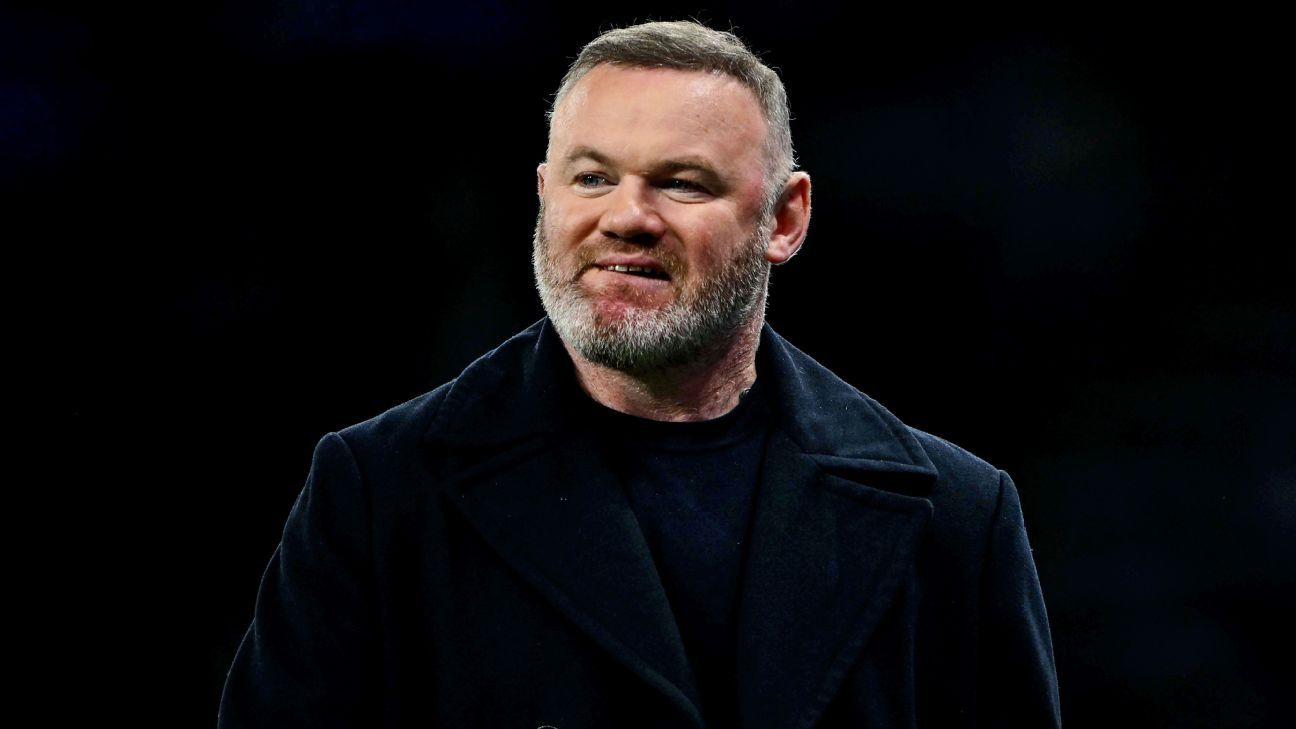
From the Rooney era to now, English soccer still has a drinking problem
हिंदी में सुनें
Listen to this article in Hindi
Wayne Rooney's revelations highlight English soccer's ongoing struggle with alcohol, despite advancements in player well-being and support systems.
Wayne Rooney's recent disclosure about his struggles with alcohol during his record-breaking tenure with Manchester United served as a stark reminder that even the most accomplished athletes face hidden challenges. While shocking, Rooney's story also felt like a relic of a bygone era.
Rooney described a pattern of heavy drinking, stating, "I just drank for two days straight, come [into] training and at the weekend I'd scored two goals and then I'd go back and go and drink for two days straight again... I was struggling massively with alcohol. Massively struggling, and I didn't think I could turn to anyone..."
Today's professional soccer landscape is vastly different. Billions are invested, and clubs employ experts in nutrition, fitness, recovery, and mental well-being to optimize player health. This makes Rooney's experiences – primarily during his peak years under Sir Alex Ferguson from 2004-2013 – seem like something that couldn't happen now. Some teams monitor players' weight daily, and others use mouth swabs to track their health. Saliva tests can even identify concussions. Despite these advancements, alcohol abuse remains a concern.
While issues like gambling, gaming, overtraining, and the use of substances like nitrous oxide and snus have emerged, alcohol still requires attention. Jeff Whitley, a player welfare executive and counselor at the Professional Footballers' Association (PFA), confirmed to ESPN that "Alcohol hasn't gone anywhere. It's still there, it's still accessible."
During the 2024-25 season, the PFA conducted over 1,500 well-being assessments across the Premier League, EFL, and Women's Super League (WSL) through its Wellbeing Workshops. Approximately 13% of players identified alcohol as a concern.
Whitley elaborated, "They might not necessarily go out and party as hard as some of the people in the 1990s, but I suppose the most important thing is understanding how they drink and also what do they see as somebody who is out of control with their consumption... Some of the players might be binge drinkers."
Even infrequent drinking can be problematic if it leads to negative consequences. Whitley emphasizes the dangers of excessive drinking leading to a loss of control or harmful actions. He poses the question: "Okay, you might not be going out every week, but have you already had consequences?"
To combat this, clubs regularly collaborate with the PFA, requesting Wellbeing Workshops that provide advice, education, and access to counselors. The PFA also has a dedicated well-being team offering confidential support, including a 24/7 helpline and a network of counselors. They also partner with the Sporting Chance Clinic, founded by former Arsenal and England captain Tony Adams, to provide specialist mental health and addiction treatment.
Whitley's personal history makes him uniquely suited to connect with players facing addiction. He battled alcohol and drug addiction during his playing career, which included over 300 senior games for teams like Manchester City and Sunderland. He sought help at Sporting Chance after declaring bankruptcy. He recalls a time when little support was available.
"Nobody came into the clubs talking about that stuff when I was playing," Whitley stated. "I was playing in a squad at City where some of the messages from the older players were along the lines of, 'If you don't drink, you ain't going to be a player.'"
While the PFA's 13% figure indicates that alcohol remains a problem, the culture surrounding it has changed dramatically since the 1990s. A notorious incident involving England players drinking heavily in a Hong Kong bar before Euro 1996 epitomized the era's relationship with alcohol. Attitudes began to shift when Arsene Wenger, upon becoming Arsenal manager in 1996, banned alcohol on the team bus.
Wenger said, "I will not ban beer completely, because one pint helps relax people... But I do not want the players drinking 15 beers, because that is bad... A footballer's body is his work. If he then destroys that with bad habits like drinking, it's silly."
ESPN analyst Don Hutchison, who played for teams like Liverpool and Everton, witnessed this change firsthand. Looking back on his 19-year career, he regrets the impact of alcohol. "I do put my head on the pillow every now and again thinking, 'what the f--- was I doing in the early nineties?'... I know I could have got so much more out of my career."
Hutchison described how, upon joining Liverpool in 1991, he felt pressure to participate in the drinking culture. "When I signed for Liverpool, there was a sports bar as close as you can imagine to the training ground, so the routine was [drinking there] every Tuesday afternoon... It was bonkers."
An infamous incident in Ayia Napa in 1994, where Hutchison was photographed wearing only a Budweiser label, contributed to his departure from Liverpool. "The stupid stuff I was doing off the pitch cost me," he admitted. "It cost me because I was getting in the headlines too many times."
Despite these changes, alcohol still affects players, albeit to a lesser extent. With the rise of other addictions, Whitley stresses the importance of players and clubs being aware of available resources. "Snus is a huge problem within the industry... Whether it's snus, nitrous oxide, alcohol or whatever, if they don't understand their addictive natures, then they'll always search for something new."
Whitley concludes, "There are younger players coming forward looking for help and support now, and that's a real positive."