Freestyle Chess South Africa: Carlsen and Aronian reach the final
हिंदी में सुनें
Listen to this article in Hindi
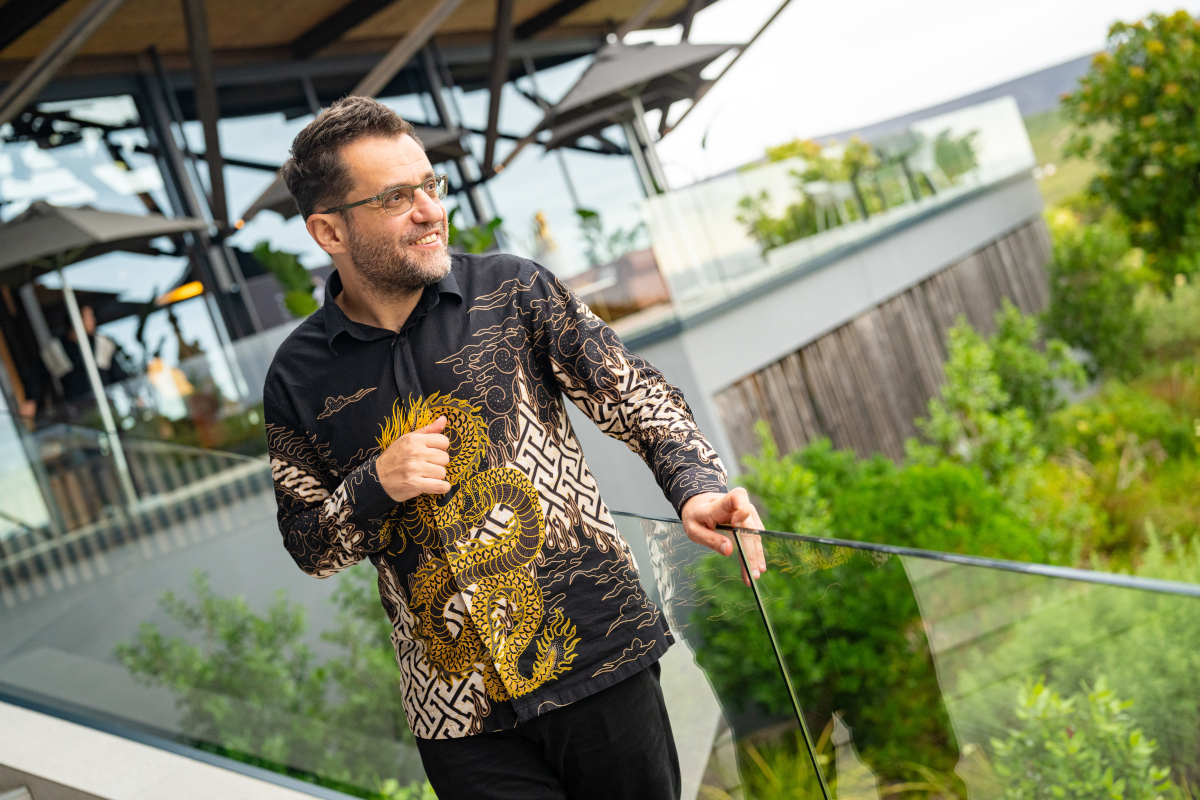
Day three of the Freestyle Chess Grand Slam Finals in South Africa clarified the lineup for Thursday's concluding matches. Magnus Carlsen and Levon Aronian advanced to the championship decider after winning their respective semifinals, while Javokhir Sindarov and Vincent Keymer will contest third place. In the lower bracket, Fabiano Caruana and Arjun Erigaisi secured victories to reach the fifth-place match, leaving Hans Niemann and Parham Maghsoodloo to compete for seventh. | Photo: Freestyle Chess / Lennart Ootes
Carlsen beats Sindarov, Aronian beats Keymer
Day three of the Freestyle Chess Grand Slam Finals in South Africa determined the pairings for Thursday's title-deciding matches. Magnus Carlsen and Levon Aronian emerged as the finalists, ensuring that the tournament title will be decided between the two most experienced players in the field. Their respective semifinal victories placed Javokhir Sindarov and Vincent Keymer into the third-place match, while results in the lower bracket confirmed the pairings for fifth and seventh place.
In the upper bracket, Carlsen advanced after a tightly contested encounter with Sindarov. The Norwegian won the first game, only for Sindarov to level the score by taking the second on demand. Carlsen regained the lead in game three, but once again Sindarov pushed the match to the limit, creating chances to again bounce back successfully. Carlsen ultimately held, avoiding the need for an Armageddon decider and winning the match 2½–1½.
Ganguly introduces conceptually fresh directions in several key lines – even in the most played main lines.
The Ragozin Defence (1.d4 Nf6 2.c4 e6 3.Nf3 d5 4.Nc3 Bb4) has become a cornerstone of modern chess theory. With 3.Nf3 gaining popularity as a way to avoid Nimzo-Indian setups and the challenges Black faces in the Queen’s Indian, the Ragozin offers a solid and dynamic alternative.
Free video sample: Introduction
Free video sample: 5.cxd5 exd5 6.Bf4
Aronian secured the second place in the final by defeating Keymer in a match that hinged on a dramatic save. The German grandmaster missed winning opportunities in the second game of the classical portion, allowing Aronian to escape from a difficult position. With the score tied after two games, the match moved to blitz tiebreaks, where Aronian prevailed convincingly by winning both games, for a final score of 3–1.
In the lower bracket, Fabiano Caruana and Arjun Erigaisi triumphed in their respective matches. Caruana defeated Parham Maghsoodloo 1½–½, extending the Iranian player's difficult run in Cape Town. Erigaisi, meanwhile, beat Hans Niemann 3–1 after the first pair of games ended in draws and the match moved to blitz.
These results set up Caruana v. Erigaisi for fifth place and Niemann v. Maghsoodloo for seventh. The Finals will conclude on Thursday, 11 December.
Carlsen 2½-1½ Sindarov
After convincingly winning the first game with black, Carlsen only needed a draw to reach the final. But playing white is not as favourable as in classical chess - theoretical knowledge is almost fully irrelevant in Freestyle Chess, especially with a rapid-ish time control, so drawing with white for Carlsen was not at all a trivial task.
Sindarov won on demand to even the score and take the match to tiebreakers. The Uzbek star had a clear advantage for quite a while in the middlegame, but the ever-fighting Carlsen managed to restore the balance. The deciding sequence only came in the endgame, when Carlsen faltered on move 44 - as both players had less than 2 minutes on the clock.
In this insightful video course, Grandmaster David Navara shares practical advice on when to calculate deeply in a position — and just as importantly, when not to.
In this insightful video course, Grandmaster David Navara shares practical advice on when to calculate deeply in a position — and just as importantly, when not to.
Free sample video: Introduction
Free sample video: Invisible moves
As in every match that has been decided in blitz tiebreaks so far in the event, the quick-paced deciding set of games in this confrontation featured a number of mistakes by both sides. Carlsen's experience seems to have helped him this time around, as he again won the first game and survived a lost position in the rematch to get a spot in the final.
Javokhir Sindarov facing Magnus Carlsen | Photo: Freestyle Chess / Stev Bonhage
Aronian 2½-1½ Keymer
After drawing both of the 30-minute games, Aronian took the lead in the first blitz encounter and won again in the second. The most relevant factor in this match was Keymer's inability to make the most of clear advantages both in the second and third games of the encounter.
Particularly painful was Keymer's blunder in the first blitz game.
Experts examine the games of Max Euwe. Let them show you which openings Euwe chose to play, where his strength in middlegames were, which tactical abilities he had or how he outplayed his opponents in the endgame.
Max Euwe became the fifth World Chess Champion after beating Alexander Alekhine in the 1935 World Championship match. A maths teacher by profession, Euwe remained an amateur throughout his life, but was still the best chess player in the Netherlands, and one of the world's best players. Euwe holds the record for the most Dutch national championships, with twelve. After winning the World Championship, Euwe was also the world's best player for a while. He lost the title again in 1937 in the rematch against Alexander Alekhine.
Free video sample: Openings
Vincent Keymer failed to make the most of clear winning chances in his match against Levon Aronian | Photo: Freestyle Chess / Stev Bonhage
Erigaisi 3-1 Niemann
Two well-played draws meant this was the third match to be decided in tiebreaks. Much like Aronian, Erigaisi won both blitz encounters - in the first of these two, the Indian grandmaster found a great-looking final combination to win the game.
Arjun Erigaisi analysing with the tournament finalists | Photo: Freestyle Chess / Stev Bonhage
Caruana 1½-½ Maghsoodloo
The one match that finished "in regulation" saw Maghsoodloo playing a one-move blunder in the first encounter. Caruana made the most of the opportunity and agreed to a draw from a better position in the rematch.
Grandmaster Dr. Karsten Müller, one of the world’s leading endgame experts, guides you step by step through everything you need to know in this second volume.
Picture this: you’ve outplayed your opponent move by move, you’re clearly better – and then the endgame slips into a draw, simply because you lacked the crucial theoretical knowledge. That is exactly where this course comes in. Without solid endgame skills, there’s no way forward. Rook endgames are most essential: they occur more often than any other type of endgame, and often make the difference between victory and half a point. If you master them, you’ll confidently convert your advantages into wins!
Free video sample: Introduction
Free video sample: Bodycheck
Parham Maghsoodloo versus Fabiano Caruana | Photo: Freestyle Chess / Stev Bonhage
All games
Official website
Replay all games on Live.ChessBase.com
EXPAND YOUR CHESS HORIZONS
Data, plans, practice – the new Opening Report In ChessBase there are always attempts to show the typical plans of an opening variation. In the age of engines, chess is much more concrete than previously thought. But amateurs in particular love openings with clear plans, see the London System. In ChessBase ’26, three functions deal with the display of plans. The new opening report examines which piece moves or pawn advances are significant for each important variation. In the reference search you can now see on the board where the pieces usually go. If you start the new Monte Carlo analysis, the board also shows the most common figure paths.