Fractured Integration: Security Concerns Exacerbate Europe's Migration Challenges
हिंदी में सुनें
Listen to this article in Hindi
A Paris metro stabbing incident underscores the complex interplay between migration policies, security concerns, and societal integration across Europe, raising difficult questions.
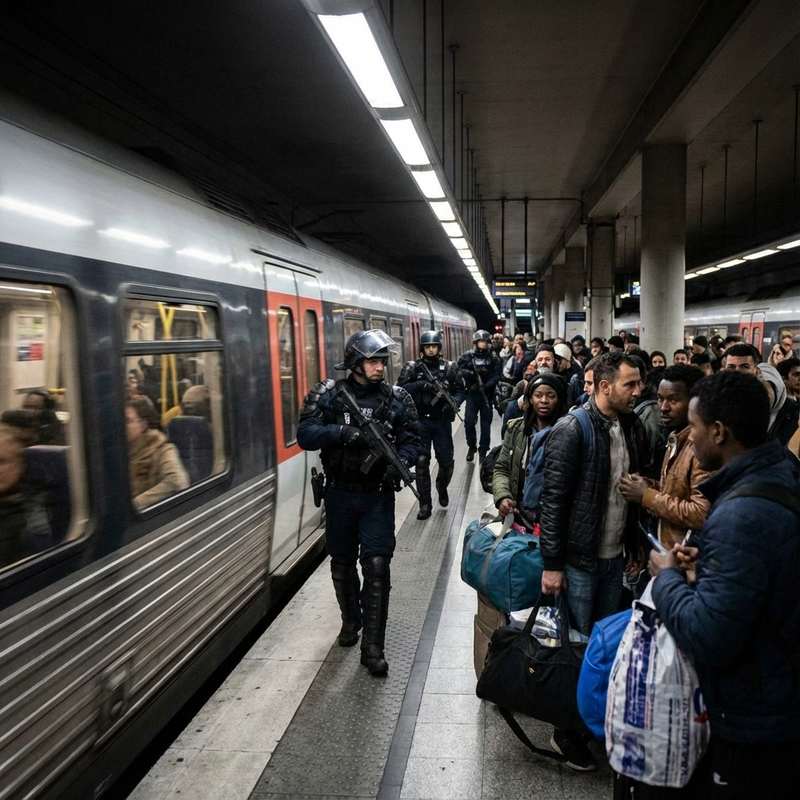
Europe faces a confluence of challenges, where migration policies, security concerns, and societal integration are increasingly intertwined. While debates rage about border control and asylum processes, incidents within European nations, such as the recent stabbing in the Paris metro, serve as stark reminders of the complexities involved. These events trigger political reverberations far beyond the immediate locale, influencing national debates and potentially reshaping European policy. The integration of migrant populations is becoming a central issue across the continent, particularly as economic anxieties and security fears fuel nationalist sentiments.
France, like many other European nations, has long grappled with the integration of its diverse population. The country's universalist model, which emphasizes assimilation into a shared national identity, faces growing strains as some communities maintain distinct cultural and religious identities. This tension, combined with economic disparities and perceptions of social exclusion, can create fertile ground for radicalization and crime. The Paris stabbing incident, involving a Malian national with a criminal record who was slated for deportation, highlights the difficulties in managing individuals who fall through the cracks of the system. The fact that the suspect, despite a deportation order, remained in the country due to bureaucratic hurdles underlines the challenges in enforcing existing immigration laws. The Schengen Area, while facilitating free movement, also presents challenges in tracking individuals across borders, demanding greater cooperation among member states.
The political implications of such events are significant. Far-right and populist parties often capitalize on security anxieties to advocate for stricter immigration controls and nationalist policies. These arguments gain traction when high-profile incidents are perceived as failures of integration or border security. Mainstream parties, in turn, face pressure to adopt tougher stances on immigration to avoid losing support to their more nationalist rivals. This dynamic can lead to increasingly restrictive immigration policies, even though evidence suggests that integration challenges are often rooted in broader socioeconomic issues, such as discrimination and lack of opportunities. The incident also shines a spotlight on the effectiveness of law enforcement and intelligence agencies in monitoring potential threats. Enhanced surveillance, as touted by the French Interior Minister, raises privacy concerns and questions about the balance between security and civil liberties.
Beyond national politics, these events impact Europe's international relations. The rise of anti-immigrant sentiment can strain relations with countries of origin, particularly when deportation policies are perceived as unfair or discriminatory. Furthermore, incidents involving migrants can fuel xenophobia and Islamophobia, contributing to a climate of distrust and division within European societies. This has implications for Europe's soft power and its ability to project an image of tolerance and inclusivity on the global stage. The ongoing conflict in Ukraine and the resulting influx of refugees have further complicated the situation, placing additional strain on resources and social cohesion. Balancing humanitarian obligations with security concerns remains a critical challenge for European policymakers. The long-term consequences of the Paris stabbing, and similar incidents across Europe, depend on how effectively governments address the underlying issues of integration, social inequality, and security. A failure to do so risks further polarization, the erosion of social trust, and the rise of extremism. Europe's internal stability is increasingly linked to its ability to manage migration flows, promote inclusive societies, and address the root causes of radicalization and crime. [World affairs background] is essential for understanding the nuances of these complex issues.
The effectiveness of integration programs and the allocation of resources towards addressing socioeconomic disparities are crucial factors. Furthermore, fostering interfaith dialogue and promoting cultural understanding can help bridge divides and build more cohesive communities. The key uncertainty lies in whether European societies can overcome political polarization and develop comprehensive, long-term strategies that address both security concerns and the underlying drivers of social division. The future of Europe may well depend on its ability to navigate these treacherous waters. [India’s global position] serves as an interesting counterpoint, highlighting the successes and challenges of managing diversity in a different cultural context. Understanding [topic basics for readers] is crucial before forming opinions.
Editor’s note: This article was independently written by the Scoopliner Editorial Team using publicly available information.