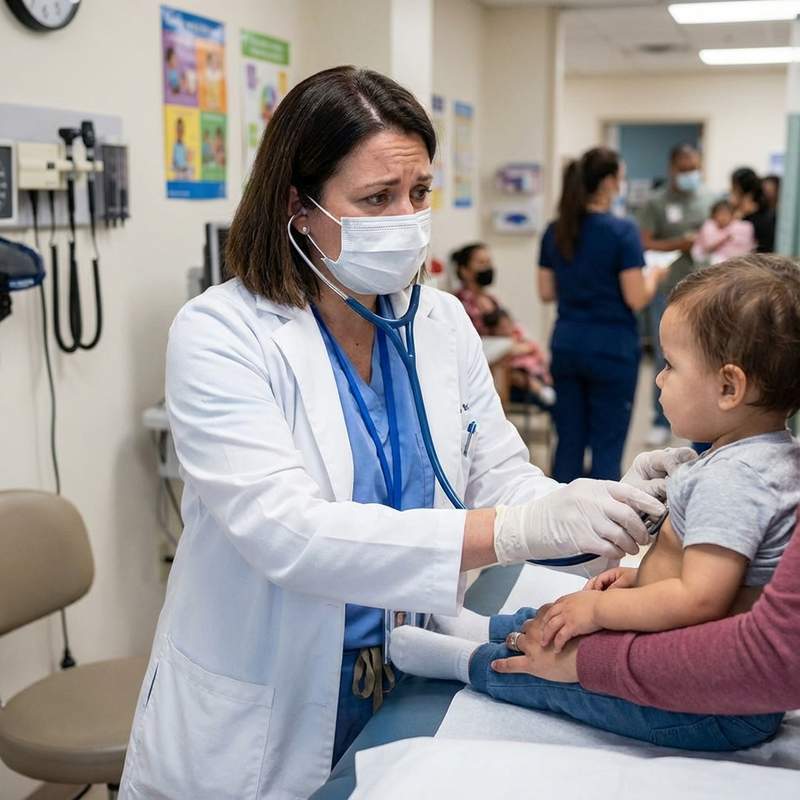
Early Flu Season Signals Potential Strain on Pediatric Healthcare Systems
हिंदी में सुनें
Listen to this article in Hindi
An early surge in flu cases, particularly affecting children, highlights potential pressures on healthcare systems and underscores the importance of public health infrastructure.
The early arrival of flu season in regions like California is more than just a seasonal nuisance; it's a potential stress test for public health infrastructure, particularly concerning its impact on pediatric care. While flu seasons are cyclical and expected, shifts in timing, dominant strains, and affected populations can reveal vulnerabilities in preparedness and resource allocation.
One key factor is the behavior of influenza viruses themselves. The emergence of new subvariants, such as the H3N2 Flu A subclade K, introduces uncertainty. The annual flu vaccine is formulated based on projections of dominant strains, and while preliminary data suggests some effectiveness against hospitalization, the vaccine's ability to prevent symptomatic disease from subclade K remains under investigation. This inherent lag in vaccine development compared to viral evolution is a constant challenge for public health officials.
The disproportionate impact on children, as observed in Southern Hemisphere flu seasons and projected for regions like California, presents specific challenges. Pediatric healthcare systems often operate with tighter margins than adult systems, with fewer available beds and specialized staff. A surge in pediatric flu cases can quickly overwhelm these resources, potentially leading to longer wait times, increased strain on healthcare professionals, and a higher risk of complications for vulnerable children. Understanding disease trends can also help public health preparedness in general.
Furthermore, the severity of complications in children underscores the importance of timely intervention. Conditions such as pneumonia, acute respiratory distress syndrome, and sepsis can develop rapidly, requiring intensive care. The fact that a significant proportion of children who died from flu last season did not receive antiviral medication highlights potential gaps in access to care or awareness of treatment options. Early diagnosis and intervention are crucial, but depend on robust public health messaging and accessible healthcare services.
The decline in vaccination rates adds another layer of complexity. While the reasons for this decline are multifaceted and likely include factors such as pandemic fatigue and misinformation, the consequences are clear: a larger pool of susceptible individuals, particularly among children. This not only increases the risk of infection but also amplifies the potential for severe outcomes and puts further strain on healthcare resources. Public health campaigns aimed at increasing vaccine uptake are essential, but they must be tailored to address specific concerns and barriers within different communities.
It's also important to note the limitations of current surveillance systems. Wastewater surveillance, while a valuable tool for detecting viral activity, provides an aggregate picture and does not reveal individual-level data on infection rates or severity. Similarly, hospitalization and emergency room visit data offer a lagging indicator of disease burden. More real-time and granular data collection methods are needed to improve situational awareness and inform public health responses.
So where does that leave things? the early arrival of flu season and its potential impact on children serve as a reminder of the ongoing need for robust public health infrastructure. This includes continuous monitoring of viral evolution, proactive vaccine development and distribution, accessible healthcare services, and effective communication strategies. Preparedness is not just about responding to the current season but also about building resilience for future challenges. Access to information on public health can help communities protect themselves.
Editor’s note: This article was independently written by the Scoopliner Editorial Team using publicly available information.