Understanding the Wolf Supermoon: A Celestial Event Explained
हिंदी में सुनें
Listen to this article in Hindi
The Wolf Supermoon will rise on January 3, 2026, marking the first full moon of the year and the conclusion of a rare sequence of supermoons.
The first full moon of 2026, known as the Wolf Supermoon, will rise on January 3. This event is noteworthy not only for its timing but also because it marks the final supermoon in a rare sequence of four consecutive supermoons. Supermoons occur when the moon is at or near its closest point to Earth (perigee) during its orbit, making it appear larger and brighter in the night sky than an average full moon. Astronomically, the moon will reach its full phase at 5:03 a.m. EST on January 3. That said, the reality is a bit more complicated. the most visually striking moments will occur during moonrise later that day when the moon rises above the eastern horizon around dusk.
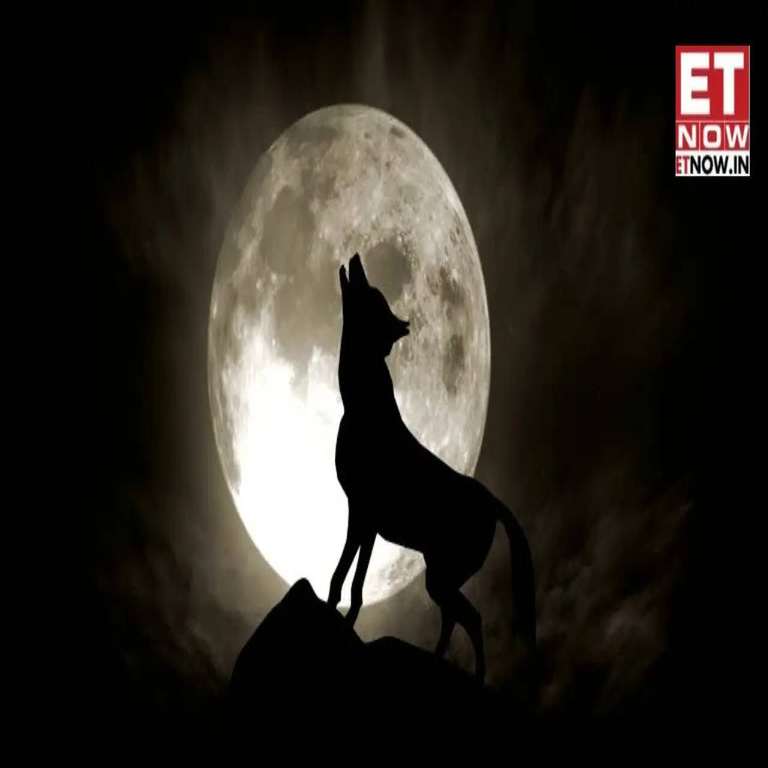
Traditionally, January's full moon is referred to as the Wolf Moon. This name originates from North American folklore, which suggests that wolves howled more frequently in mid-winter, reflecting the harsh conditions of the season. While the name carries cultural significance, the timing of the full moon in winter also offers unique visual opportunities for observers.
The Wolf Supermoon will be particularly impressive at moonrise, a time when the moon is low on the horizon and often appears larger due to an optical illusion known as the 'moon illusion.' This effect occurs when the moon is compared to objects on the ground, creating a perception of increased size. On January 3, viewers in various locations will witness the moon rising shortly after sunset, providing optimal conditions for observation.
In cities like New York and Los Angeles, sunset will occur just before or around the time of moonrise, allowing for dramatic visual effects as the moon emerges against the twilight sky. Open areas, such as beaches or hilltops, will provide the best vantage points for viewing, as they offer a clear eastern horizon. Even without equipment, the Wolf Supermoon will be visible to the naked eye, though binoculars can enhance the viewing experience by revealing surface details.
Additionally, the January 2026 Wolf Moon will have a higher position in the sky compared to other full moons throughout the year. This higher elevation is a result of the moon's orbit and its position relative to Earth at that time. While this aspect may affect visibility and the angle of observation, it does not imply any significant change in the moon's physical properties.
Despite the excitement surrounding supermoons, it is essential to clarify what they do not represent. A supermoon does not indicate any abnormal activity or phenomena on the moon itself; instead, it is a natural occurrence based on the moon's elliptical orbit around Earth. The visual effects experienced during a supermoon are primarily due to perspective and atmospheric conditions.
As with any celestial event, factors such as weather can significantly influence visibility. Observers should be aware that cloud cover or adverse weather conditions could hinder the experience of witnessing the Wolf Supermoon. Thus, while the event holds visual appeal, it is essential to approach the experience with realistic expectations regarding weather and viewing conditions.
Editor's note: This article was independently written by the Scoopliner Editorial Team using publicly available information.