Starlink Satellite Suffers Anomaly: Elon Musk's Spacecraft Encounters Trouble
हिंदी में सुनें
Listen to this article in Hindi
A Starlink satellite experienced a propulsion issue, leading to a descent and fragmentation. Despite the incident, it poses no risk to Earth or the ISS.
An unexpected event occurred with one of Elon Musk's Starlink satellites on December 17, 2025, highlighting the challenges of maintaining a massive constellation in orbit. Satellite 35956, which had been orbiting at a stable altitude of 418 kilometers, abruptly ceased communication.
SpaceX quickly investigated the issue. Controllers on the ground determined that a propulsion tank had vented gas, triggering a loss of altitude. This forceful expulsion altered the satellite's trajectory, reducing its orbital height by about 4 kilometers. Additionally, some small pieces of debris were released into space as a result of the event.
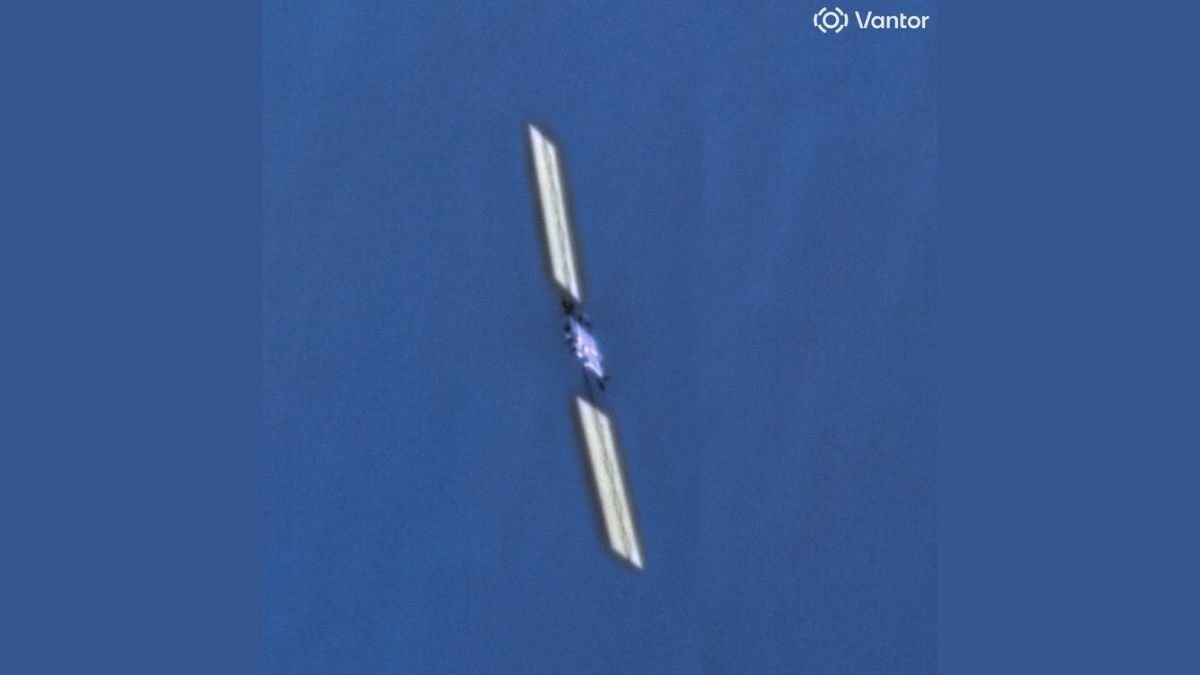
Despite the satellite's uncontrolled tumbling, it remained largely intact. The spatial intelligence firm Vantor, based in Westminster, captured high-resolution images of the troubled spacecraft over Alaska using their WorldView-3 satellite. These photos, taken from a distance of 241 kilometers, offered a clear view of the satellite's condition, demonstrating advanced space surveillance capabilities.
Independent observers monitoring the situation noted the presence of multiple objects in close proximity to the satellite. This observation suggests that an internal event, rather than a collision with another object, likely caused the fragmentation. Such incidents are infrequent within the Starlink fleet, underscoring the inherent risks of operating in the orbital environment.
Experts have suggested that the venting may have been caused by a pressure buildup or a malfunctioning valve. What began as a routine orbit quickly turned into an emergency descent.
**No Threat Posed to Space Station or Earth**
SpaceX reassured the public that the tumbling satellite presents no danger to the International Space Station (ISS). Its trajectory remains well below the ISS's orbit. Furthermore, there is no cause for alarm on Earth. The satellite's low orbit ensures that atmospheric drag will cause it to re-enter the atmosphere and burn up within a matter of weeks. Both the satellite and the debris are expected to disintegrate in a safe and visually dramatic fashion.
This built-in safety mechanism is a key feature of the Starlink design. Satellites are intentionally placed in low Earth orbit so that any failures result in a rapid and clean removal, reducing the risk of long-term space debris. This proactive approach contrasts with higher-altitude satellites, which can remain in orbit for decades, potentially creating persistent debris fields.
**Implications for the Starlink Constellation**
With over 9,000 satellites, Starlink is the largest satellite constellation in operation, providing internet access to remote locations worldwide. Events like this underscore the challenges inherent in operating in space, where satellites are constantly exposed to radiation, micrometeoroids, and the possibility of internal malfunctions.
To enhance safety, SpaceX is collaborating with NASA and the US Space Force for tracking purposes. Engineers are currently investigating the root cause of the anomaly, focusing on the possibility of pressure buildup. Software fixes are also being implemented across the entire Starlink fleet.
These incidents drive improvements in safety protocols. The Starlink network continues to expand, connecting millions of users and demonstrating resilience in Elon Musk's effort to achieve global coverage. The loss of a single satellite will not significantly impact the constellation's overall performance. As the number of objects in orbit continues to increase, these experiences contribute to the network's reliability, benefiting users from rural communities to disaster relief efforts.