Shifting Cloud Patterns Emerge as Key Driver of Accelerated Global Warming
हिंदी में सुनें
Listen to this article in Hindi
New research suggests that changes in cloud cover, rather than solely air pollution reduction, are a primary driver of the increasing rate of global warming. An analysis.
Earth's temperature is rising, and the pace appears to be quickening. While efforts to curb air pollution are undoubtedly beneficial for human health, a new study published in *Science Advances* points to a potentially more significant, and less intuitive, driver of this accelerated warming: changes in cloud cover. The research suggests that alterations in cloud reflectivity are playing a larger role in trapping solar energy than previously understood, surpassing the impact of aerosol reductions in recent decades. This nuanced understanding is crucial for refining climate models and predicting future warming trends.
The core of the issue lies in what scientists call Earth's energy imbalance. This refers to the difference between the amount of solar energy our planet absorbs and the amount it radiates back into space. A positive imbalance means the Earth is absorbing more energy than it releases, leading to a gradual warming. For nearly two decades, researchers have been meticulously tracking this imbalance, seeking to pinpoint the factors responsible for its increasing magnitude.
Traditionally, air pollution, specifically aerosols – tiny particles released from sources like factories, vehicles, and volcanic eruptions – have been considered a major player. Aerosols can influence cloud formation, affecting their brightness and reflectivity. Brighter clouds bounce more sunlight back into space, creating a cooling effect. Therefore, it was assumed that reductions in air pollution, while improving air quality, could inadvertently contribute to warming by reducing this reflective cloud cover.
That said, the reality is a bit more complicated. the University of Miami researchers' analysis of extensive satellite data and advanced climate models reveals a more complex picture. Their findings indicate that the impact of aerosols on Earth's overall energy balance has been relatively minimal in recent decades. This is because the effects of aerosols vary significantly between the Northern and Southern Hemispheres.
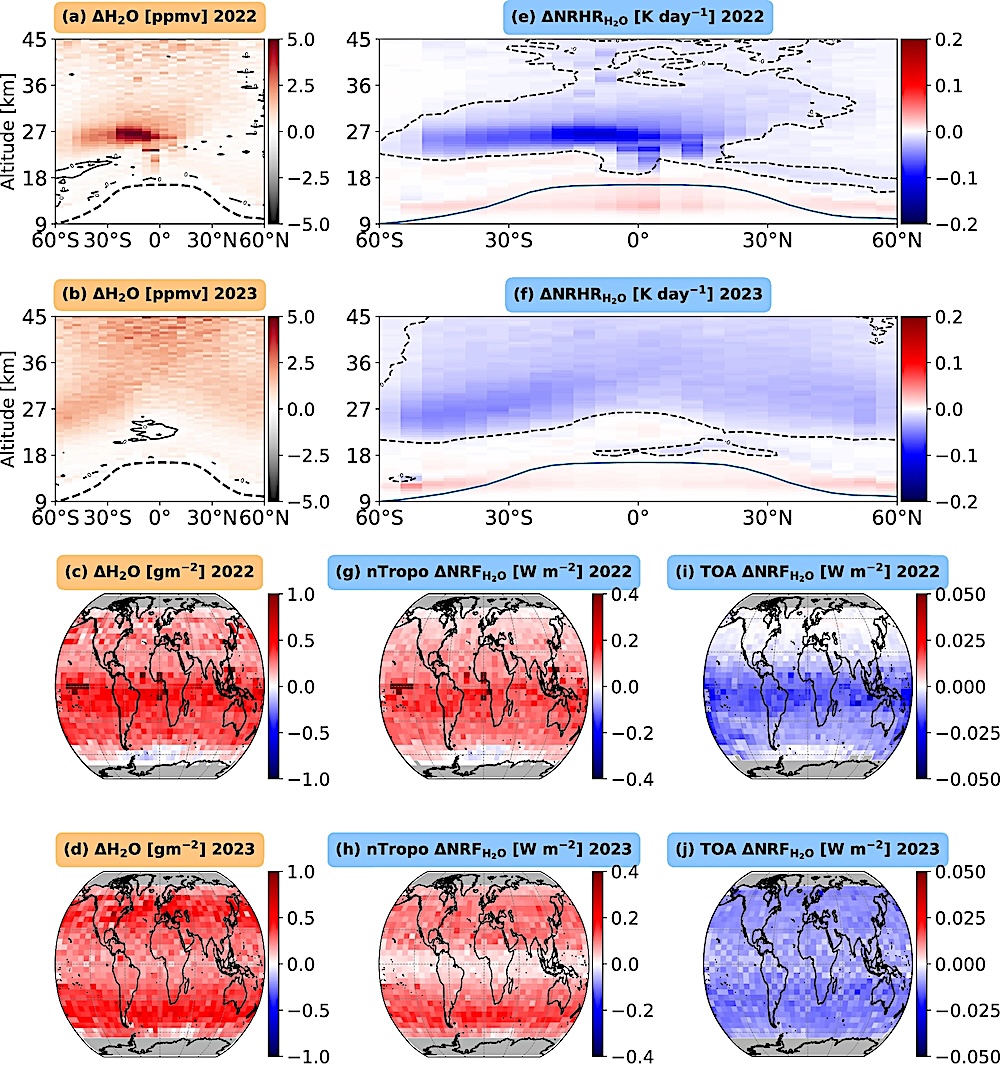
In the Northern Hemisphere, stricter air quality regulations have led to a decrease in aerosol concentrations. This means fewer particles are available to form reflective clouds, allowing more sunlight to reach the surface and contributing to regional warming. Conversely, the Southern Hemisphere has experienced large-scale natural events, such as the devastating Australian bushfires of 2019-2020 and the 2022 Tonga volcanic eruption. These events injected massive amounts of aerosols into the atmosphere, increasing cloud reflectivity and exerting a cooling influence.
When these opposing hemispheric trends are considered on a global scale, the researchers found that the net effect of aerosols on Earth's energy imbalance has been relatively small. The study emphasizes that the primary driver of the increasing energy imbalance is a reduction in the amount of sunlight reflected by the Earth, not a decrease in the amount of heat escaping into space. Between 2003 and 2023, the Earth gained heat at a rate of approximately half a watt per square meter every ten years, a substantial and concerning trend. Understanding the intricacies of [climate modeling] is crucial in interpreting these complex interactions.
While this study sheds light on the role of clouds, it also highlights the limitations of current knowledge. The precise mechanisms driving changes in cloud cover remain an area of active research. Factors such as rising temperatures, altered atmospheric circulation patterns, and variations in humidity could all be contributing to these shifts. Further investigation is needed to fully understand the complex interplay of these variables. [Understanding the basics of atmospheric science] is essential for grasping the complexities involved. Furthermore, natural climate cycles could also play a role in modulating cloud behavior and influencing the Earth's energy balance.
This research doesn't diminish the importance of reducing air pollution. Cleaner air is vital for public health and environmental well-being. That said, the reality is a bit more complicated. it underscores the need for a more holistic approach to climate change mitigation. Focusing solely on aerosol reductions may not be sufficient to address the accelerating rate of global warming. Greater attention must be paid to understanding and predicting changes in cloud cover, as well as accounting for natural climate variability. Earth's energy imbalance serves as a critical indicator of the planet's warming trajectory, and a deeper understanding of its drivers is essential for making informed decisions about our climate future. The long-term effects of [prior research on climate change] are also important to consider.
Editor’s note: This article was independently written by the Scoopliner Editorial Team using publicly available information.