Earth in danger? Interstellar comet 3I/ATLAS set to come close to the planet
हिंदी में सुनें
Listen to this article in Hindi
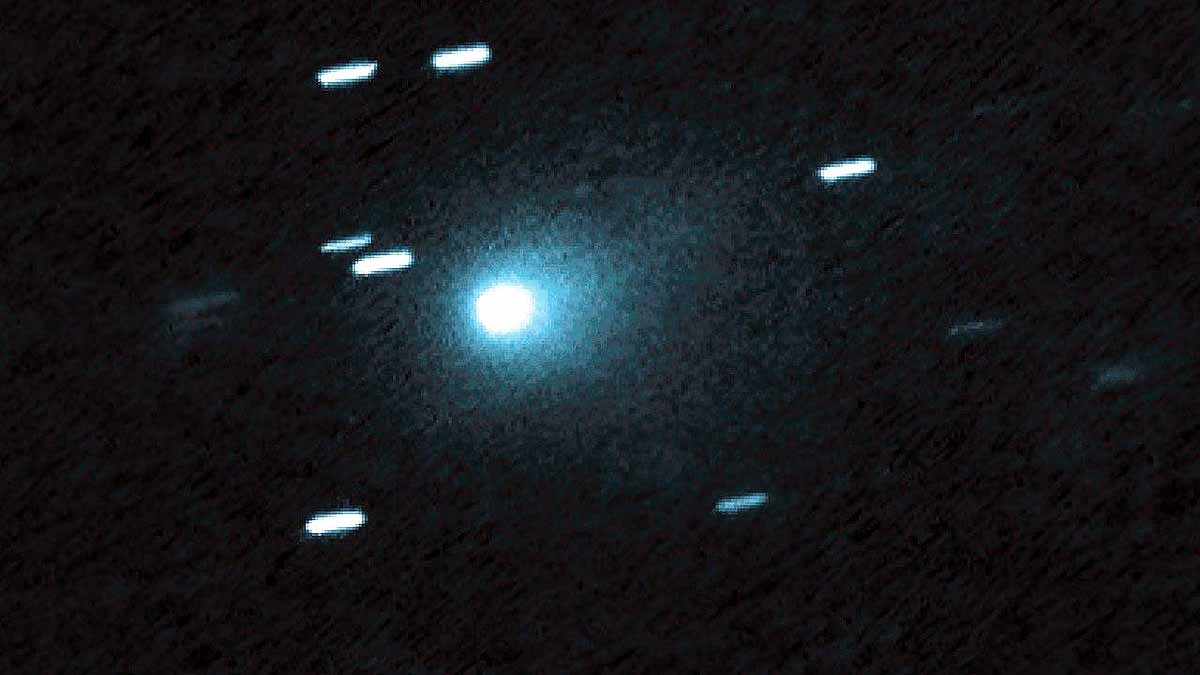
Comet 3I/ATLAS, an interstellar object, will soon make its closest approach to Earth, offering scientists a unique opportunity to study its composition.
A rare visitor from beyond our solar system, an interstellar comet named 3I/ATLAS, is expected to pass relatively close to Earth this month. This event provides astronomers with a valuable opportunity to study material originating from another star system.
Designated 3I/ATLAS, this comet is only the third interstellar object ever confirmed. The previous two were 1I/‘Oumuamua and 2I/Borisov.
Since its discovery earlier this year, 3I/ATLAS has garnered significant attention globally. Despite rumors regarding its possible alien origins, NASA has refuted claims suggesting the comet is an alien spacecraft.
Discovery and Trajectory
The Asteroid Terrestrial-impact Last Alert System (ATLAS) survey telescope in Chile discovered 3I/ATLAS on July 1, 2025. The telescope identified the comet moving at roughly 130,000 mph along a fast, hyperbolic path, indicating that the Sun's gravity cannot bind it. This trajectory confirms that 3I/ATLAS is an interstellar object making a one-time pass through our inner solar system before returning to deep space.
The comet will make its closest approach to Earth on December 19, at a distance of approximately 1.8 astronomical units (roughly 270 million kilometers). This distance is well beyond the orbit of Mars, so there is no threat of impact.
Visibility
While the comet's approach has generated excitement among scientists, it will not be visible to the naked eye. After passing around the Sun in late 2025, 3I/ATLAS has emerged as a faint smudge in the dawn and evening sky. It can only be observed by experienced stargazers using powerful amateur telescopes and under dark sky conditions.
Throughout December, the comet is expected to dim to around magnitude 12 or fainter as it travels through the constellations Virgo and Leo. This level of brightness is too faint to be seen with binoculars under most conditions.
Scientific Opportunity
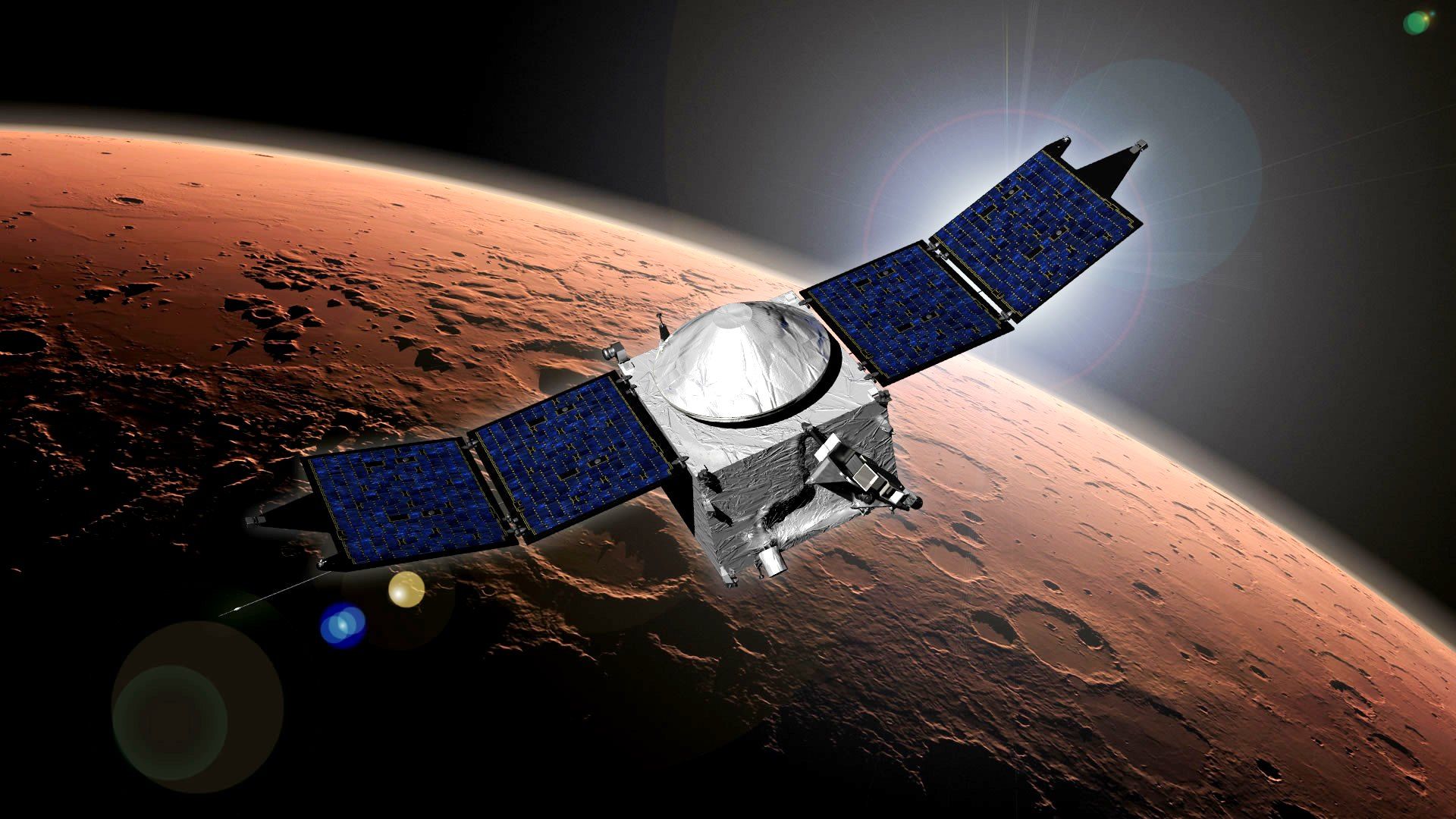
Major observatories and space telescopes, including the Hubble and James Webb telescopes, are focusing their instruments on 3I/ATLAS to analyze its composition, including its dust and gas. According to NASA, missions to Mars and Jupiter, along with the Europa Clipper spacecraft, will also attempt to gather data as the comet passes their orbits. This coordinated effort will transform the solar system into a vast, multi-point observation network.
By comparing 3I/ATLAS to 2I/Borisov and typical solar system comets, scientists hope to gain insights into the differences between planet-forming disks around other stars and our own. These insights could provide lasting knowledge, far outliving the brief passage of this interstellar visitor through our cosmic neighborhood.