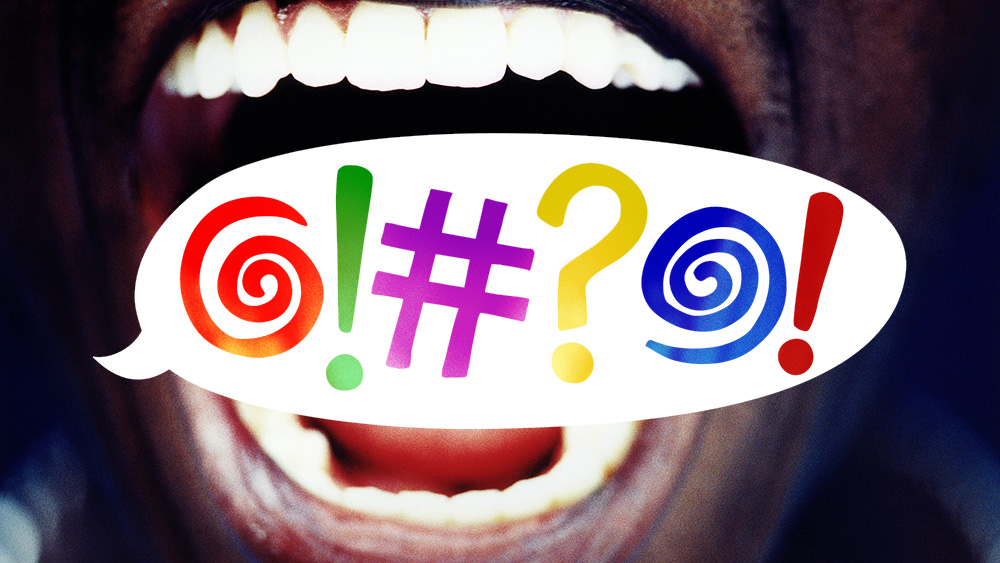
Does swearing make you stronger? Science says yes.
हिंदी में सुनें
Listen to this article in Hindi
New research confirms swearing can boost physical strength and endurance. Discover the science behind the 'hypoalgesic effect' and its benefits.
Many people instinctively swear when they experience pain, like stubbing a toe. Evidence suggests this might actually help. Scientists are increasingly finding that swearing can reduce pain and even enhance physical performance, according to a study in *American Psychologist*.
Richard Stephens, a psychologist at Keele University and co-author of the study, initially became curious about the potential benefits of swearing after observing his wife's colorful language during childbirth. This led him to investigate whether swearing could truly provide pain relief. His earlier work includes a 2009 study that earned an Ig Nobel Peace Prize. Stephens told Scientific American that swearing is a common response to pain, suggesting an underlying reason for the behavior.
In that 2009 study, college students were asked to submerge their hands in ice water. Some participants repeated a swear word of their choosing, while others repeated a neutral word. The results showed that those who swore reported less pain and were able to keep their hands in the ice water for approximately 40 seconds longer. Some experts believe this could be a basic, cathartic reflex.
A 2011 study by the same team indicated that the pain-relieving effect of swearing is more pronounced in individuals who don't swear frequently, possibly because they associate stronger emotions with those words. The study also noted an increase in heart rate during swearing. That said, the reality is a bit more complicated. some researchers propose that swearing might simply serve as a distraction from pain, rather than directly reducing it.
To investigate further, Stephens' team conducted another study in 2020, again using ice water. Participants were asked to repeat either the F-word or the made-up words "fouch" and "twizpipe." Interestingly, only the actual swear word had any impact on pain. The team also measured pain threshold, finding that those who repeated the F-word were able to withstand the pain of the ice water longer before reporting discomfort. The made-up words had no effect.
Stephens' recent work explores how swearing might act as a form of disinhibition, which can have benefits, building on previous research from 2018 and 2022 showing that swearing can improve strength during a chair push-up task. According to Stephens, people often unconsciously limit their full strength. Swearing, he suggests, helps overcome social constraints, allowing individuals to push themselves harder. It can be a readily accessible way to feel more focused, confident, less distracted, and more willing to "go for it."
In the latest study, participants chose a swear word they would typically use when hurt and a neutral word to describe an object. They then performed a chair push-up exercise, holding themselves up while seated and repeating either the swear word or the neutral word every two seconds. Afterward, they completed a questionnaire about their mental state during the exercise.
The results showed that participants who swore were able to sustain the exercise for a longer duration compared to those who used a neutral word, confirming earlier findings. Furthermore, the swearing group reported feeling more in a state of "flow," more distracted, and more self-confident, suggesting increased disinhibition.
Stephens concludes that the commonality of swearing may be because it's a calorie-neutral, drug-free, low-cost, and easily accessible tool for boosting performance when needed. His team plans to investigate the impact of swearing on public speaking and romantic interactions, situations where hesitation and lack of confidence are common, potentially leading people to hold back.
The DOI for the study in *American Psychologist*, 2025, is 10.1037/amp0001650.