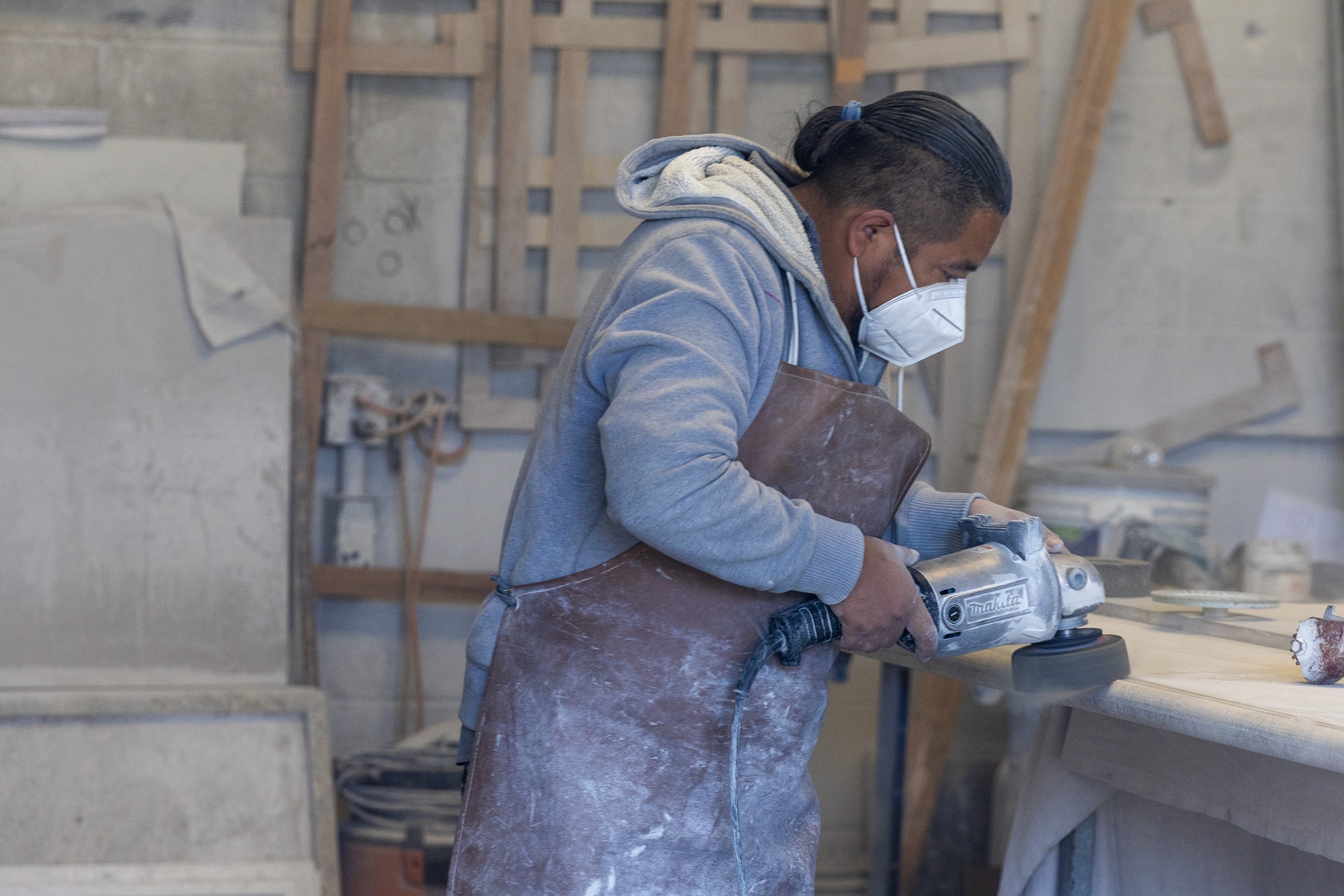
Doctors Petition California to Ban Countertop Material Linked to Deadly Disease
हिंदी में सुनें
Listen to this article in Hindi
California is urged to ban engineered stone after a medical association links it to silicosis, a deadly lung disease affecting stoneworkers. Learn more.
California is facing increasing calls to ban a popular countertop material following a petition from a medical association. The group is urging the state to prohibit engineered stone due to its connection to silicosis, an aggressive and often fatal lung disease affecting stoneworkers.
The Western Occupational & Environmental Medical Association (WOEMA), representing over 600 occupational safety experts, sent a letter to regulators on December 12, stating that engineered stone is too dangerous to fabricate and install safely. They argue that current safety measures are insufficient to protect workers. Their requested ban would apply to engineered stone containing more than 1% crystalline silica, mirroring a policy enacted in Australia, which became the first country to ban the material after a similar health crisis.
While California has some of the strictest regulations in the U.S. regarding silica dust exposure, WOEMA contends that many countertop fabrication shops lack the resources to fully comply. This puts thousands of stonecutters at risk of developing silicosis. The dust is generated during the cutting, polishing, and grinding of engineered stone used for countertops, vanities, and other surfaces.
The Occupational Safety and Health Standards Board has six months to review the petition, but declined to comment on WOEMA’s letter. The proposal is expected to meet resistance from manufacturers, distributors, and fabricators of engineered stone, also known as quartz or artificial stone. This material represents a growing, multi-billion dollar market in the U.S., with demand projected to increase in California due to rebuilding efforts after the January 2025 fires in Los Angeles, where over half of the state's silicosis cases are located.
An alternative to a ban, supported by the International Surface Fabricators Association (ISFA), is a licensing program. Under this system, only certified shops that adhere to regulations would be allowed to handle artificial stone. Laurie Weber, director of ISFA, argues that a ban is not the answer, stating that the problem lies in employers ignoring existing laws and a lack of enforcement. Weber also questioned WOEMA's determination that engineered stone cannot be fabricated safely even when shops comply with current safety standards. According to Weber, more research is needed to understand the potential economic impact on small and mid-sized fabrication businesses if they were forced to stop working with their primary material.
Governor Gavin Newsom recently signed a law addressing silicosis through education and enforcement, although a certification component was removed from the final version. Since 2019, approximately 450 silicosis cases have been confirmed among California stoneworkers, with projections estimating the number could rise to 1,500 within the next decade. The California Department of Public Health reports that most of those affected are Latino men, many of whom are immigrants without permanent legal status who were unaware of the risks associated with working with crystalline silica products. Tragically, 25 stoneworkers have died, and dozens have required lung transplants.
Engineered stone can contain over 90% crystalline silica, a significantly higher percentage than natural stones like marble. Its popularity stems from its stain resistance, attractive designs, and often lower cost compared to natural stone. That said, the reality is a bit more complicated. many consumers are unaware of the dangers posed by artificial stone dust to the workers who fabricate and install these products.
Scientific evidence has increasingly demonstrated the toxicity of silica dust, with even small amounts of exposure capable of causing illness. The airborne particles can bypass filter masks and become lodged in the lungs, leading to progressive scarring and injury, even in workers as young as their 20s.
Silicosis cases linked to engineered stone have also been reported in other states and countries, including the UK, where medical experts are urging a ban. James Nevin, an attorney representing hundreds of sick workers, noted that his firm's clients are located in 16 states beyond California. California currently prohibits dry cutting of engineered stone and mandates wet methods and other safety measures. That said, the reality is a bit more complicated. Cal/OSHA inspections have revealed widespread violations of these rules, which are considered too expensive and difficult for many employers to implement. California has approximately 4,600 countertop fabrication workers.
Major manufacturers like Caesarstone and Cosentino have faced lawsuits related to silica-related injuries. While both companies have developed silica-free products for the Australian market, they continue to sell high-silica engineered stone in the U.S.

:max_bytes(150000):strip_icc()/What-Happens-to-Your-Blood-Sugar-When-You-Eat-Bananas-daf3e534cdb247c2bc9c3d1f396ece17.jpg)


:max_bytes(150000):strip_icc()/healthiest-sandwich-bread-GettyImages-183953960-1a3aeb41759042849186f11e6a279510.jpg)
:max_bytes(150000):strip_icc()/AR-Coca-cola-2x1yellow-bb178bdf660d425bb0af091a138a1cc0.jpg)