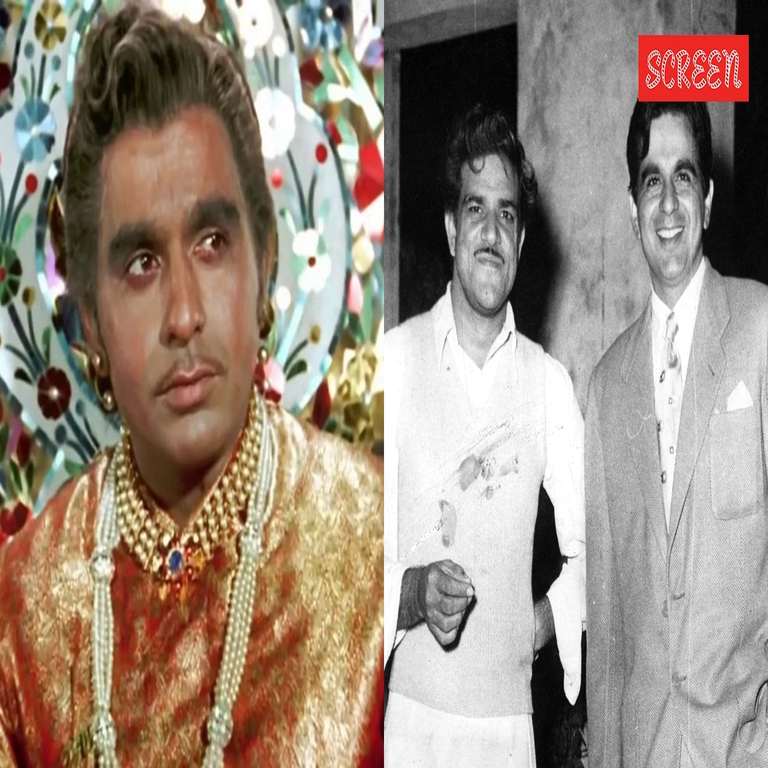
The Complex Ties of Love and Rivalry in the Making of Mughal-e-Azam
हिंदी में सुनें
Listen to this article in Hindi
Dilip Kumar's complex relationships during Mughal-e-Azam reflect the intricate dynamics of fame, love, and rivalry in Bollywood.
The story of Dilip Kumar and K Asif during the production of Mughal-e-Azam is a fascinating lens through which to examine the intricate web of personal relationships and professional rivalries in the Bollywood of the late 20th century. Dilip Kumar, who had already established himself as a leading actor with performances in films like Devdas and Madhumati, was initially rejected by K Asif for the role of Prince Salim due to his youthful appearance. That said, the reality is a bit more complicated. as Kumar’s career progressed and he became a prominent figure in the industry, Asif reconsidered and ultimately cast him in what would become one of his most iconic roles.
Kumar's portrayal of Salim, a character who defies his royal lineage for love, resonated deeply with audiences and critics alike. This performance not only solidified his status as a cinematic legend but also played a pivotal role in the evolution of Bollywood storytelling, where themes of love and rebellion took center stage. The film’s grand scale and emotional depth positioned it as a cultural milestone, representing the rich tapestry of Indian history and the human experience.
That said, the reality is a bit more complicated. the relationship between Kumar and Asif took a tumultuous turn with the revelation of Asif's romantic involvement with Kumar’s sister, Akhtar. This elopement, particularly given Asif's marital history, created a significant rift between the two men. Kumar's reaction—cursing Asif and disavowing their friendship—highlights the personal stakes involved in artistic collaborations. Such incidents are not uncommon in the entertainment industry, where personal and professional lines often blur, leading to conflict and estrangement.
This incident underscores the broader dynamics of power and vulnerability within the film industry. Asif, a twice-married man significantly older than Akhtar, was in a position to disrupt the familial bonds that had previously supported Kumar. The tension between personal loyalty and professional ambition is a recurring theme in Bollywood, where interpersonal relationships often inform career trajectories.
Moreover, the historical context of Mughal-e-Azam cannot be overlooked. Released in 1960, the film was a product of its time, set against a backdrop of changing social norms regarding marriage, gender roles, and individual desire. The film's narrative, focused on love transcending social hierarchies, mirrored the societal shifts occurring in India during this period. The emotional weight of Kumar’s character and the film’s production intricacies offer a glimpse into the larger cultural currents shaping Indian cinema.
So where does that leave things? the relationships surrounding the making of Mughal-e-Azam serve as a microcosm of the Bollywood industry, reflecting broader cultural themes and the complexities of human emotion. The fallout between Kumar and Asif illustrates how personal decisions can have far-reaching implications, not only for individual careers but also for the narratives that shape the art itself. Such stories are vital for understanding the evolution of the entertainment industry and its ongoing impact on society.
Editor's note: This article was independently written by the Scoopliner Editorial Team using publicly available information.