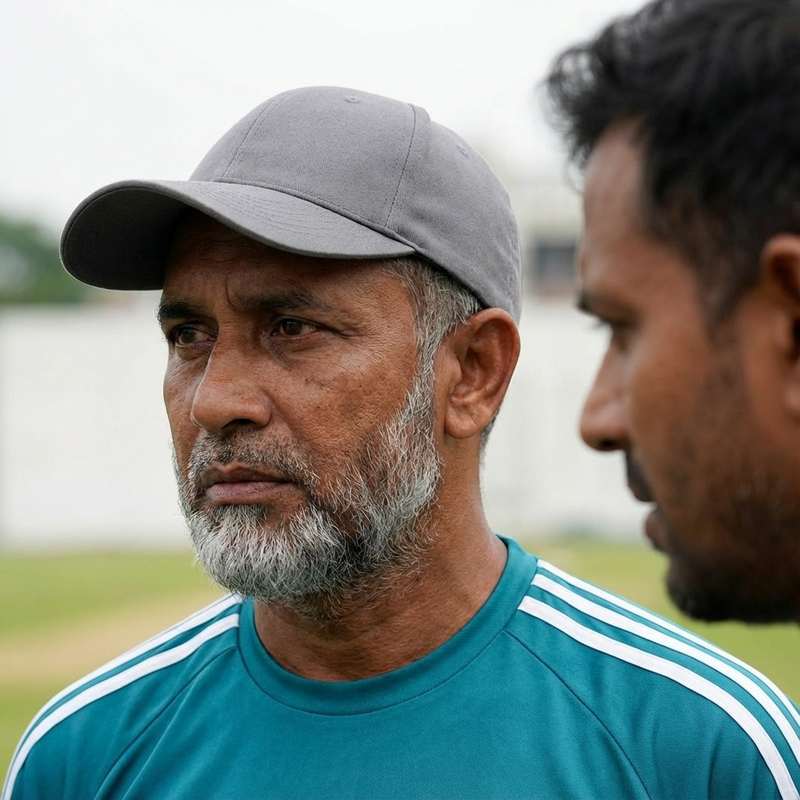
Mahbub Ali Zaki's Death Casts Shadow Over Bangladesh Cricket and Pace Bowling Development
हिंदी में सुनें
Listen to this article in Hindi
The sudden death of Dhaka Capitals assistant coach Mahbub Ali Zaki highlights his significant contribution to Bangladesh's pace bowling development and the BPL's emotional toll.
The Bangladesh Premier League (BPL) has been marked by tragedy following the sudden death of Dhaka Capitals assistant coach Mahbub Ali Zaki. Zaki collapsed at the Sylhet International Cricket Stadium shortly before his team's match against Rajshahi Warriors on Saturday and was later pronounced dead at Al Haramain Hospital. His death has resonated throughout the Bangladesh cricket community, prompting expressions of grief and highlighting his contributions to the sport, particularly in pace bowling development.
Zaki's involvement with the Dhaka Capitals added experience to the team setup. Prior to the incident, team officials confirmed that Zaki had not complained of any health problems, making his sudden collapse unexpected. Players from other BPL teams, including Sylhet Titans, Noakhali Express, and Chattogram Royals, visited the hospital, reflecting the widespread impact of the news within the league.
Beyond his role with the Dhaka Capitals, Zaki had a longstanding career in Bangladesh cricket. He gained prominence for his work with Taskin Ahmed, a key bowler for the national team, when Ahmed's bowling action was under scrutiny during the 2016 T20 World Cup in India. Zaki's expertise was instrumental in helping Ahmed refine his technique, demonstrating Zaki's ability to identify and address technical challenges in pace bowling.
Zaki's career extended beyond coaching at the professional level. As a former fast bowler, he represented Comilla District in the National Cricket Championship and played for Abahani and Dhanmondi in the Dhaka Premier Division Cricket League. Following his playing days, he transitioned to coaching, joining the Bangladesh Cricket Board (BCB) in 2008. His role as a High-Performance coach allowed him to influence the development of numerous pace bowlers across the country.
The BCB acknowledged Zaki's significant contribution to the growth of pace bowling in Bangladesh, emphasizing his dedication to player development. His work focused on nurturing talent at the grassroots level and identifying potential future stars. His contributions at the High Performance level were designed to prepare players for the rigors of international cricket.
Zaki's death underscores the demanding nature of professional sports, both on and off the field. While the physical exertion of players is often highlighted, the stress and pressure experienced by coaches and support staff can also have significant health implications. The incident serves as a reminder of the importance of comprehensive health monitoring and support systems within professional sports organizations. The BPL season will proceed, but the shadow of Zaki's passing will undoubtedly be felt throughout the tournament.
Editor’s note: This article was independently written by the Scoopliner Editorial Team using publicly available information.