December 2025 Cold Moon Supermoon: Date And Time To See Year's Last Full Moon
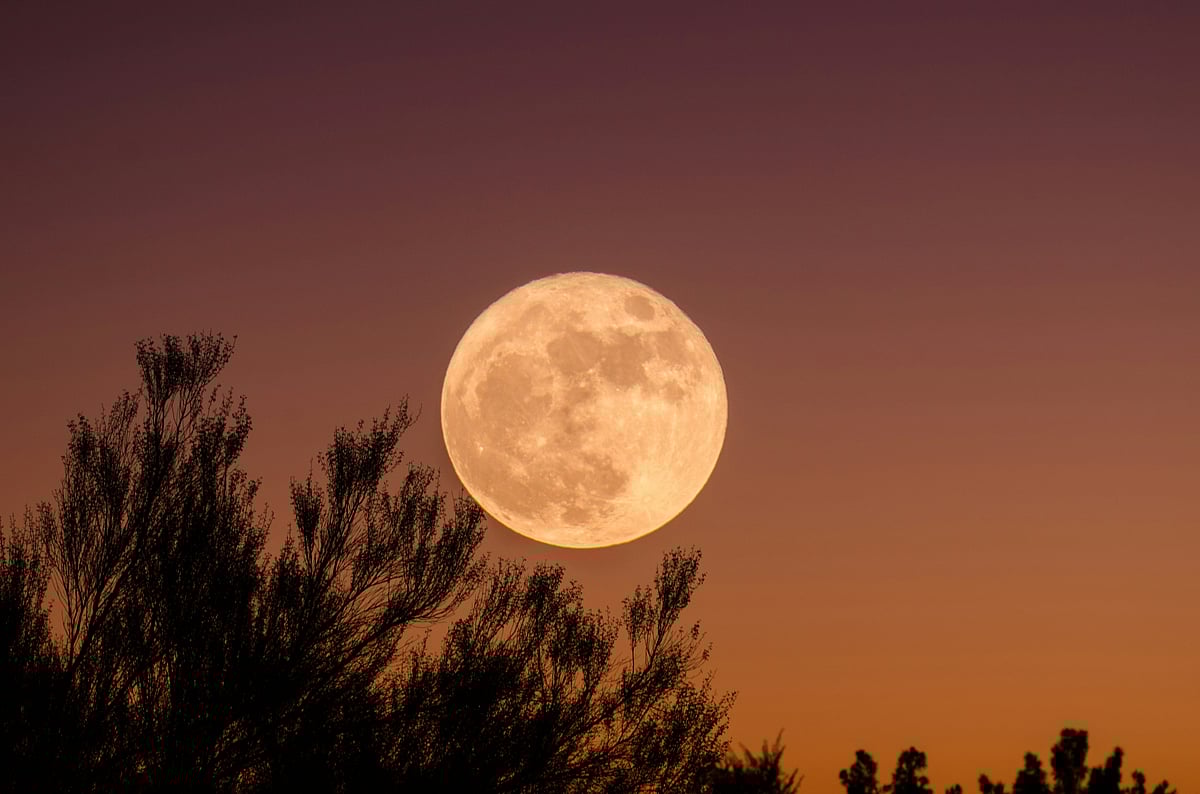
The final full moon of 2025, popularly known as the Cold Moon, will grace the sky this week on the early hours of Dec. 5, 2025. This is no ordinary full moon, but it is also a supermoon, appearing larger and brighter than usual as it reaches its closest point to Earth in its elliptical orbit.
The final full moon of 2025, popularly known as the Cold Moon, will grace the sky this week on the early hours of Dec. 5, 2025.
This is no ordinary full moon, but it is also a supermoon, appearing larger and brighter than usual as it reaches its closest point to Earth in its elliptical orbit.
This month’s celestial event occurs as the moon comes within 90% of its closest approach to Earth (perigee), causing it to shine up to 30% brighter and look significantly larger compared to the smallest full moon of the year.
This full moon also coincides with the conclusion of an 18.6-year ‘Major Lunar Standstill’ cycle, a rare period when the moon’s orbital tilt reaches its maximum. During this phase, the lunar disk rises farther north on the horizon and ascends higher in the autumn sky than typically observed, as reported by Hindustan Times.
The Cold Moon reaches its fullest on Dec. 4, at around 6:15 p.m. EST which is 4:45 a.m. IST on Dec. 5.
However, it will look nearly full from Dec. 3 to 5, offering multiple viewing opportunities. In India, the moonrise after sunset on Dec. 4 provides the best position, especially near the eastern horizon where atmospheric effects enhance its "moon illusion."
This marks the third consecutive supermoon of 2025, following earlier ones, and caps a year with notable lunar events including two blood moons.