Iran's Protests: Economic Strain and Geopolitical Implications
हिंदी में सुनें
Listen to this article in Hindi
Exploring the implications of Iran's recent protests spurred by economic distress and their potential effects on regional stability.
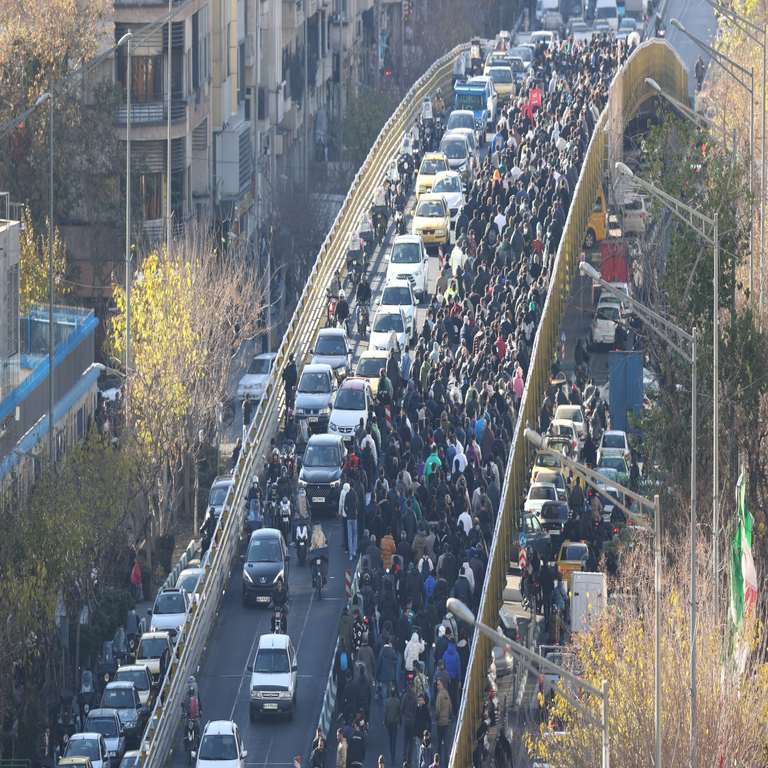
The current protests in Iran represent a significant moment in the intersection of domestic unrest and geopolitical stability. As demonstrations spread from urban centers to rural provinces, they signal mounting dissatisfaction with the Iranian government amid a backdrop of economic hardship. The discontent is particularly relevant in a region already fraught with tensions, where the balance of power is delicately maintained, and shifts can have far-reaching consequences.
The economic situation in Iran, exacerbated by international sanctions, mismanagement, and the impact of global inflationary pressures, has reached a critical juncture. High inflation and unemployment rates have led to a decline in living standards, creating fertile ground for social unrest. The protests have not only emerged from a disillusionment with economic conditions but also reflect deeper societal grievances, including demands for greater political freedoms and human rights.
This resurgence of protests is noteworthy as it marks the largest civil unrest since the protests following the death of Mahsa Amini in 2022. While the current demonstrations have not yet reached the same intensity or nationwide scope, their expansion into rural regions indicates a broader dissatisfaction that could pose a challenge to the Iranian regime. The government's response, as evidenced by reported fatalities among both protesters and security forces, suggests a potential escalation in state repression, raising concerns about further violence and instability.
Regionally, the implications of Iran's protests extend beyond its borders. Iran plays a pivotal role in Middle Eastern geopolitics, particularly concerning its relationships with neighboring countries and its involvement in proxy conflicts. Destabilization within Iran could embolden opposition groups both domestically and in the region, leading to shifts in alliances and increased tensions with countries like Saudi Arabia and Israel, who view Iran as a strategic adversary.
The protests also come at a time when the geopolitical landscape is witnessing significant realignments. The normalization of relations between Iran and certain Arab states, after years of estrangement, has created a complex web of interactions that could be affected by internal strife. Additionally, the evolving relations between Iran, China, and Russia may be tested as the Iranian government navigates its internal challenges while trying to maintain its regional influence.
That said, the reality is a bit more complicated. the response of the Iranian government to these protests may also reveal its vulnerabilities. A heavy-handed approach to quelling dissent could alienate segments of the population further and spur a cycle of unrest. Conversely, any attempts to address economic grievances could be seen as a capitulation, threatening the regime's authority and cohesion.
Moreover, the international community's response to the unrest will also play a crucial role. The potential for external influence, whether through sanctions or diplomatic pressures, may either exacerbate the situation or contribute to a stabilization of conditions. The West's historical engagement with Iran, marked by sanctions and negotiations, adds another layer of complexity to how the protests could evolve.
So where does that leave things? the protests in Iran highlight the intersection of domestic economic challenges and broader geopolitical dynamics. Their trajectory over the coming weeks will likely impact not only Iran's internal stability but also its regional relationships and the overall balance of power in the Middle East. Monitoring these developments will be critical for understanding the future of Iran and its implications on global affairs.
Editor's note: This article was independently written by the Scoopliner Editorial Team using publicly available information.