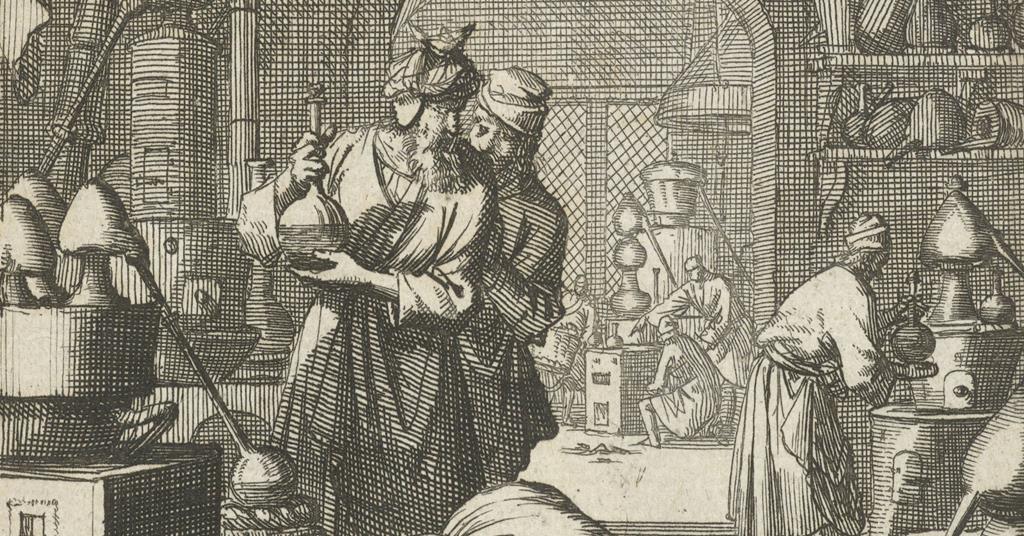
The Tortuous Path from Alchemy to Chemistry: More Evolution Than Revolution
हिंदी में सुनें
Listen to this article in Hindi
Explore the complex evolution from alchemy to modern chemistry, revealing a gradual shift marked by practical application and theoretical refinement.
The story of chemistry's birth is often presented as a clean break from its mystical predecessor, alchemy. Popular narratives portray figures like Robert Boyle as champions of modern scientific thought, liberating the field from the clutches of gold-seeking alchemists. That said, the reality is a bit more complicated. a closer look reveals a far more nuanced and gradual transformation, a process of refinement and re-evaluation rather than a sudden revolution.
Alchemy, with its roots stretching back centuries, sought to understand the fundamental nature of matter and its transformations. While often associated with the elusive quest for the philosopher's stone and the transmutation of base metals into gold, it also encompassed practical investigations into medicines, dyes, and metallurgical processes. The idea of transmutation, altering one substance into another, was central.
This contrasts with the later development of chemistry, which placed emphasis on identifying fundamental elements and understanding how they combine to form compounds. Antoine Lavoisier's work in the late 18th century, particularly his identification of oxygen and its role in combustion, is often seen as a pivotal moment. Lavoisier's emphasis on precise measurement and quantitative analysis helped solidify chemistry as a distinct scientific discipline. He also clarified the concept of a chemical element, cementing his oxygen theory in France.
That said, the reality is a bit more complicated. the transition wasn't so straightforward. Early figures like Boyle, often hailed as a founder of modern chemistry, were deeply involved in alchemical pursuits. Boyle sought the philosopher's stone and believed in the possibility of transmutation. His work, along with that of Isaac Newton, reveals a blending of alchemical and proto-scientific ideas. They weren't simply rejecting alchemy; they were attempting to refine it, separating useful knowledge from what they saw as superstition or deception. This overlaps with the rise of medicine, which, like chemistry, benefitted from a more rigorous approach to scientific inquiry.
One key element in this transformation was the development of the phlogiston theory. Proposed by Johann Joachim Becher and later refined by Georg Ernst Stahl, this theory attempted to explain combustion and other chemical processes by positing the existence of a substance called phlogiston that was released during burning. While ultimately incorrect, the phlogiston theory proved remarkably fruitful, prompting chemists to investigate the nature of "airs" (gases) and to systematically study chemical reactions. The study of gases became very important during the 18th-century, leading to the discovery of what we now know as carbon dioxide, nitrogen, and hydrogen. The phlogiston theory was wrong, but close enough to right to be fruitful.
Lavoisier's oxygen theory eventually replaced phlogiston, providing a more accurate explanation of combustion and laying the foundation for modern chemical nomenclature. But even after Lavoisier, some scientists continued to believe in alchemy. Figures like James Price and Peter Woulfe, despite facing ridicule from their peers, clung to the belief in transmutation, highlighting the enduring allure of alchemical ideals.
The shift from alchemy to chemistry was therefore not a sudden overthrow but a gradual evolution, driven by a combination of theoretical advancements, practical applications, and a changing worldview. Alchemy provided a foundation of experimental knowledge and a framework for understanding chemical transformations, even if that framework was ultimately flawed. Chemistry built upon this foundation, embracing quantitative methods and a focus on identifying the fundamental building blocks of matter.
While modern science has demonstrated the possibility of transmutation through nuclear reactions, this is a far cry from the alchemical dream of easily transforming base metals into gold. It demonstrates the ongoing evolution of scientific understanding, where old ideas are not simply discarded but are refined, reinterpreted, and ultimately integrated into a more complete picture of the natural world. The history of science demonstrates the importance of understanding how fields of knowledge change over time.
Editor’s note: This article was independently written by the Scoopliner Editorial Team using publicly available information.