Lost Contact with Libyan Jet Highlights Turkey's Delicate Balancing Act in North Africa
हिंदी में सुनें
Listen to this article in Hindi
The disappearance of a Libyan military jet near Ankara underscores the complexities of Turkey's involvement in Libya and the broader risks of regional power struggles.
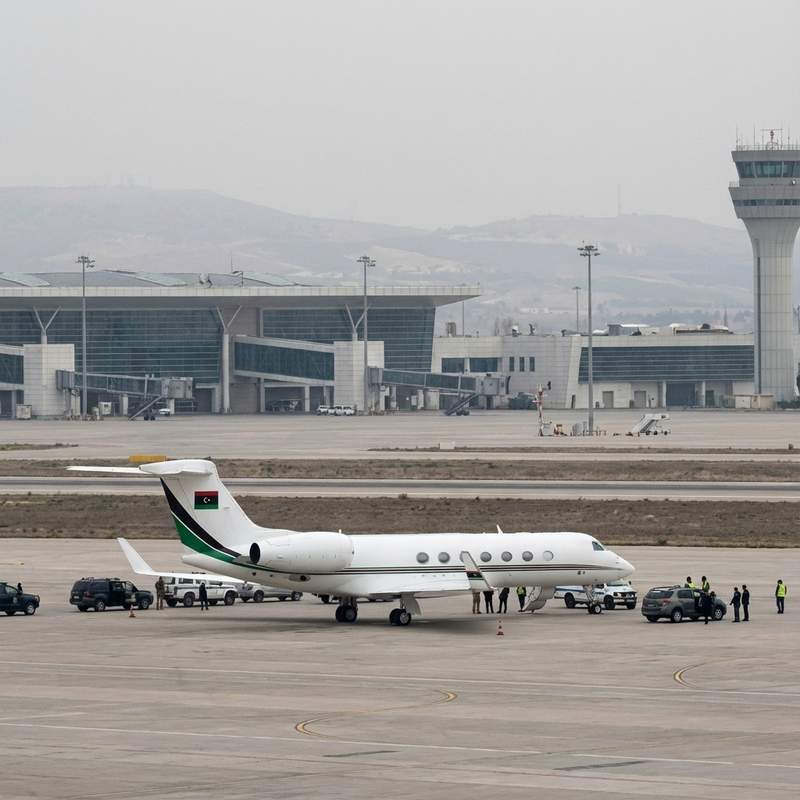
The reported loss of contact with a jet carrying Libya's army chief of staff near Ankara throws into sharp relief Turkey's intricate and often precarious position in the North African nation. While the immediate focus remains on the fate of those on board, the incident serves as a stark reminder of the risks inherent in Ankara's assertive foreign policy, particularly its deep involvement in the Libyan conflict. Turkey's engagement extends beyond simple diplomacy; it includes significant military and economic support for the UN-backed government in Tripoli, a relationship that has both solidified Turkish influence and created new vulnerabilities.
For Turkey, Libya represents a strategic asset. Control over Libyan resources, access to the Mediterranean, and the potential for lucrative reconstruction contracts are all powerful motivators. Ankara's military intervention, beginning in 2019, prevented the collapse of the Tripoli government in the face of an offensive by General Haftar's forces, a move that dramatically altered the power balance within Libya and the wider region. That said, the reality is a bit more complicated. this intervention has also drawn Turkey into a complex web of alliances and rivalries, pitting it against other regional actors like Egypt, Russia, and the UAE, who support opposing factions within Libya.
The incident involving the Libyan jet raises several critical questions about Turkey's security posture and its relationship with its Libyan allies. Firstly, it highlights the inherent risks of operating in a volatile environment where political instability and armed conflict are ongoing realities. While the cause of the lost contact remains unknown, the incident underscores the potential for unforeseen events to disrupt carefully laid plans and expose vulnerabilities. The reported emergency landing request suggests a possible technical malfunction, but the lack of immediate communication afterward inevitably raises concerns about other possibilities, however unlikely.
Secondly, the event underscores the importance of secure communication channels and robust security protocols in high-stakes geopolitical environments. The failure to maintain contact with a high-ranking official like the Libyan army chief of staff, even for a relatively short period, can have significant consequences for trust and coordination between allies. It prompts scrutiny of existing security arrangements and the effectiveness of communication infrastructure, potentially leading to a reassessment of operational procedures. This episode may force Turkey to re-evaluate its intelligence gathering and risk assessment capabilities in the region, ensuring it can mitigate future threats to its interests and personnel.
Furthermore, any potential instability within the Libyan government, even indirectly triggered by such an incident, could have ripple effects across North Africa and potentially into Europe. Libya's fragile political transition, ongoing struggles with armed groups, and its role as a transit point for migrants heading to Europe make it a key area of concern for international security. Further complicating matters, the presence of various foreign actors vying for influence within Libya creates a volatile environment, prone to sudden shifts in power dynamics. Turkey's active role means that any disruption in Libya directly impacts its regional standing and its broader foreign policy objectives. For background, understanding Turkey's foreign policy drivers is crucial.
Looking ahead, Turkey faces a delicate balancing act. It must maintain its support for the Tripoli government while simultaneously seeking to de-escalate tensions with rival factions and external powers. This requires careful diplomacy, a commitment to inclusive political dialogue, and a willingness to compromise on certain objectives. The incident involving the Libyan jet serves as a cautionary tale, reminding Ankara of the inherent risks of its assertive foreign policy and the need for constant vigilance in a turbulent region. The challenges for Turkey in North Africa mirror broader geopolitical shifts impacting India’s global position. Ultimately, the long-term stability of Libya, and Turkey's success in the region, will depend on its ability to navigate these complex dynamics and forge a path toward lasting peace and reconciliation. It is important to remember that even in an interconnected world, topic basics can be lost on the audience.
Editor’s note: This article was independently written by the Scoopliner Editorial Team using publicly available information.