Comet 3I/ATLAS loaded with World War I chemical weapon? Harvard scientist drops bombshell claim as cosmic visitor nears Earth
हिंदी में सुनें
Listen to this article in Hindi
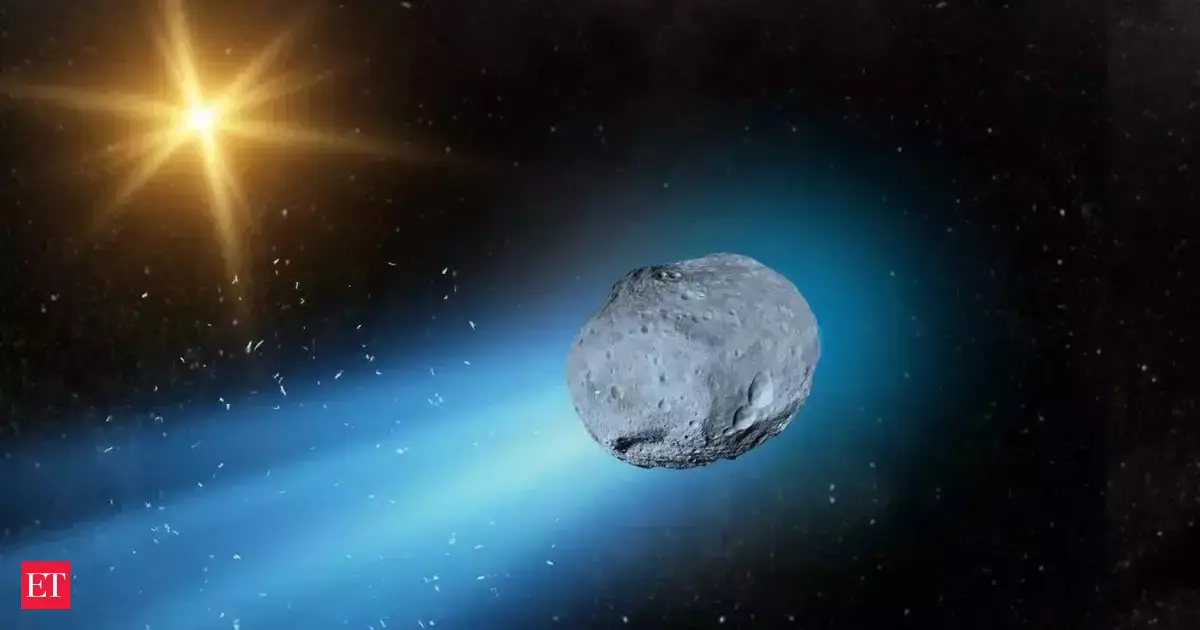
As interstellar comet 3I/ATLAS is approaching Earth, Harvard scientist is debating whether the cosmic visitor is a friendly visitor or ‘serial killer sent to poison us. Researchers have found that comet 3I/ATLAS is both rich in metals and chemically uneven inside and is even loaded with hydrogen sulfide, once used as chemical weapon during the World War I.
Synopsis
As interstellar comet 3I/ATLAS is approaching Earth, Harvard scientist is debating whether the cosmic visitor is a friendly visitor or ‘serial killer’ sent to poison us. Researchers have found that comet 3I/ATLAS is both rich in metals and chemically uneven inside and is even loaded with hydrogen sulfide, once used as chemical weapon during the World War I.
Ever since interstellar comet 3I/ATLAS was first spotted in July, it has intrigued experts and scientists across the globe. The only the third interstellar visitor ever found passing through our Solar system, its strange colour shifts, unusual behaviour, abrupt changes in speed, and the appearance of both a tail and an anti-tail have baffled the astronomers. Harvard professor Avi Loeb told The New York Post that amounts of methanol and hydrogen cyanide were detected in the comet. ATLAS also showed levels of hydrogen sulfide, which was used as a poisonous chemical weapon by France, the United States and Italy in World War I.
This was significant because methanol is “a building block for amino acids and sugars that are used for organic chemistry of life.” “Young stars have a lot of methanol, and that was observed in the past two and a half decades,” Loeb explained.
In a new Medium post titled “Is 3I/ATLAS a Friendly Interstellar Gardener or a Deadly Threat?”, he quipped that going “on a blind date with an interstellar visitor” means you should first study your cosmic companion — to judge whether it might have seeded life on Earth or whether it’s more like “a serial killer spreading poison,” an intergalactic cyanide pill.
ALSO READ: 'Flush, flush, flush down the toilet': US lawmaker fires warning shot on Trump's handling of India ties
Is Comet 3I/ATLAS friend or foe?
With 3I/ATLAS set to come close to Earth in less than two weeks, Harvard professor Avi Loeb is debating whether our interstellar visitor is friend or foe. The answer to this lies in comet's chemical makeup.
Live Events
The latest findings come from NASA astrochemist Dr Martin Cordiner and his team at the Goddard Space Flight Center revealed not faint traces but substantial quantities of gaseous methanol and hydrogen cyanide streaming from the interstellar object. “Molecules like hydrogen cyanide and methanol are at trace abundances and not the dominant constituents of our own comets. Here we see that, actually, in this alien comet they’re very abundant.”
ALSO READ: Interstellar comet 3I/ATLAS sent by advanced civilizations to 'seed' life on Earth? Harvard scientist's big claim
Harvard professor on comet 3I/ATLAS
In a post published on Medium, the Harvard astrophysicist discussed what the chemical composition of said gas plume and other parts of the comet might reveal about its nature. And to study the nature of the comet, Avi Loeb referred to the observations made by the Atacama Large Millimeter/Submillimeter Array (ALMA), a radio telescope in Chile that detected amounts of methanol and hydrogen cyanide in the cosmic body over the fall.
“There is much more methanol than hydrogen cyanide,” the astrophysicist told The Post. “In principle, methanol is an important agent for the origins of life.” He added, “And on the other hand, the hydrogen cyanide at large concentrations is a poison.”
ALSO READ: As comet 3I/ATLAS races towards Earth this month, NASA captures stunning images of interstellar cosmic visitor. Is it dangerous?
He has he speculated that ATLAS was likely “friendly” given the anomalously large ratio of methanol to hydrogen-cyanide production, which was one of the highest observed in any comet. Loeb believed that the celestial snowball could have even seeded life in other galaxies.
“If the solar system didn’t have the building blocks, it could have gotten them from the visits of objects like 3I/Atlas in the early solar system,” he told The Post. He has even speculated that Earth may have been “pollinated” by multiple “interstellar gardeners” over billions of years. “The anomalously large ratio of methanol to hydrogen-cyanide production by 3I/ATLAS suggests a friendly nature for this interstellar visitor.”
In his telling, a comet venting such life-linked organics looks more like a “friendly interstellar gardener” than a threat. He expects more clarity from upcoming telescope releases, including a batch from ESA’s JUICE mission in February 2026, while the James Webb Space Telescope is set to image the comet around its close approach on 19 December.
(You can now subscribe to our Economic Times WhatsApp channel)
How Escorts plans a comeback after Kubota takeover slowed it
How push for AI-led productivity is raising risks for Indian IT cos
India’s newest airline is quietly prepping for IPO. Can it pull it off?
Is RBI taking a leaf out of Fed, BoJ to manage bond yields?
Stock Radar: Breakout from Ascending Triangle pattern makes Infosys an attractive buy check target & stop loss
Chaos at airports is also a reflection of … : 11 stocks from the tourism & hospitality space with upside potential of up to 33%
1
2
3