Revisiting the Christmas Star: A Comet's Celestial Dance and Ancient Interpretations
हिंदी में सुनें
Listen to this article in Hindi
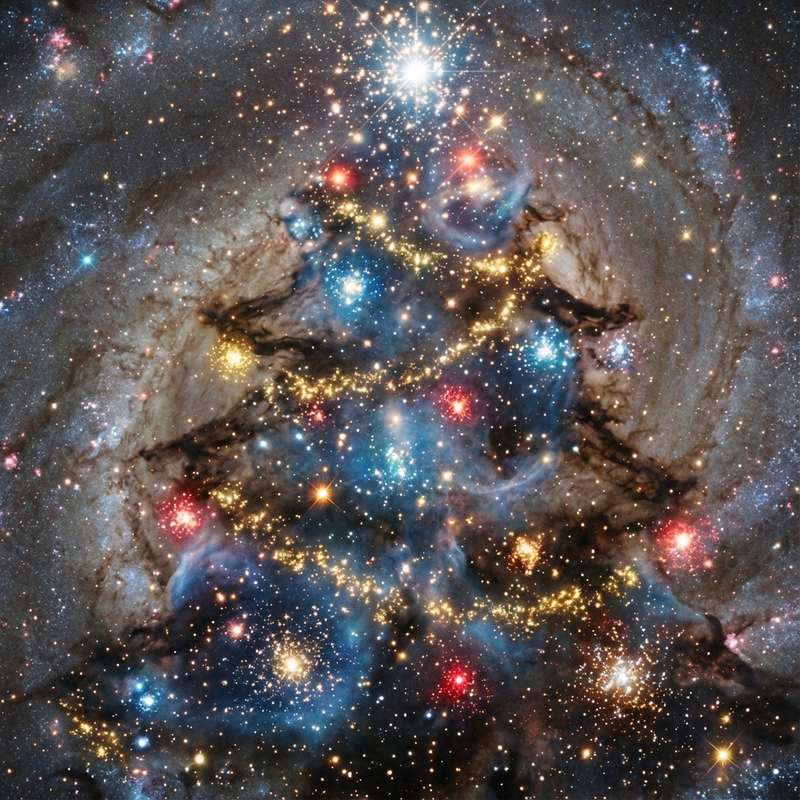
Could the Star of Bethlehem have been a comet? A new analysis explores a possible celestial candidate and its connection to ancient astrological beliefs.
The story of the Star of Bethlehem, guiding the Magi to the newborn Jesus, is a cornerstone of the Christmas narrative. While the biblical account offers no specific astronomical details, the nature of this 'star' has been a subject of fascination and debate for centuries. Was it a planet, a supernova, or something else entirely? Now, a NASA scientist is revisiting the question, proposing a comet as a potential candidate and exploring its possible interpretation within the context of ancient astrological beliefs.
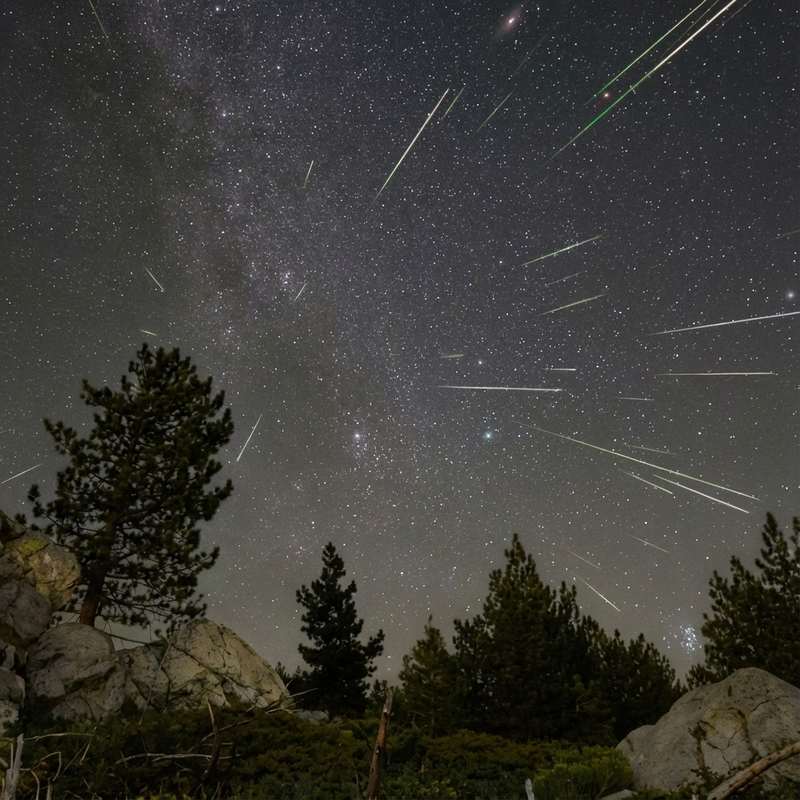
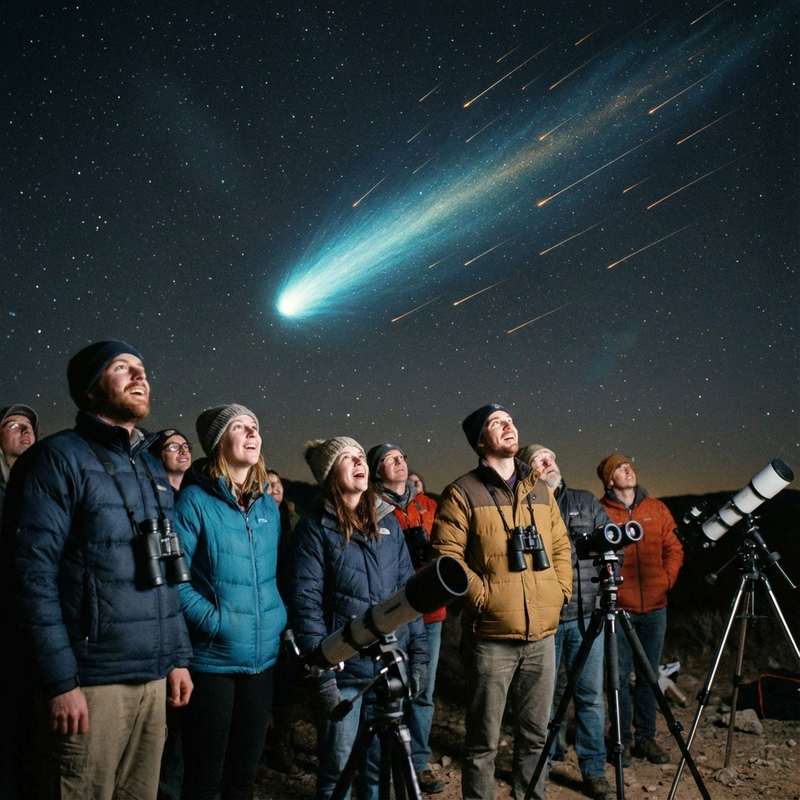
Mark Matney, in a recent paper published with the British Astronomical Association, presents a compelling argument centered around a comet observed and recorded in Chinese annals in 5 BCE. Matney's analysis uses numerical techniques to calculate a possible orbit for this comet, suggesting it could have passed relatively close to Earth in early June of that year. The key element of this hypothesis is the comet's potential to exhibit what Matney terms 'temporary geosynchronous' motion. This means that, from the perspective of observers on Earth, the comet could have appeared to move in a way that aligns with the biblical description of the star 'going before' the Magi as they journeyed to Bethlehem, and then 'stood over' the location where Jesus was.
Understanding 'temporary geosynchronous' motion is crucial. Imagine a car traveling alongside you on a highway. If the car maintains the same speed, it appears stationary relative to you. Similarly, a comet exhibiting temporary geosynchronous motion would appear to move slowly and deliberately across the sky, potentially even appearing to stop. This perceived behavior could explain the Magi's account of the star guiding them, a narrative that wouldn't fit with the rapid trajectory of most celestial objects. (See: Science Basics Explainer)
Matney's research goes beyond just orbital mechanics. He delves into the potential influence of ancient astrological beliefs on the Magi's interpretation of the comet. He examines Greco-Roman astrological writings, contemporary cuneiform omen texts, and the broader system of astrological geography to understand how a comet appearing in the sky might have been interpreted as a sign of significant events, particularly the birth of a king. Comets, often seen as harbingers of change and upheaval, could have held immense symbolic weight for astrologers in the ancient world. The paper also addresses how this proposed comet candidate aligns with the known chronology of events surrounding Jesus' birth.
It's important to note the limitations of this hypothesis. The identification of the 5 BCE comet as *the* Star of Bethlehem remains speculative. Ancient records are often incomplete and open to interpretation. Furthermore, the link between the comet's observed motion and the Magi's journey relies on assumptions about their location, travel routes, and the specific timing of events. This is not to diminish the significance of the research, but rather to emphasize that it presents a plausible, scientifically grounded *candidate*, not a definitive answer. (Related field context: Ancient Astronomy and Astrology)
Furthermore, this research operates within a historical context where astronomical observations were deeply intertwined with astrological interpretations. Modern astronomy is a distinct science from astrology, relying on empirical evidence and mathematical models to understand the universe. Astrology, on the other hand, seeks to find correlations between celestial events and human affairs, a practice that lacks scientific validation. Matney's work acknowledges this distinction, focusing on how ancient astrological beliefs might have shaped the Magi's perception of the comet, without endorsing the validity of astrological claims themselves.
So where does that leave things? Mark Matney's research offers a fascinating and meticulously researched perspective on the enduring mystery of the Star of Bethlehem. By combining astronomical calculations with an understanding of ancient astrological beliefs, he presents a compelling case for a comet as a potential candidate. While definitive proof remains elusive, this work provides a valuable contribution to the ongoing discussion and highlights the intricate interplay between science, history, and cultural interpretation. The study serves as a reminder of how ancient cultures sought meaning in the night sky, and how those interpretations continue to resonate with us today. (Prior research background: Historical Astronomical Conjectures)
Editor’s note: This article was independently written by the Scoopliner Editorial Team using publicly available information.