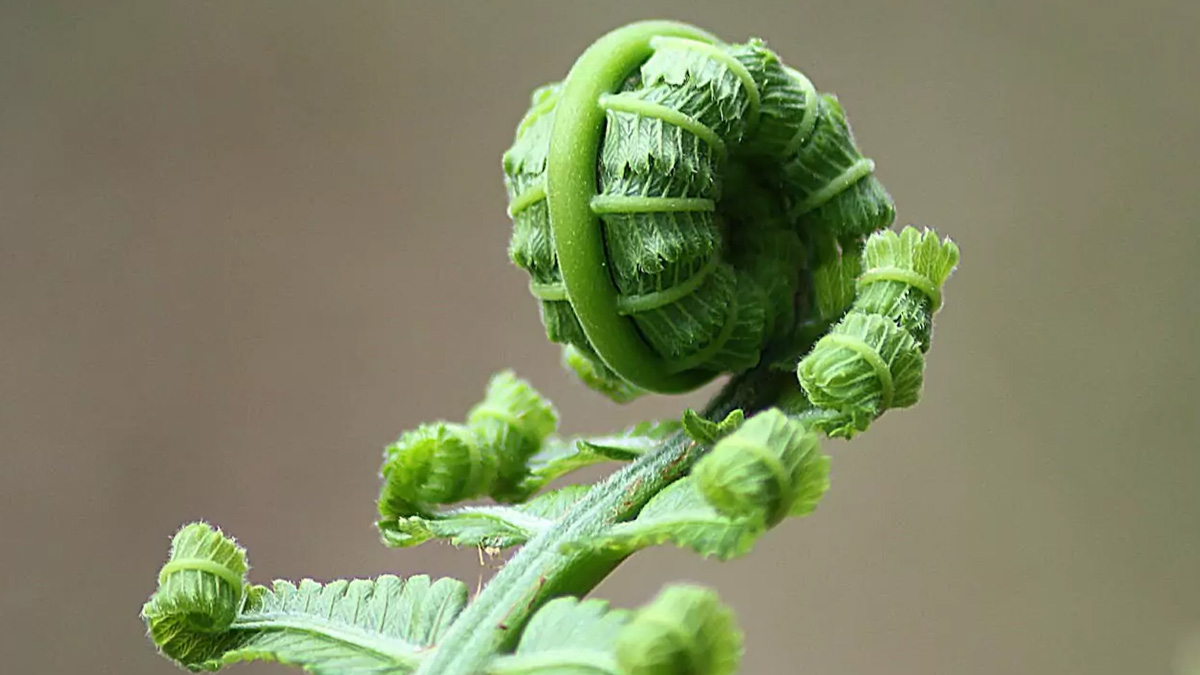
China's remarkable discovery: a fern naturally produces a rare mineral, reshaping the global economy
The world of rare mineral extraction might just be on the brink of transformation, thanks to a group of researchers in China. You see, they've uncovered
The world of rare mineral extraction might just be on the brink of transformation, thanks to a group of researchers in China. You see, they’ve uncovered something rather peculiar—and honestly, quite fascinating. Amidst the study of natural ways to accumulate elements, the team made a discovery that could potentially revolutionize how we think about extracting critical minerals. Forget about gold; we are talking about something even more unique here. In a fern, hidden from scientific literature until now, they found a naturally forming rare earth mineral. This discovery is not just surprising—it’s a game-changer that hints at an ecological and circular model for extracting strategic materials, paving the way toward energy independence.
Pioneering sustainable extraction: The breakthrough discovery
Scientists have always been on the lookout for clean and sustainable ways to extract rare earth elements. The detection of monazite, a rare earth mineral, on a nanometric scale within a living plant opens an entirely new field of possibilities. This means these valuable materials can be recovered without resorting to harsh industrial methods. Imagine obtaining these elements through natural processes, not traditional mining techniques. It’s not just about being eco-friendly; it’s about opening the door to much cleaner, sustainable techniques.
Up until now, we had no evidence that rare earth elements could crystallize in mineral form within a plant. This groundbreaking research doesn’t just confirm the possibility—it boosts the credibility of phytomining. This discipline has been under exploration for years, using plants to absorb and concentrate minerals from the soil. For experts, this isn’t just a novel concept; it brings us the first tangible proof that biological mechanisms can indeed be harnessed to develop alternative extraction methods.
Plants as key players in sustainable resource recovery
Could plants truly become pivotal in our quest for valuable resources, all without wreaking havoc on ecosystems or creating toxic waste that conventional mining often leaves behind? The researchers behind this study certainly think so. And while this approach remains in its experimental stage, the implications for industries that rely on rare earth elements—from electronics to renewable energy—are profound.
The research was spearheaded by the Guangzhou Institute of Geochemistry within the Chinese Academy of Sciences, in collaboration with Virginia Tech’s Department of Geosciences in the United States. The intersection of botany and geosciences in this endeavor seeks to chart new pathways for the sustainable development of critical materials, at a time when global demand continues to rise.
According to a report from the Nature journal, the insightful findings not only underline the potential for integrating biological and geological sciences but also hold promise for a future where resource extraction could harmonize with environmental stewardship.
The broader impact: Reshaping industries
So, what does this all mean for industries that are heavily dependent on rare earth elements? A lot. With this breakthrough, we could be looking at a much greener way to source these critical materials. Instead of the heavily pollutive methods currently in use, phytomining could offer a softer footprint on our planet. From technology manufacturing to clean energy solutions, the chance to access rare earth elements in ways that conserve, rather than consume, is more compelling now than ever.
It’s worth noting that rare earth elements are vital in modern technologies. As per an energy department report, their uses range from the magnets in wind turbine generators to components in electric vehicles. The push for greener solutions in resource extraction could accelerate other sectors’ transition to more sustainable practices.
And there’s more. Interdisciplinary studies like this one don’t just contribute new knowledge; they also lead to unexpected collaborations that spark further innovation, like the intriguing combination of geosciences and botany we see here.
Charting a sustainable future
The future of sustainable mining looks brighter with such discoveries. You can practically feel the excitement in the air among researchers and industries alike. The possibilities are, in a word, abundant. One has to wonder, are we on the cusp of a new era in mining that could change the way we interact with our planet’s resources? Only time will tell, but the potential impact of this discovery is undoubtedly considerable.
It’ll be captivating, to say the least, to see how these scientific findings unfold in real-world applications. As we lean towards sustainable living, embracing new technologies and methods, let’s keep an ear to the ground for more developments in this area. Whether you’re a budding scientist or a curious reader, staying informed could be the first step toward actively engaging with our ever-changing world.
And remember, understanding these intricacies is not just for experts—each one of us has a role in supporting sustainable practices. So, why not dive deeper and learn more about how science is paving the way for a greener, more sustainable future?
In your next adventure towards environmental consciousness, keep this in mind—every step counts, and each one of us can drive change. Stay curious, stay engaged, and let’s build a sustainable future together.
)