Chile’s new far-right head is latest Latin American leader to ride hardline wave to power
हिंदी में सुनें
Listen to this article in Hindi
José Antonio Kast's presidential victory in Chile signals a rightward shift in Latin America, joining leaders with hardline policies amid regional concerns.
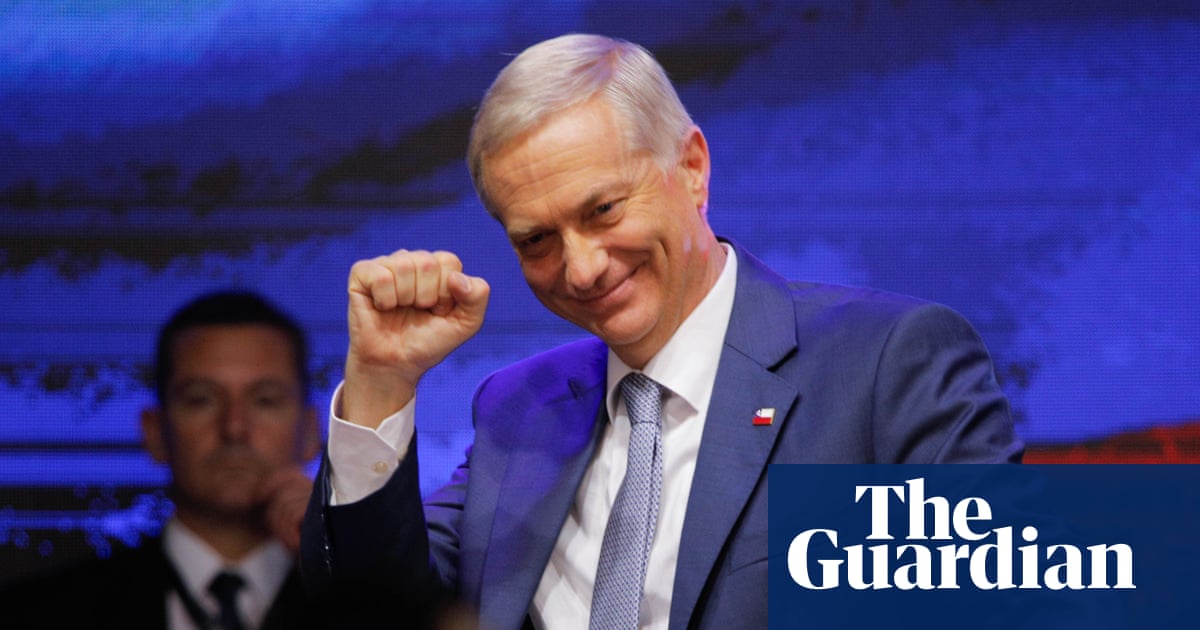
José Antonio Kast's victory in the Chilean presidential election marks the latest instance of a hardline leader gaining power in Latin America. His win has garnered praise from right-wing figures globally, including congratulations from U.S. Secretary of State Marco Rubio, Hungary's Viktor Orbán, Italy's Giorgia Meloni, Argentina's Javier Milei, and Elon Musk.
The newly elected president, a staunch Catholic and father of nine, is known for his opposition to abortion and same-sex marriage. Kast, whose father was a Nazi party member, secured 58.16% of the vote in the runoff election, surpassing leftist Jeannette Jara, a former labor minister under current President Gabriel Boric, by over two million votes.
Kast's campaign, his third presidential bid, centered on the claim that increased migration over the past decade has driven a surge in crime. Echoing policies of Donald Trump, Kast pledged to expel approximately 330,000 undocumented migrants, primarily Venezuelans. He also proposed constructing detention centers, building 5-meter-high walls, installing electric fences, digging 3-meter-deep trenches, and increasing military presence along the border.
Analysts view Kast's victory as part of a recurring shift between left and right-wing leadership in Chilean politics over the last 15 years. That said, the reality is a bit more complicated. he represents the most far-right president elected in Chile since the end of the military dictatorship in 1990. Notably, Kast is the first president since the dictatorship to openly admire Augusto Pinochet, whose regime was responsible for the torture of an estimated 40,000 people and the deaths of over 3,000. In 2017, during a presidential campaign, Kast stated that Pinochet would vote for him if he were alive.
Cristóbal Rovira Kaltwasser, a populism researcher and professor at the Pontificia Universidad Católica de Chile, described Kast's election as "bad news for Chile's democratic system." He added, "What we are seeing with Kast is a return to the origins of a right that clearly did not have democratic credentials." Kast, like other right-wing leaders in the region, has expressed admiration for El Salvador's President Nayib Bukele, who has imprisoned at least 2% of his country's adult population as part of a controversial crackdown on gangs.
Kaltwasser expressed concern that the conventional right will shift further to the right, potentially leading to the disappearance of democratic right-wing forces. He also noted the lack of evidence supporting Kast's claim that rising migration is responsible for increased crime.
Many analysts and political leaders consider Kast's election part of a broader right-wing trend in Latin America, evidenced by recent victories in Ecuador, Bolivia, Argentina, and, according to preliminary results, Honduras. Colombian President Gustavo Petro acknowledged this trend, tweeting about the rise of fascism.
Sandra Pellegrini, a senior analyst for Latin America and the Caribbean at the Armed Conflict Location and Event Data Project (ACLED), points to a regional shift towards "hardline security measures." She attributes this to the widespread belief in the success of Bukele's policies in El Salvador. That said, the reality is a bit more complicated. she cautions that the trade-off for such measures has been a surge in state-perpetrated violence and human rights violations. Bukele's state of emergency has led to the arrest of over 81,000 people, drawing condemnation from human rights groups.
Pellegrini's recent report also argues that the U.S. military buildup near Venezuela and its strikes on alleged drug boats are intended to pressure governments to align with U.S. foreign policy goals. The White House's push for governments to be "tougher" aims to reassert U.S. dominance in the Western Hemisphere, secure access to resources, and counter Chinese influence.
Pellegrini warns that the U.S.'s actions send a message that human rights are no longer a priority, potentially leading to increased militarization and human rights violations in Chile and other governments in the region.