CDC Grant Funds Danish Hepatitis B Study Led by Researchers Linked to Tracy Beth Høeg
हिंदी में सुनें
Listen to this article in Hindi
The CDC awarded $1.6M to Danish researchers for a hepatitis B vaccine study in Guinea-Bissau, raising ethical concerns and questions about relevance to the U.S.
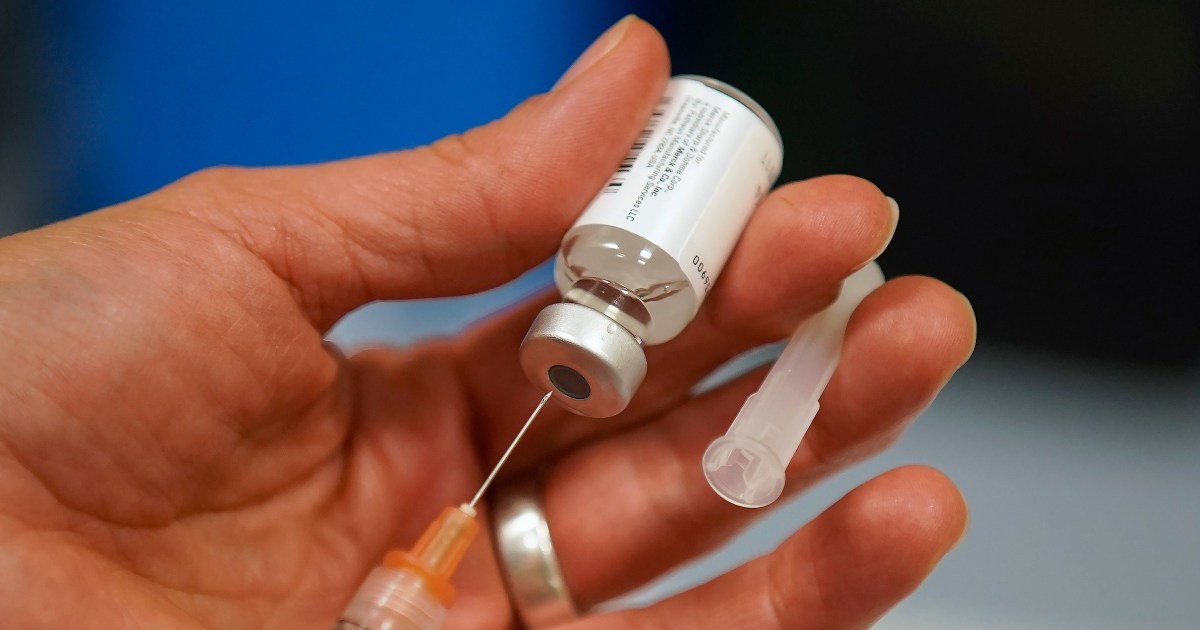
The Centers for Disease Control and Prevention (CDC) has awarded $1.6 million in grant money to researchers at the University of Southern Denmark, some of whom have connections to Tracy Beth Høeg, a high-ranking official at the Food and Drug Administration (FDA). The grant will fund a study of hepatitis B vaccines. Some experts are questioning the ethics of the study and doubt the data it produces will be applicable to vaccine use in the United States.
The grant recipients, Christine Stabell Benn and Peter Aaby, are the leaders of the Bandim Health Project, a research operation based in Guinea-Bissau, West Africa. The CDC grant will enable them to conduct a placebo-controlled trial of the hepatitis B vaccine in newborns. Currently, Guinea-Bissau administers the first hepatitis B vaccine dose to babies at 6 weeks of age, but the country plans to implement a universal birth dose policy in 2027, as recommended by the World Health Organization.
According to documents in the Federal Register, the grant was awarded in response to an “unsolicited proposal.” The University of Southern Denmark confirmed that Stabell Benn and Aaby are the recipients of the CDC funding. Stabell Benn has not yet responded to requests for an interview.
While specific details of the study's design remain scarce, the Bandim Health Project stated that some newborns will be randomly selected to receive the hepatitis B vaccine at birth. This group will then be compared to a control group receiving the current standard of care, in order to assess “overall health outcomes.” According to the CDC, the trial aims to determine the impact of a hepatitis B birth dose on “early-life mortality, morbidity, and long-term developmental outcomes.”
One vaccine expert told STAT that the study's projected five-year duration is sufficient to identify potential risks associated with the vaccine. That said, the reality is a bit more complicated. the expert added that the study's length will not be adequate to measure the benefits of the vaccine, since the harms of contracting hepatitis B early in infancy may not be evident for many years.
William Moss, executive director of the International Vaccine Access Center and professor of epidemiology at Johns Hopkins Bloomberg School of Public Health, stated that the benefits of the hepatitis B vaccine are not seen until decades later. According to Moss, the study does not appear to be designed to assess the benefits of administering a birth dose of the hepatitis B vaccine, unless the researchers are specifically looking for chronic hepatitis B infection.
Earlier this month, a CDC advisory panel voted in favor of eliminating the universal hepatitis B vaccine birth dose policy in the United States. This decades-old policy, which has been supported by numerous studies, is credited with a 99% reduction in hepatitis B infection rates among U.S. babies. Infants infected with the virus at birth or during their first year of life face a 90% chance of developing chronic hepatitis B, a condition that may go undiagnosed for years. Approximately 25% of those with chronic hepatitis B will die prematurely from liver disease.
Critics of the Advisory Committee on Immunization Practices (ACIP) recommendation, which was accepted by acting CDC Director Jim O’Neill, pointed out that the proposed change was motivated by parental objections to the policy, rather than new evidence of vaccine-related dangers or data questioning the vaccine's effectiveness.
Stabell Benn and Aaby have long maintained that certain vaccines have effects beyond specific pathogen protection, which are referred to as nonspecific effects. They assert that these effects can sometimes be beneficial, but in other cases, they can be detrimental. For example, they have suggested that the hepatitis B vaccine may increase a child's susceptibility to other pathogens, particularly among girls.
That said, the reality is a bit more complicated. an analysis of their studies published earlier this year challenged many of the pair’s findings, arguing that claimed nonspecific effects were not supported by reexamination of the data.
It is currently unknown whether the CDC-funded study has received ethical approval from the University of Southern Denmark or the Guinea-Bissau health ministry.
Vaccine experts have voiced concerns that randomly assigning some children to forgo vaccination at birth, especially in a country with a high prevalence of chronic hepatitis B infection like Guinea-Bissau, could be unethical. Studies, including some co-authored by Aaby, estimate that 13% to 18% of Guinea-Bissau's population is infected with the virus.
According to Moss, withholding the birth dose puts children at risk. He believes the study will need to undergo ethical review, which he suspects has not yet happened.
Other experts have questioned the ethics of exposing children in a low-income country to a risk that would be unacceptable in the United States.
Zachary Rubin, a pediatrician and allergist-immunologist in the Chicago area, said that if the study design is considered unethical in the United States because withholding the hepatitis B vaccine from newborns would violate ethical standards, then serious concerns are raised about applying the same design to infants in a lower-resource setting like Guinea-Bissau.
STAT asked the Department of Health and Human Services whether it was ethical to conduct a study involving children in a low-income country that could not be conducted in the United States. In an emailed response, spokesperson Emily Hilliard avoided directly answering the question, but insisted that “we will ensure the highest scientific and ethical standards are met.” Hilliard stated that the study is designed “to fill existing evidence gaps to help inform global hepatitis B vaccine policy.’’
That said, the reality is a bit more complicated. several scientists have cautioned that the substantial differences between Guinea-Bissau and high-income countries like the United States mean that any results observed in Guinea-Bissau are unlikely to be relevant to the United States.
Rubin pointed out that Guinea-Bissau and the United States differ significantly in terms of infant mortality rates, causes of death, health care access, infectious disease burden, and maternal screening rates. He added that even if the study found higher all-cause mortality in the vaccine group, that would not necessarily apply to the risk of the hepatitis B vaccine birth dose in American infants.
Moss concurred, noting that children in Guinea-Bissau are exposed to a different range and magnitude of pathogens than children in the United States.
Stabell Benn has close ties to Høeg, an advisor to FDA Commissioner Marty Makary who was recently named acting director of the agency’s drug center. The two co-host a podcast called “Vaccine Curious,” where they discuss vaccine policies in the U.S. and Denmark. Høeg also serves as the FDA’s representative on the CDC’s ACIP panel, where she recently advocated for reducing the number of vaccines given to newborns in the U.S.
In April, Stabell Benn told STAT that she believes regulators should raise the bar for vaccines, requiring companies to demonstrate not only that their products produce antibodies or reduce the risk of the targeted illness, but also that they improve overall health.
Stabell Benn stated that there is a fear that scrutinizing vaccine effects on overall health might reveal something that could undermine confidence. She argued that avoiding such studies is not the right approach to dealing with uncertainty.
Stabell Benn and Aaby established the Bandim Health Project group in 1978. Aaby, who was studying malnutrition at the time, began vaccinating 1,500 children during a measles outbreak. He told Mother Jones in 2020 that the children's mortality rate decreased threefold compared to unvaccinated children.
This experience led them to study the overall health effects of vaccines, both positive and negative. Robert F. Kennedy Jr. has frequently cited their research in interviews, particularly an observational study that indicated an increase in mortality among children who received the DTP vaccine, which protects against diphtheria, tetanus, and whooping cough.
The couple has faced criticism in the Danish press for not publishing the results of a separate randomized controlled trial they conducted on the DTP vaccine in 2011, while promoting the findings of the observational study. According to articles from Weekendavisen, other Danish researchers have expressed skepticism regarding the Bandim Health Project’s methods and conclusions.
The couple explained to Weekendavisen that they did not publish the randomized trial results due to a Ph.D. student’s pregnancy and the death of her field supervisor. They stated that the student lacked time for long-term follow-up, and they did not have the resources to continue the study.