The Martian Ice Age: Building a Future on the Red Planet, One Frozen Block at a Time
हिंदी में सुनें
Listen to this article in Hindi
Exploring the potential of Martian ice for building sustainable habitats, addressing challenges, and paving the way for human settlements on Mars.
The dream of establishing a human presence on Mars, once relegated to the realm of science fiction, is steadily gaining traction. But beyond the rocket launches and landing simulations, a crucial question remains: how do we actually *live* there? The Martian environment is notoriously hostile, presenting a multitude of challenges from extreme temperatures and radiation exposure to the lack of readily available resources. The answer, surprisingly, might be found in one of Earth's most common substances: ice.
Ice on Mars, far from being a mere curiosity, represents a potential game-changer for future colonization efforts. It’s not just about having access to drinking water (though that's certainly important). The real potential lies in using this readily available resource as a primary building material, offering a pathway to creating sustainable and relatively self-sufficient habitats. This approach, known as in-situ resource utilization (ISRU), is crucial for reducing the reliance on expensive and logistically complex Earth-based supply chains. Imagine the cost savings if we could build our Martian homes from Martian materials.
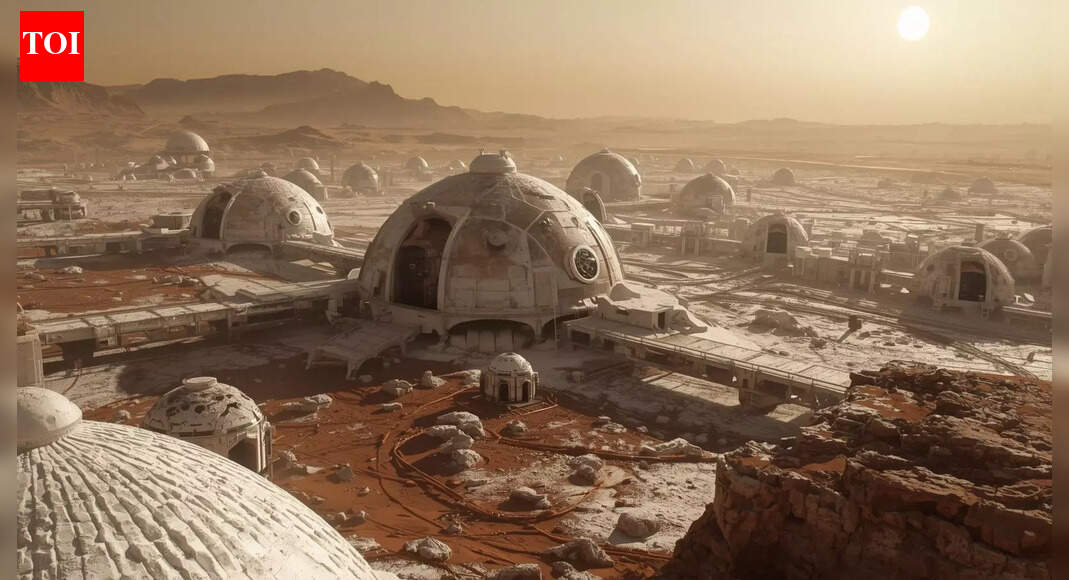
But how feasible is this concept in practice? The Martian surface is littered with ice deposits, both on the surface and in subsurface permafrost. Scientists are exploring methods to extract, melt, and refreeze this ice into usable building blocks. These blocks could then be used to construct habitats, potentially even entire domes, offering protection from the harsh Martian environment. The most immediate benefit? Insulation. Mars experiences incredibly low temperatures, plummeting to -120 degrees Celsius. An ice structure, even a few meters thick, could provide a significant thermal barrier, creating a more habitable internal environment.
Beyond temperature control, ice offers another crucial advantage: radiation shielding. Mars lacks a global magnetic field and has a very thin atmosphere, leaving the surface exposed to harmful solar and cosmic radiation. Ice is surprisingly effective at blocking these dangerous rays, offering a natural and abundant form of protection for Martian colonists. This is a critical consideration for long-term human health and survival on the red planet. Furthermore, ice structures can be designed to allow visible light to penetrate, creating a more psychologically comforting environment and potentially supporting plant growth within the habitat. This could lead to the establishment of closed-loop life support systems, further reducing reliance on Earth.
That said, the reality is a bit more complicated. the Martian ice age isn't without its challenges. Extracting and processing the ice requires significant energy, a resource that is not easily generated on Mars. Solar power is an option, but it is subject to the variability of Martian weather, including the infamous dust storms. Nuclear power, while more reliable, presents its own set of safety and logistical hurdles. The durability of ice structures in the long term is another concern. Mars experiences frequent dust storms that can deposit layers of dust on the ice, reducing its insulating properties and potentially accelerating its sublimation (the process of ice turning directly into vapor). Developing protective coatings or other mitigation strategies will be essential to ensuring the longevity of these habitats. This intersects with discussions around the future of the Indian economy, as advancements in renewable energy and materials science here could directly benefit Martian colonization efforts.
Ultimately, the idea of building with ice on Mars represents a bold and innovative approach to space colonization. While technical challenges remain, the potential benefits are undeniable. By leveraging the resources available on the red planet, we can pave the way for a more sustainable and affordable future for humanity beyond Earth. Overcoming these challenges will require interdisciplinary collaboration, innovative engineering, and a willingness to embrace unconventional solutions. But if we succeed, we could be witnessing the dawn of a new era in human history, one built on a foundation of Martian ice. This ties into broader discussions about science and technology innovation in India and globally, and how those advancements can drive progress in space exploration. The future of Martian colonization, it seems, may very well be frozen in time, waiting to be unlocked.