Bronze Age mass burial site mystery near Sanquhar wind farm
हिंदी में सुनें
Listen to this article in Hindi
Archaeologists discovered a 3,000-year-old mass burial site during wind farm construction near Sanquhar, revealing insights into Bronze Age life.
A recent archaeological discovery near Sanquhar in Dumfries and Galloway has revealed a mass burial site dating back approximately 3,300 years. The find, described as a "mysterious mass burial event," sheds light on Bronze Age life in southern Scotland.
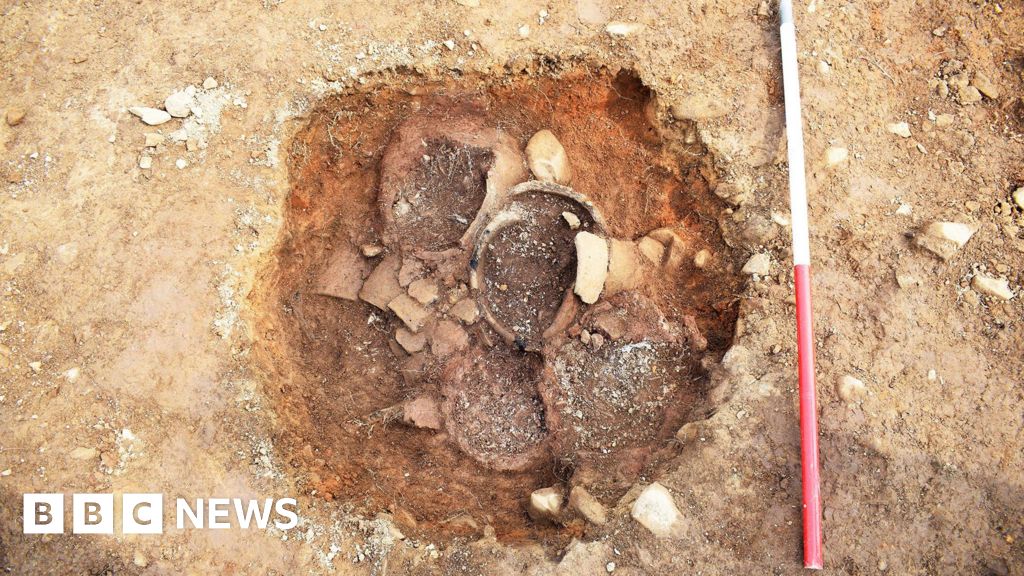
The excavation, conducted by Guard Archaeology in 2020 and 2021, took place during the construction of an access route for the Twentyshilling Wind Farm. The work uncovered a Bronze Age barrow, an ancient burial mound, containing the cremated remains of multiple individuals. These remains were housed within five urns, closely packed together.
According to archaeologist Thomas Muir, who spearheaded the excavation, the simultaneous burial of so many people suggests a catastrophic event, potentially a famine. The wind farm is located on open upland terrain about three miles south of Sanquhar.
The team discovered that the urns held the cremated bones of at least eight people, all interred in a single mass burial event between 1439 and 1287 BC. Further excavation revealed a small group of pits to the north, indicating late Neolithic activity dating from 2867 to 2504 BC.
Muir emphasized the significance of the Twentyshilling remains, noting the near-immediate cremation and burial. He explained that this contrasts with the more common Bronze Age practice of leaving bodies exposed for a period, as evidenced by other digs, such as one at Broughton in the Borders. The Broughton site showed signs of repeated use over an extended period, unlike the single, concentrated burial at Twentyshilling. This suggests a sudden, devastating event affected the Twentyshilling community.
Evidence from other burial sites in the region suggests that the Bronze Age may have been a particularly difficult period, marked by famine and abandonment. The archaeological work at Twentyshilling was a prerequisite for planning permission for the now operational wind farm.