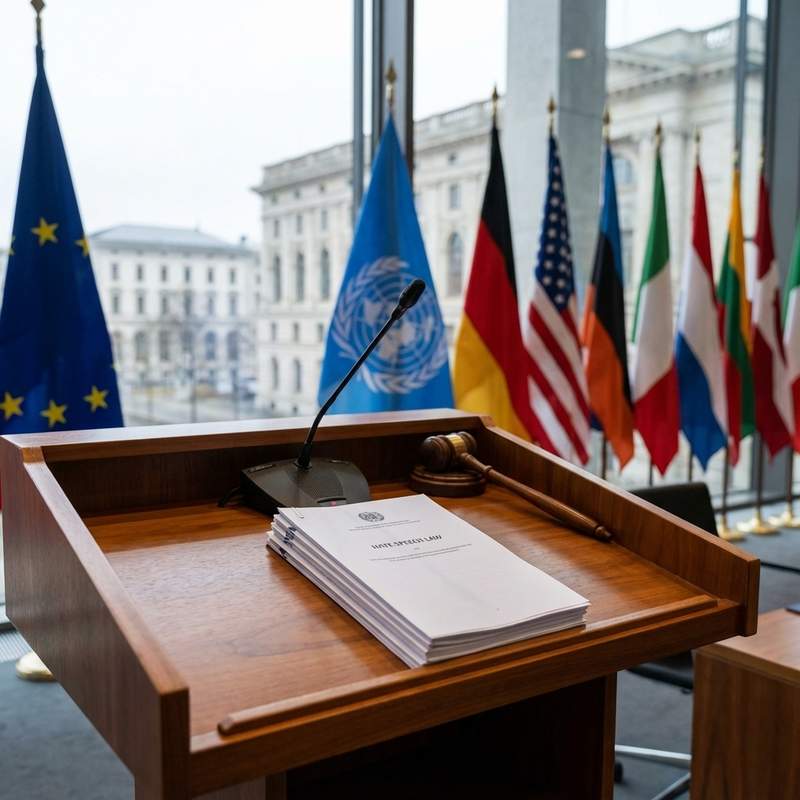
The Shifting Sands of Sovereignty: Australia's Hard Line on Hate Speech and its Global Implications
हिंदी में सुनें
Listen to this article in Hindi
Australia's increasingly assertive stance on hate speech and visa cancellations raises complex questions about national sovereignty and the limits of free expression in a globalized world.
The rise of transnational ideologies and the proliferation of online hate speech are increasingly challenging the established norms of national sovereignty. Nations are grappling with how to balance their obligations under international human rights law, including the protection of free expression, with the need to safeguard their societies from incitement to violence and discrimination. Australia's recent decision to cancel the visa of a British citizen charged with displaying Nazi symbols, and its intention to expand powers to revoke visas based on hate speech, exemplify this growing tension and reflect a global trend towards more assertive border control measures in the face of perceived threats to social cohesion.
Australia's approach highlights a fundamental dilemma facing many liberal democracies. While committed to principles of free speech, these countries also recognize the potential for such freedoms to be exploited by individuals or groups seeking to promote hatred and violence. The cancellation of visas, and the threat of deportation, represent a significant assertion of national sovereignty, allowing the state to determine who is permitted to reside within its borders and to exclude those deemed to pose a threat to public order or safety. This power, however, is not absolute and must be exercised within the bounds of international law and human rights standards. The definition of 'hate speech' itself is subject to ongoing debate, with concerns that overly broad or vaguely defined laws could be used to stifle legitimate dissent or criticism. The proposed hate speech legislation in Australia, therefore, will likely face scrutiny regarding its potential impact on freedom of expression and its compatibility with international norms.
The global implications of Australia's actions extend beyond its immediate borders. The willingness of a developed nation to proactively deport individuals for expressing hateful views could embolden other countries to adopt similar measures, potentially leading to a patchwork of varying standards and practices regarding freedom of expression and immigration control. This raises questions about the potential for 'forum shopping,' where individuals seek refuge in countries with more permissive laws, and the challenges of international cooperation in combating hate speech while respecting differing legal and cultural contexts. Furthermore, the increasing reliance on social media monitoring to identify and potentially deport individuals raises privacy concerns and highlights the complex role of technology in shaping national security and immigration policies. The balance between security and liberty is constantly being renegotiated in the digital age. Understanding the nuances of world affairs background provides context for such policy shifts.
The complexities are further compounded by the potential for reciprocal actions. Countries whose citizens are targeted by Australia's visa cancellation policies may retaliate by imposing similar restrictions on Australian citizens. This could lead to a chilling effect on international exchange and collaboration, hindering efforts to address global challenges such as climate change, pandemics, and economic inequality. The long-term consequences of these developments remain uncertain. While aimed at protecting communities from hate and violence, these measures could also contribute to a more fragmented and polarized world, where borders are increasingly fortified and the free flow of ideas is restricted.
Moreover, the effectiveness of these measures in actually curbing the spread of hate speech is debatable. Simply removing individuals from a country does not address the underlying ideologies or the online networks that facilitate their dissemination. A more comprehensive approach would involve tackling the root causes of hate speech, promoting education and tolerance, and working with social media platforms to remove harmful content while respecting freedom of expression. Understanding India’s global position, for example, is helpful in recognizing how different nations approach these challenges based on their own histories and social contexts. The focus should be on prevention rather than simply reaction.
So where does that leave things? Australia's increasingly assertive stance on hate speech and visa cancellations reflects a broader global trend towards prioritizing national security and social cohesion in the face of perceived threats from transnational ideologies. While such measures may be seen as necessary to protect communities from hate and violence, they also raise complex questions about the balance between national sovereignty, freedom of expression, and international human rights obligations. The long-term implications of these developments remain uncertain, but they underscore the need for a nuanced and comprehensive approach to combating hate speech that addresses its root causes and respects fundamental freedoms. For readers needing topic basics for context, the underlying issues are complex and require careful consideration.
Editor’s note: This article was independently written by the Scoopliner Editorial Team using publicly available information.