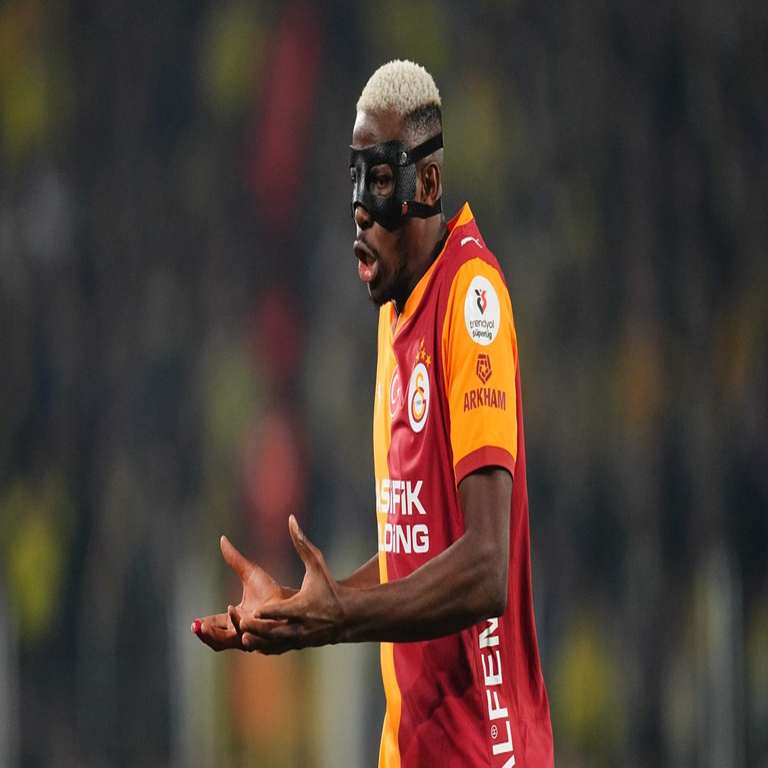
Bayern Munich's Decision on Victor Osimhen: A Strategic Move
हिंदी में सुनें
Listen to this article in Hindi
Bayern Munich opts against signing Victor Osimhen, focusing on Harry Kane's contract extension instead.
Bayern Munich has recently declined the opportunity to re-sign Nigerian striker Victor Osimhen, who currently plays for Galatasaray. This decision comes in the wake of Osimhen's 18-month tenure in Turkey and amid his participation in the Africa Cup of Nations. The discussions reportedly involved an English intermediary who presented Osimhen as a viable option for the Bavarians. Notably, Osimhen has expressed a willingness to return to Germany, influenced by his past in the Bundesliga and personal connections in the country.
That said, the reality is a bit more complicated. Bayern Munich's sporting director, Max Eberl, clarified that the club has no intentions of pursuing Osimhen at this time. The decision seems to be rooted in the club's current focus on retaining their star striker, Harry Kane, whose contract extension talks are set to begin soon. Kane's presence diminishes the necessity for additional firepower in the forward line, particularly one that would come with the high expectations associated with a player of Osimhen's caliber.
Osimhen's profile as a former Bundesliga player lends him a layer of familiarity and potential appeal to Bayern Munich fans and management alike. Yet, the current context of the squad suggests that the club is not willing to disrupt the established dynamics, especially when Kane has been a central figure in their attacking strategy. The speculation surrounding Osimhen's return, once a tantalizing prospect, now appears more like a desperate grasp at an opportunity that does not align with the club's current direction.
From a performance perspective, Osimhen has shown himself to be a prolific scorer, especially during his time in Naples, where he demonstrated the ability to change the course of matches. His physicality, speed, and goal-scoring instinct would typically make him a prime target for clubs like Bayern. That said, the reality is a bit more complicated. Bayern's recent performances, bolstered by Kane's contributions, indicate that the team is currently not in need of an additional striker. This strategic foresight reflects a careful balancing act of resources and talent management.
Looking ahead, the implications of Bayern’s decision are significant. The club appears poised to continue building around Kane, whose contribution has been critical to their attacking prowess. Meanwhile, Osimhen, while undoubtedly talented, may need to reassess his options should he wish to achieve his ambitions of returning to the Bundesliga.
The decision not to pursue Osimhen also signals Bayern Munich's commitment to stability and continuity within their squad. As they look to solidify their position both domestically and in European competitions, maintaining a cohesive unit will be key. The market for strikers remains competitive, and Osimhen's situation serves as a reminder of the fluidity and unpredictability of player movements in football, particularly when personal and club ambitions intersect.
So where does that leave things? Bayern Munich's rejection of Osimhen reflects a broader strategy focused on retaining key players and optimizing existing talent rather than making high-profile signings that may disrupt team dynamics. As the Bundesliga season progresses, this approach may prove crucial in their pursuit of both domestic and European success.
Editor's note: This article was independently written by the Scoopliner Editorial Team using publicly available information.