The Disconnect Between Past and Present: Analyzing Sabalenka vs. Kyrgios in the 'Battle of the Sexes'
हिंदी में सुनें
Listen to this article in Hindi
An analysis of the implications of the Sabalenka-Kyrgios exhibition match and its historical context.
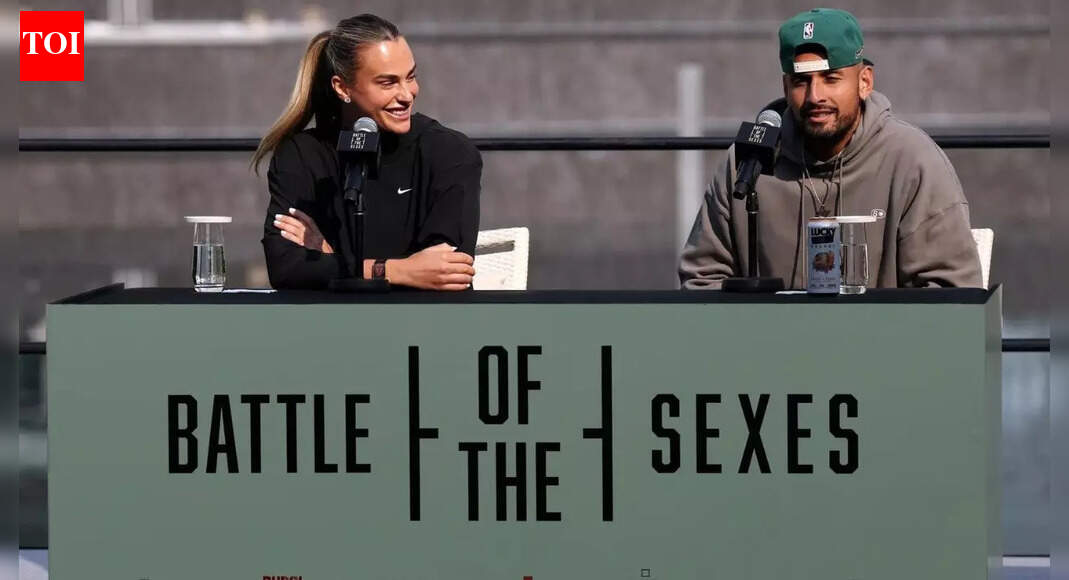
The upcoming exhibition match between Aryna Sabalenka and Nick Kyrgios, branded as the 'Battle of the Sexes,' serves as a compelling platform for discussing the evolution of women's tennis and societal progress since the iconic 1973 match between Billie Jean King and Bobby Riggs. While the historical match represented a pivotal moment in the fight for gender equality in sports, the current contest raises questions about the relevance of such branding in today's context.
Billie Jean King has emphasized that the motivations behind her match with Riggs were deeply political and rooted in the struggle for equal rights and recognition for women in sports. Today, Sabalenka, a four-time Grand Slam champion, faces Kyrgios, who has seen a significant decline from his past top-20 ranking to his current position outside the top 600. This disparity in career trajectories highlights the differing stakes involved in both matches.
From a performance standpoint, Sabalenka enters the match with a wealth of recent competitive experience, having consistently performed at a high level on the WTA tour. Her strong baseline game and powerful serve have contributed to her success in major tournaments, making her a formidable opponent regardless of Kyrgios’s previous accolades. On the other hand, Kyrgios's sporadic participation in competitive matches over recent years raises concerns about his match fitness and ability to compete at a high level.
Moreover, the current social landscape surrounding gender equality in sports is markedly different from that of the 1970s. While King’s match was a cultural spectacle that challenged societal norms, today's exhibition lacks the same urgency and societal implications. The context of Sabalenka-Kyrgios is more reflective of entertainment than of advocacy, raising questions about the effectiveness of such branding in promoting gender equity in sports.
Tactically, Sabalenka’s strengths will likely allow her to dictate play against Kyrgios, who is known for his unpredictable style and shot-making ability but has not demonstrated the consistency required to challenge elite players recently. This match may also serve as an opportunity for Kyrgios to regain some competitive edge, but the expectation remains that Sabalenka will dominate due to her current form and fitness.
So where does that leave things? while the event carries the legacy of a significant historical context, the implications of the Sabalenka-Kyrgios match are far less impactful than those of the original 'Battle of the Sexes.' The analysis of their respective performances highlights a key divergence in the evolution of the sport and the ongoing conversation surrounding gender equality. This match may entertain fans, but it is unlikely to serve as a catalyst for change within the realm of women's sports.
As audiences reflect on this exhibition, they may consider the broader implications of branding and marketing in sports and how these narratives evolve over time. The 'Battle of the Sexes' title may evoke nostalgia, but it also underscores the need for a deeper understanding of the historical context and the current realities of gender dynamics in athletics.
Editor’s note: This article was independently written by the Scoopliner Editorial Team using publicly available information.