AstroSat's UV Telescope Marks 10 Years of Pioneering Ultraviolet Astronomy
Science News: The UltraViolet Imaging Telescope (UVIT) on AstroSat celebrates a decade of groundbreaking research, contributing to over 300 papers and advancing India's capabilities in ultraviolet astronomy.
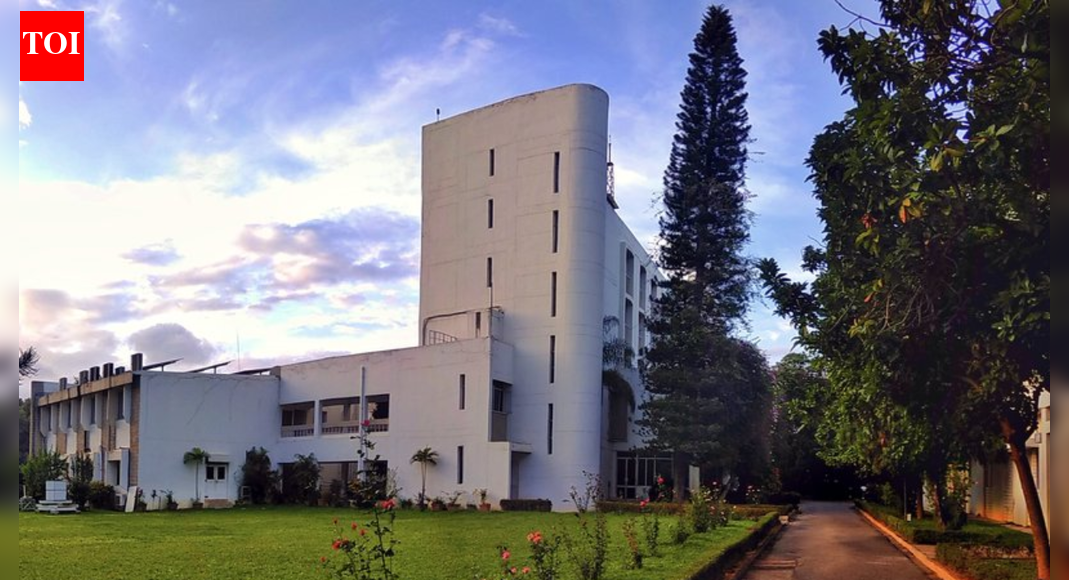
image credit: Indian Institute of Astrophysics
BENGALURU: The Indian Institute of Astrophysics (IIA) in Bengaluru has completed ten years of operations of the UltraViolet Imaging Telescope (UVIT) on board AstroSat, India’s first dedicated space observatory. The telescope opened its doors on Nov 30, 2015, two months after AstroSat’s launch on Sept 28, 2015, and remains India’s only ultraviolet space instrument. It is also one of the few operating facilities worldwide that can observe in the far-UV, apart from the Hubble Space Telescope. In ten years, the telescope has observed 1,451 targets and contributed to about 300 research papers and 19 doctoral theses. Findings include hot compact companions to Be stars, blue stragglers in clusters, extended UV discs in dwarf galaxies, novae in Andromeda, UV emission from distant galaxies at redshift 1.42 and links between UV and X-ray emission from active galactic nuclei. Improved image products are being uploaded to Isro’s PRADAN archive, while discussions at the workshop pointed to a proposed successor mission, the Indian Spectroscopic and Imaging Space Telescope, aimed at expanding India’s ultraviolet astronomy capability. Built and delivered by the institute from its Hosakote campus, the telescope was designed to capture ultraviolet light that cannot be studied from the ground. “Since UV rays are absorbed by our atmosphere, they can only be observed using space telescopes,” IIA director and calibration scientist for the mission, Annapurni Subramaniam, said. She added that the combination of a large field of view and a spatial resolution finer than 1.5 arcseconds (a unit of angular measurement) has kept the instrument in steady scientific use by astronomers in India and abroad. To mark the milestone and to look ahead at future UV missions, IIA organised a one-day academic workshop in Bengaluru on Thursday. Former Isro chairman AS Kiran Kumar, speaking at the event, recalled the role of the late K Kasturirangan in shaping AstroSat as a multi-institutional project. He said such coordination remains vital as academic institutions and private groups gain more opportunities to build space-based facilities. “Our ability to understand the Universe improves whenever we discover new ways of observing and measuring,” he said. The telescope is built as a twin system. One unit studies the near-UV (200–300 nanometres) and visible bands, while the other captures the far-UV (130–180 nanometres). This design allows astronomers to study hot stars, young stellar populations, compact objects, and energetic processes with greater clarity. According to CS Stalin, who heads the payload operations centre, the set-up gives the instrument an edge over earlier ultraviolet missions, including Nasa’s GALEX, which offered coarser resolution. Its development involved a national consortium, including Inter-University Centre for Astronomy and Astrophysics (IUCAA) in Pune, Tata Institute of Fundamental Research (TIFR) in Mumbai and multiple Isro centres. The institute built clean rooms at its CREST campus to assemble and test the optics without contamination. A collaboration with the Canadian Space Agency added experience from earlier UV projects. After launch, the payload operations centre took charge of producing science-ready data, monitoring the telescope, evaluating proposals and updating software.
End of Article