Interstellar Comet's Wobbling Jets Offer Clues to Exoplanetary System Formation
हिंदी में सुनें
Listen to this article in Hindi
Analysis of comet 3I/ATLAS's wobbling jets sheds light on the composition and dynamics of planetary systems beyond our own solar system.
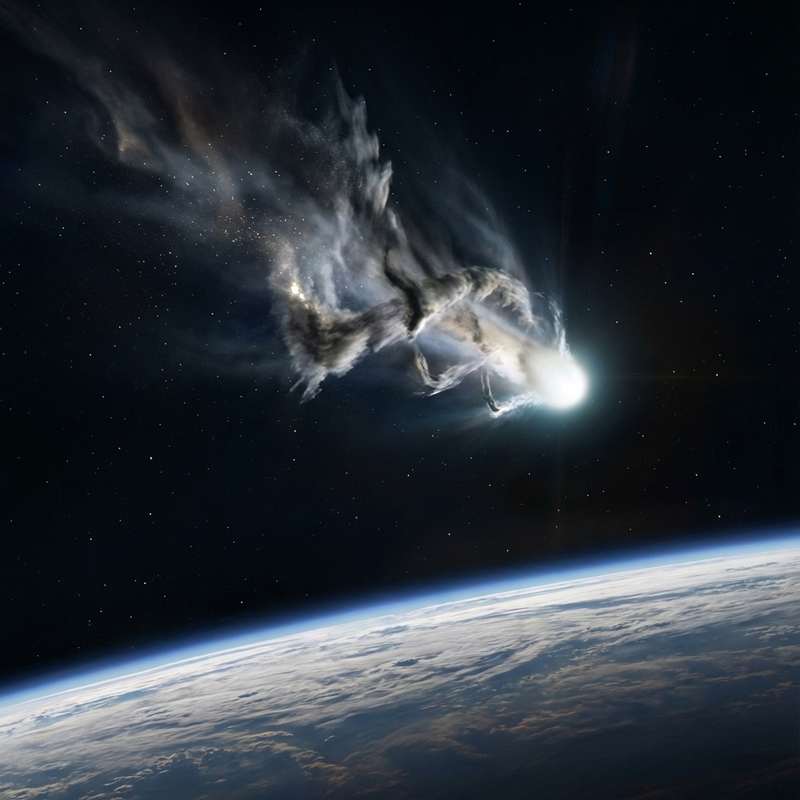
Comets, icy remnants from the formation of planetary systems, typically keep to themselves. But occasionally, visitors from other star systems grace our skies, offering scientists a rare glimpse into the building blocks of worlds beyond our own. The interstellar comet 3I/ATLAS is one such visitor, and recent observations have revealed a curious feature: wobbling jets emanating from its sun-facing side. These jets, forming what's known as an anti-tail, aren't just streaming away from the comet in a straight line. They appear to oscillate, providing valuable information about the comet's composition and its behavior as it interacts with our Sun.
Most comets develop tails that point away from the Sun. This is due to solar radiation and the solar wind pushing dust and gas away from the comet's nucleus. An anti-tail, on the other hand, appears to extend *towards* the Sun. This phenomenon occurs when larger dust particles, less affected by solar forces, are ejected from the comet. These particles continue along their original orbital path, and from our perspective on Earth, they appear to point sunward. Think of it like rain on a car window while driving: the raindrops appear to streak towards you, even though they are actually falling downwards. This creates the illusion of a tail pointing in the opposite direction.
What makes the anti-tail of 3I/ATLAS particularly interesting is the presence of narrow, jet-like features within it. These jets aren't static; they wobble. Astronomers, using the Two meter Twin Telescope at the Teide Observatory in Tenerife, observed 3I/ATLAS over 37 nights and noticed a regular pattern in the jets' movement. The jets appeared to shift position every seven hours and forty-five minutes. This consistent oscillation strongly suggests that the comet is rotating, and that active regions on its surface are releasing gas and dust in a periodic manner.
The most plausible explanation is that as the comet spins, different areas on its surface, with varying compositions and gas pockets, are exposed to sunlight. As these areas heat up, they release gas and dust, creating the jets. Because the comet is rotating, the direction of these jets changes over time, resulting in the observed wobble. Based on the data, scientists estimate that 3I/ATLAS completes one full rotation approximately every fifteen hours and thirty minutes. This is a quicker spin than initially estimated and indicates an uneven mass distribution or a more compact core than previously thought. This rotational behavior is a key factor in understanding the overall dynamics of comets, offering insights into their internal structure and how they release materials into space. (Related: Science basics explainer)
This discovery is significant because it's the first time such a phenomenon has been observed on an interstellar comet. 3I/ATLAS is considered a relatively pristine object, meaning it has likely spent billions of years in the cold depths of interstellar space, largely unchanged. This makes it a valuable specimen for studying the building blocks of planetary systems outside our own. Seeing how it reacts to solar heating for the first time provides a unique opportunity to test models of comet formation in other star systems. (Related: Related field context)
While 3I/ATLAS has already made its closest approach to Earth and is now heading back out of the solar system, the data collected during its brief visit will continue to be analyzed for years to come. The observation of wobbling jets, in particular, provides valuable constraints for models of comet rotation and outgassing. That said, the reality is a bit more complicated. there are still unanswered questions. The exact composition of the jets and the specific mechanisms driving their formation remain areas for further research. Understanding the volatile compounds present in these jets could offer additional clues about the environment in which 3I/ATLAS formed. It's important to remember that this is just one interstellar object, and more observations of future visitors will be needed to draw broader conclusions about the diversity of comets and planetary systems beyond our own.
The fleeting visit of 3I/ATLAS has left astronomers with a wealth of data and a deeper appreciation for the complexity of these icy wanderers. The wobbling jets have provided a unique window into the comet's rotation and activity, offering valuable insights into the formation and evolution of planetary systems far beyond our own. As 3I/ATLAS fades back into interstellar space, it leaves behind a legacy of scientific discovery, reminding us that the universe is full of surprises waiting to be uncovered. (Related: Prior research background)
Editor’s note: This article was independently written by the Scoopliner Editorial Team using publicly available information.