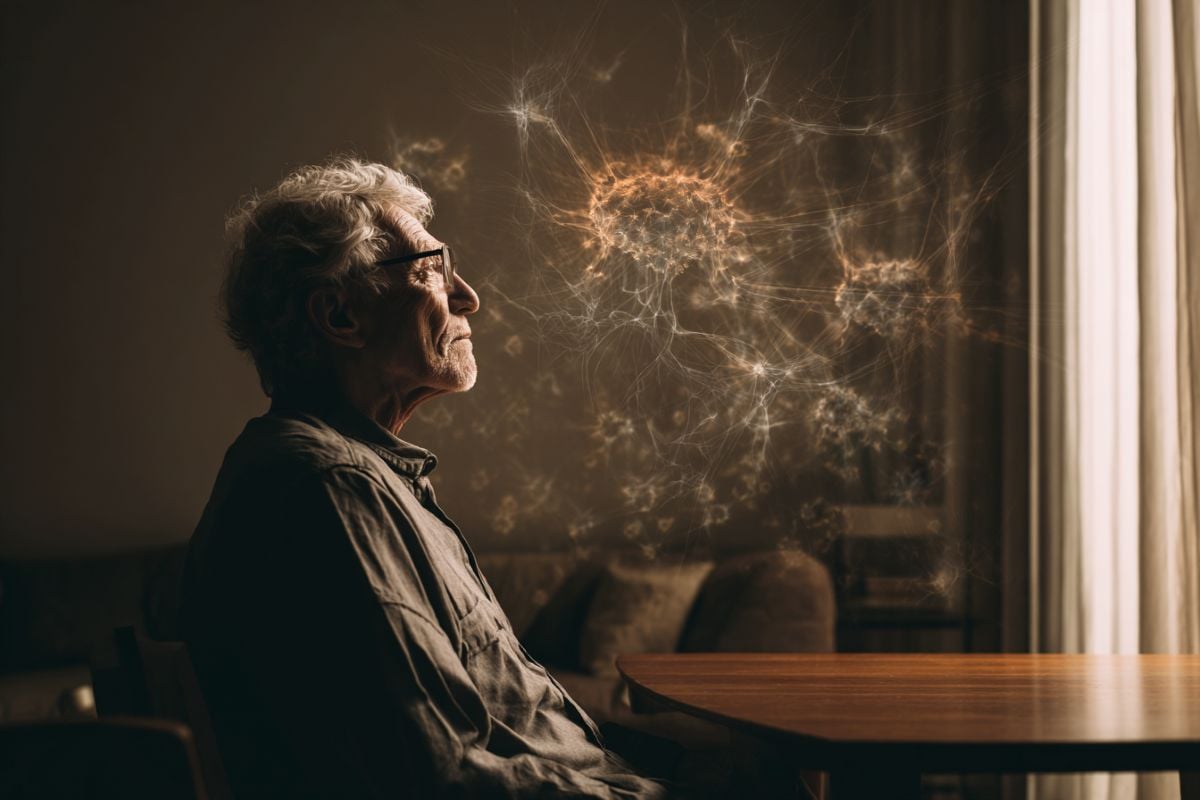
Albert Einstein’s brain was stolen by a doctor and carried around for 40 years
हिंदी में सुनें
Listen to this article in Hindi
After Albert Einstein's death, a pathologist stole his brain, sparking decades of controversy over consent, research, and the ethics of scientific curiosity.
When Albert Einstein passed away in 1955, his brain began an unusual journey marked by ethical questions, after it was secretly taken by a hospital pathologist and preserved for many years. The story, envisioned as a scientific pursuit, evolved into a lengthy controversy involving consent, research of questionable merit, and a specimen that ultimately ended up in museums, far removed from Einstein's own wishes.
Einstein died on April 18, 1955, at the age of 76, marking the end of a hugely important scientific career. He was admitted to Princeton Hospital the day before, complaining of chest pains, and died early the next morning due to a ruptured abdominal aortic aneurysm. Einstein had refused surgery, stating he wanted to die “when I want to go,” rather than artificially prolonging his life. He gave clear instructions that his body should be cremated and his ashes scattered in secret to prevent the creation of shrines or symbols that might turn him into a public icon.
That said, the reality is a bit more complicated. what followed went against both the spirit and the explicit details of his wishes. Dr. Thomas Stoltz Harvey, the pathologist on duty at Princeton Hospital, conducted the autopsy. Although Harvey's expertise was in identifying disease, injury, and cause of death, rather than the study of the brain, he removed Einstein’s brain and kept it without the family's permission. Harvey later gave different explanations, claiming he “assumed” he had permission, believed the brain would be used for scientific study, and felt obligated to preserve it. That said, the reality is a bit more complicated. reports and historical accounts confirm that no explicit consent was given when the brain was removed. Days later, Harvey sought retroactive approval from Einstein’s eldest son, Hans Albert Einstein, who reluctantly agreed on the condition that any research be strictly for scientific purposes and published in reputable journals. By then, Einstein's original wishes had already been disregarded. Harvey also reportedly removed Einstein’s eyeballs, later giving them to Henry Abrams, Einstein’s ophthalmologist. These eyes remain in a safe deposit box in New York, adding to the unsettling story of Einstein’s remains.
Within months of the autopsy, Harvey was fired from Princeton Hospital because he refused to return the brain. While Hans Albert Einstein had accepted Harvey’s assurances, the hospital director did not. Harvey left Princeton with Einstein’s brain, and his professional life began to fall apart. Instead of a structured scientific study, the brain was subject to decades of unofficial custody. Harvey photographed it, weighed it, and cut it into about 240 pieces. He preserved the pieces in jars and created 12 sets of microscope slides, which he labeled and stored without any institutional oversight. Some samples were sent to researchers, but most remained with Harvey. The brain traveled with him as he moved between jobs and cities, reportedly stored in everything from laboratory jars to a beer cooler. For many years, little research was published. The first significant study of Einstein’s brain appeared in 1985, 30 years after his death. Led by neuroscientist Marian Diamond, the study reported an unusual ratio of neurons to glial cells in certain areas of the cortex, suggesting this might be related to enhanced cognitive ability. Media coverage at the time was sensational, with headlines suggesting scientists had discovered the neural basis of E = mc². That said, the reality is a bit more complicated. the scientific community was more cautious. Critics argued that conclusions based on a single brain, without proper control samples or consistent methodology, could not adequately explain intelligence. Psychologist Terence Hines of Pace University, a long-time critic of the Einstein brain studies, said that you cannot take one unique brain and declare that you've found the key, dismissing such claims as “bull”.
Later studies did identify other anatomical differences. A 2013 study, co-authored by anthropologist Dean Falk, reported that Einstein’s corpus callosum, which connects the brain's hemispheres, was thicker in certain regions than in control groups, suggesting greater communication between the hemispheres. Falk also noted structural variations in Einstein’s frontal and parietal lobes, including an extra ridge in the mid-frontal area, linked to planning and working memory, and asymmetry in the parietal regions, associated with spatial reasoning. Another frequently cited feature was a distinct “omega sign” on the right motor cortex, a trait sometimes seen in left-handed musicians. Einstein played the violin throughout his life. That said, the reality is a bit more complicated. researchers have consistently cautioned against drawing direct causal links between these anatomical traits and genius. No two human brains are identical, and many features seen in Einstein’s case fall within the normal range of variation. As Harvey himself admitted in 1978, his research indicated Einstein’s brain was “within normal limits for a man his age,” a finding he was slow to publish.
Over time, the narrative shifted from neuroscience to a cultural curiosity. In 1978, journalist Steven Levy tracked Harvey down in Wichita, Kansas, after discovering the brain was missing from Princeton Hospital. When Levy asked to see photographs, Harvey instead opened a cooler containing jars of tissue. This event renewed public interest and scrutiny of Harvey’s actions. Brian Burrell's *Postcards from the Brain Museum* and Frederick Lepore's *Finding Einstein’s Brain* reconstruct the story using archival records, interviews, and decades of reporting on Thomas Harvey’s custody of the brain. Harvey died in 2007 at the age of 94. By then, portions of Einstein’s brain had been moved from private possession to public institutions. The Mütter Museum in Philadelphia received 46 sections, and additional fragments were sent to the National Museum of Health and Medicine, ending the brain’s decades-long journey outside formal collections. Harvey’s original ambition never materialized. The secret of genius was not unlocked, and no definitive biological explanation emerged. What remains is a strange historical side note: one of the greatest minds of the modern era spent 40 years divided into jars, studied sporadically, debated endlessly, and ultimately taught us more about our collective obsession with genius than about genius itself.