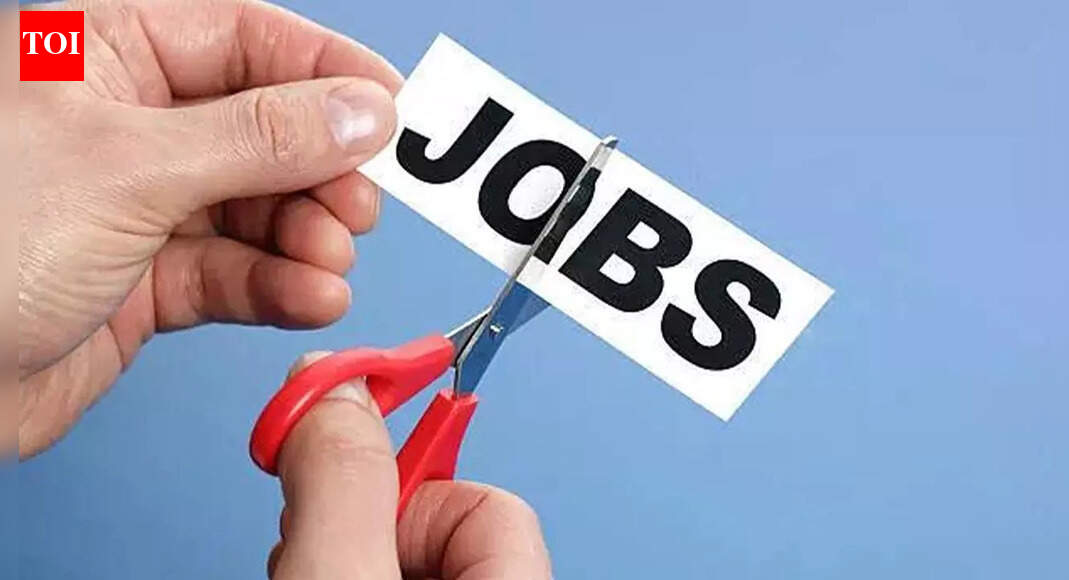
The AI Reckoning: Are Job Cuts a Sign of Progress or a Looming Crisis?
हिंदी में सुनें
Listen to this article in Hindi
AI-driven layoffs are surging. Is this a necessary evolution or a sign of deeper economic problems? Analyzing the impact on jobs and the future of work.
The march of progress, they say, is relentless. But what happens when that progress leaves a trail of displaced workers in its wake? We’re increasingly facing that question head-on as artificial intelligence continues its rapid advancement, reshaping industries and redefining the very nature of work. The narrative of AI as a job creator is slowly being challenged by the cold, hard reality of job displacement, and the numbers are starting to raise serious concerns.
The question isn't simply about whether AI *can* replace human workers, but whether it *should* – and what the consequences are for society when it does. The raw figures – tens of thousands of jobs lost in a single year, attributed, at least in part, to AI – paint a stark picture. These aren't just abstract data points; they represent real people, real families, and real communities grappling with sudden unemployment and an uncertain future. The initial wave of enthusiasm surrounding AI's potential to boost productivity and efficiency is now colliding with the harsh economic realities of widespread job displacement.
While some argue that these layoffs are merely a necessary correction after a period of pandemic-fueled overhiring, the explicit citing of AI as a reason for restructuring by major tech companies adds a new dimension to the debate. It suggests a fundamental shift in how businesses view labor, with AI not just augmenting human capabilities but directly replacing them in certain roles. This isn't limited to routine tasks; even roles requiring a degree of creativity and critical thinking are now within AI's reach.
This trend has profound implications for the Indian economy. As the nation strives to become a global technological hub, it must also address the potential for AI-driven job displacement in key sectors like IT, BPO, and customer service. Investing in robust retraining programs and fostering a culture of lifelong learning will be crucial to ensure that the workforce can adapt to the changing demands of the digital age. Consider the crucial role of the RBI / policy explainer in helping citizens understand the macroeconomic forces at play, and the importance of transparent communication from both government and industry.
That said, the reality is a bit more complicated. it’s crucial to maintain a balanced perspective. The narrative of AI as a purely destructive force is overly simplistic. AI also creates new opportunities, driving innovation, boosting productivity, and generating demand for new skills and expertise. The key lies in proactively managing the transition, ensuring that workers have the resources and support they need to acquire the skills necessary to thrive in the AI-powered economy. This includes investing in education, training, and infrastructure, as well as fostering a more inclusive and equitable labor market.
One of the biggest challenges is the skills gap. The jobs being displaced by AI often require different skills than the jobs being created. Bridging this gap requires a concerted effort from governments, businesses, and educational institutions to develop and implement effective retraining programs. These programs must be accessible, affordable, and tailored to the specific needs of the workforce. They should also focus on developing skills that are difficult for AI to replicate, such as critical thinking, creativity, emotional intelligence, and complex problem-solving.
Furthermore, the ethical considerations surrounding AI-driven job displacement cannot be ignored. Companies have a responsibility to ensure that AI is deployed in a responsible and ethical manner, minimizing negative impacts on workers and communities. This includes providing adequate notice of layoffs, offering severance packages, and investing in retraining programs. Policymakers also have a role to play in establishing clear guidelines and regulations to govern the use of AI in the workplace.
Ultimately, the success of the AI revolution will depend on our ability to harness its potential for good while mitigating its risks. This requires a collaborative effort from all stakeholders – governments, businesses, workers, and educators – to create a future where AI empowers people, rather than displacing them. We need a new social contract, one that recognizes the changing nature of work and provides a safety net for those who are affected by technological disruption. This could include exploring options like universal basic income or expanding access to social safety nets. Understanding the topic basics for readers is crucial for informed participation in these critical conversations.
The alternative is a future where wealth and opportunity are increasingly concentrated in the hands of a few, while millions are left behind. That's a future no one wants. The time to act is now, to shape the future of work in a way that benefits all of society.