AI Helps Decode Covert Attention and Reveals New Neuron Types
हिंदी में सुनें
Listen to this article in Hindi
UC Santa Barbara researchers used AI to understand covert attention, the ability to focus without moving your eyes, discovering new neuron types.
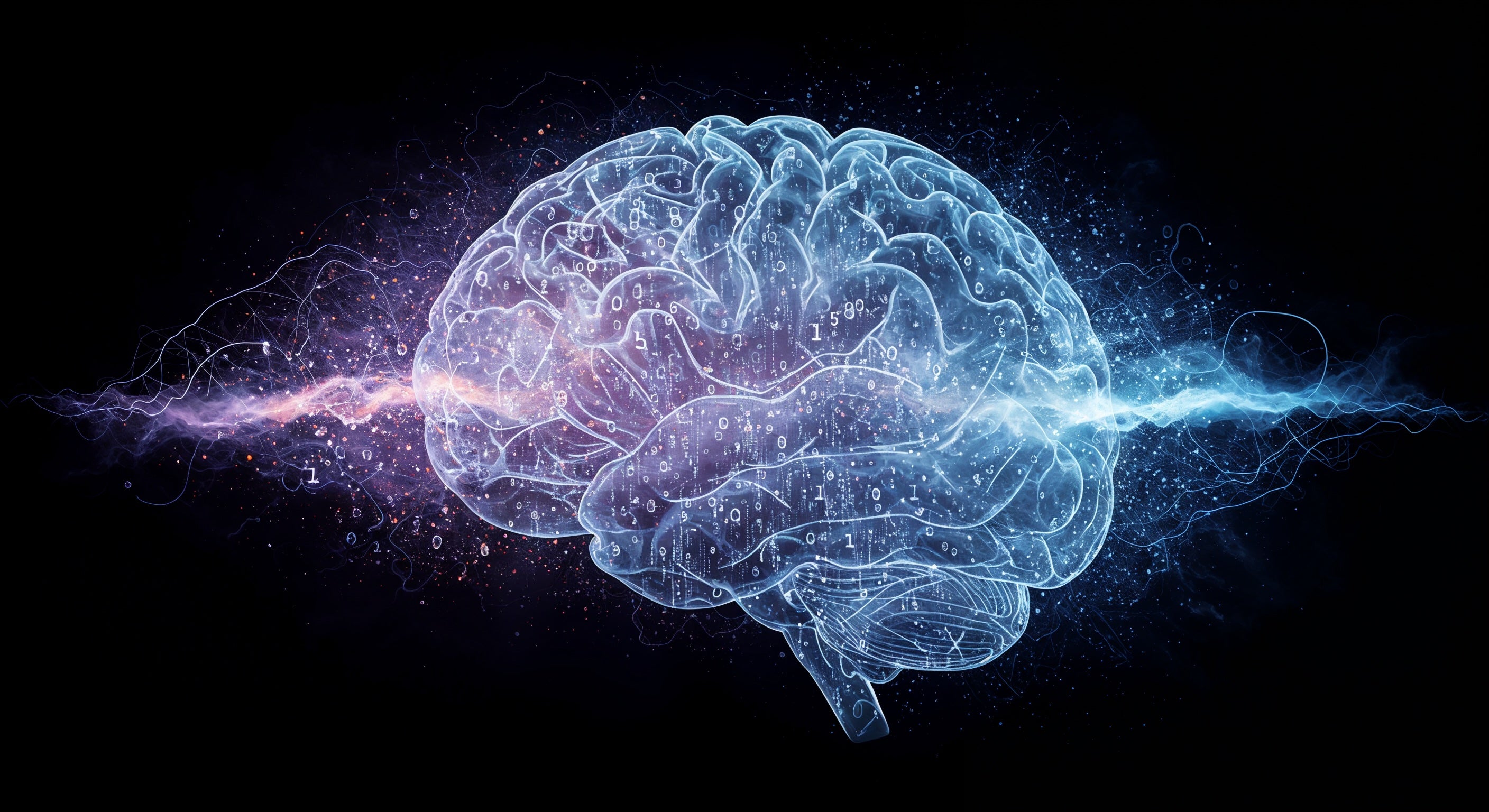
The ability to shift focus in a visual scene without moving your eyes, known as covert attention, is something we do constantly. Think about scanning a room or driving. Despite its commonality, the neurophysiological basis of this behavior remains largely unknown. Researchers at UC Santa Barbara, using convolutional neural networks (CNNs), have made a breakthrough. Sudhanshu Srivastava, Miguel Eckstein, and William Wang have not only shed light on the mechanisms of covert attention but also identified previously unknown neuron types. These findings were subsequently validated with data from mouse brain studies.
Srivastava, formerly a graduate student in Eckstein's lab and now a postdoctoral researcher at UC San Diego, emphasized the significance of the work, stating, "This is a clear case of AI advancing neuroscience, cognitive sciences and psychology."
The team's research has been published in the journal *Proceedings of the National Academy of Sciences*.
Uncovering Emergent Properties and New Neuron Types
Attention is often described as a spotlight in our brain, focusing on a specific area in our visual field and allocating resources to enhance perception. Contemporary computational and neurobiological models incorporate this attention mechanism, suggesting it amplifies visual processing at the attended location while reducing noise.
Scientists typically study covert attention in the lab by presenting a flash or arrow cue just before or at the same time as a target. They then measure how quickly and accurately participants detect the target when it appears with the cue. The idea is that the cue directs the brain's attention mechanism, modifying visual processing at the cued location.
Eckstein, a professor of psychological and brain sciences at UCSB, noted that covert attention behaviors seem deceptively simple, yet they are intrinsically linked to our ability to shift awareness across the visual world. For many years, this rapid behavior was believed to be exclusive to primates, facilitated by the parietal lobes, and even linked to consciousness.
That said, the reality is a bit more complicated. recent studies have documented this behavior in other species, including mice, archer fish, and bees – animals with simpler brain structures. This has prompted researchers to consider whether certain types of covert attention might be an emergent phenomenon. This means it could be the result of various neurons working together, rather than the function of specialized attention modules in the brain.
Mapping how the brain processes information, especially how attention is optimized for accuracy, is a complex challenge. The human brain is a dynamic system containing billions of neurons. Current imaging techniques lack the resolution needed to measure the activity of individual neurons.
To overcome this, researchers are turning to artificial intelligence models. By creating a relatively simple model of the brain and assigning it tasks that the human brain performs, it becomes possible to examine the AI's inner workings. This provides valuable insights into how the brain might be organized to perform such tasks.
Srivastava, Eckstein, and Wang previously demonstrated in 2024 that CNNs, containing between 200,000 and 1 million neurons, exhibited hallmarks of human covert attention when presented with target detection tasks. This occurred even without a built-in mechanism for directing attention. This earlier work showed that covert attention could emerge as a property of an artificial or biological organism learning to optimize target detection.
The current study delves deeper, investigating how these emergent neuronal mechanisms within CNNs give rise to the behavioral characteristics of covert attention. Researchers sought to understand what aspects of the CNN make this emergent covert attention possible.
Eckstein explained that they analyzed the convolutional neural networks in detail, rather than treating them as a black box. While single-cell physiology allows researchers to record activity from thousands of individual neurons, characterizing every unit in a million-neuron brain is currently impossible. That said, the reality is a bit more complicated. CNNs offer the opportunity to characterize every single unit, potentially guiding our understanding of real neurons in the brain.
The researchers subjected a population of 1.8 million artificial neurons (180k neuronal units across 10 trained CNNs) to a Posner cueing task. This visual test measures the speed and accuracy with which participants detect a target when it appears with or without a cue.
Their findings revealed CNN units that mirrored those reported by neurophysiologists in primate and mouse brains, despite lacking any built-in attention mechanism. Notably, they identified several CNN "neuron" types with previously unreported response properties. For example, while most studies focus on how neurons are excited by attention, the researchers found units in the CNN whose response was diminished by the presence of the cue, termed "cue inhibitory."
Eckstein highlighted the most surprising finding: a "location opponent" neuron. This type of neuron is excitatory, increasing activity when the target and cue are present at one location, while suppressing activity at other locations. This effectively amplifies the signal where the target is expected and dampens it elsewhere. While this opponency is new to the understanding of covert attention, such cells are common in other areas of vision. Examples include cells excited by red light but inhibited by green (color opponent) and neurons responding to upward motion while being inhibited by downward motion.
Eckstein explained that it’s a push-pull mechanism. He added that studies often focus on excitatory responses, where neurons increase activity, potentially overlooking mechanisms that dampen activity.
To determine if the CNNs corresponded to real biological neurons, the researchers examined neural data from mouse studies involving a cueing task. They confirmed the existence of these location-opposing neurons in the mouse superior colliculus (a midbrain structure), along with other previously unreported neuron types implicated in attention, such as cue-inhibitory and location-summation neurons.
Eckstein suggested that these neurons might mediate emergent attentional behavior.
Interestingly, one neuron type present in the CNN, which combines opponency for the cue but excitatory summation for the target at both locations, was not found in the mouse. This suggests potential biological constraints not present in the AI model.
The extent to which these findings apply to humans remains to be seen, as the research is still in its early stages. That said, the reality is a bit more complicated. this work demonstrates that covert attention is more complex than previously understood. The researchers have not only shown the existence of emergent attentional behaviors but also emergent neural mechanisms. Furthermore, CNNs can predict neural types with unique properties that have not been previously reported.
Srivastava stated that the findings fundamentally changed how they think about attention, and that they will see how these new concepts evolve over time.
Eckstein and Wang are leading UCSB’s Mind & Machine Intelligence Initiative, which was made possible by a gift from Duncan and Suzanne Mellichamp. They are deeply interested in the intersection of human and machine intelligence, and the initiative brings together researchers working at the intersection of AI and the study of the mind.