Unveiling the Arctic's Hidden Ecosystem: Methane Hydrates and Chemosynthetic Life
हिंदी में सुनें
Listen to this article in Hindi
Discovery of methane hydrate mounds and chemosynthetic life deep beneath the Greenland Sea reveals new insights into Arctic carbon cycling and unique ecosystems.
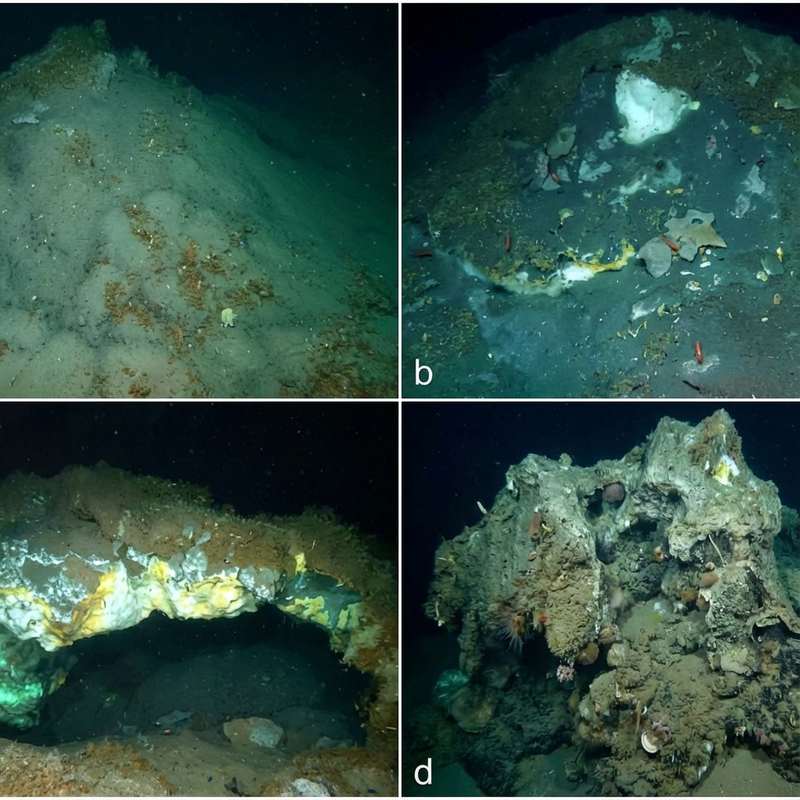
The Arctic, often perceived as a desolate expanse of ice and snow, holds secrets in its depths. Recent exploration of the Greenland Sea has revealed a complex geological and biological landscape thousands of meters below the surface, challenging previous assumptions about life and carbon storage in this remote region. Scientists have discovered extensive methane hydrate mounds along the Molloy Ridge, a tectonic boundary deep beneath the sea, teeming with chemosynthetic organisms that thrive in the absence of sunlight. This discovery sheds light on the intricate interplay between geology, biology, and climate in one of the Earth's most extreme environments.
Methane hydrates are essentially methane gas trapped within a crystalline ice structure. They form under specific conditions of low temperature and high pressure, typically found in permafrost regions and along continental slopes. The discovery of these hydrates at a depth of approximately 3,640 meters along the Molloy Ridge is significant because it represents one of the deepest known locations for hydrate formation. The Molloy Ridge itself is a mid-ocean ridge where tectonic plates are slowly moving apart. This movement creates fissures and pathways within the Earth's crust, allowing methane from deeper geological reservoirs to migrate upwards. As the methane encounters the cold temperatures of the deep ocean, it can become trapped, forming the observed hydrate mounds. Understanding how these geological features influence the distribution and stability of methane is crucial for predicting the Arctic's role in the global carbon cycle.
Perhaps even more remarkable is the ecosystem that has developed around these methane hydrate mounds. In the perpetual darkness of the deep sea, sunlight cannot support photosynthesis, the process by which most life on Earth obtains energy. Instead, the organisms in this area rely on chemosynthesis, a process where energy is derived from chemical compounds. In this case, the chemosynthetic organisms, primarily microbes, obtain energy from the methane seeping from the seafloor. These microbes form the base of a food web that supports a variety of other life forms, including tube worms and crustaceans, all specifically adapted to the extreme pressures and near-freezing temperatures of the deep Arctic Ocean. This discovery expands our understanding of the limits of life and the diverse strategies organisms employ to thrive in seemingly inhospitable environments. A deeper understanding of evolutionary adaptation is key in the field of biology.
The Molloy Ridge plays a crucial dual role in this deep-sea ecosystem. First, its tectonic activity provides the conduits for methane to reach the seafloor. Second, the ridge itself acts as a structural foundation for the hydrate mounds and the biological communities that depend on them. The interaction between geological processes and biological activity highlights the interconnectedness of Earth's systems, even in the most remote locations. It's important to note that while these methane hydrates currently appear to be stable, preventing large-scale release of methane into the water column, their long-term stability remains a concern. Methane is a potent greenhouse gas, and a significant release could exacerbate climate change. For a further explanation, see our science basics explainer.
This finding underscores the importance of continued exploration and research in the deep Arctic Ocean. The use of remotely operated vehicles (ROVs) equipped with advanced sensors and imaging systems has been instrumental in uncovering these hidden features and ecosystems. Further research is needed to fully understand the dynamics of methane cycling in this region, the long-term stability of the hydrate mounds, and the potential impacts of climate change on these unique ecosystems. The discovery of these ecosystems in the Greenland Sea may signify that similar regions exist elsewhere along deep tectonic margins, waiting to be discovered and studied. While this discovery provides valuable insights into the deep Arctic, it is important to avoid overstating its immediate implications. More research is required to fully grasp the long-term consequences and potential vulnerabilities of these systems. The study of oceanography may provide important context for this topic.
Editor’s note: This article was independently written by the Scoopliner Editorial Team using publicly available information.