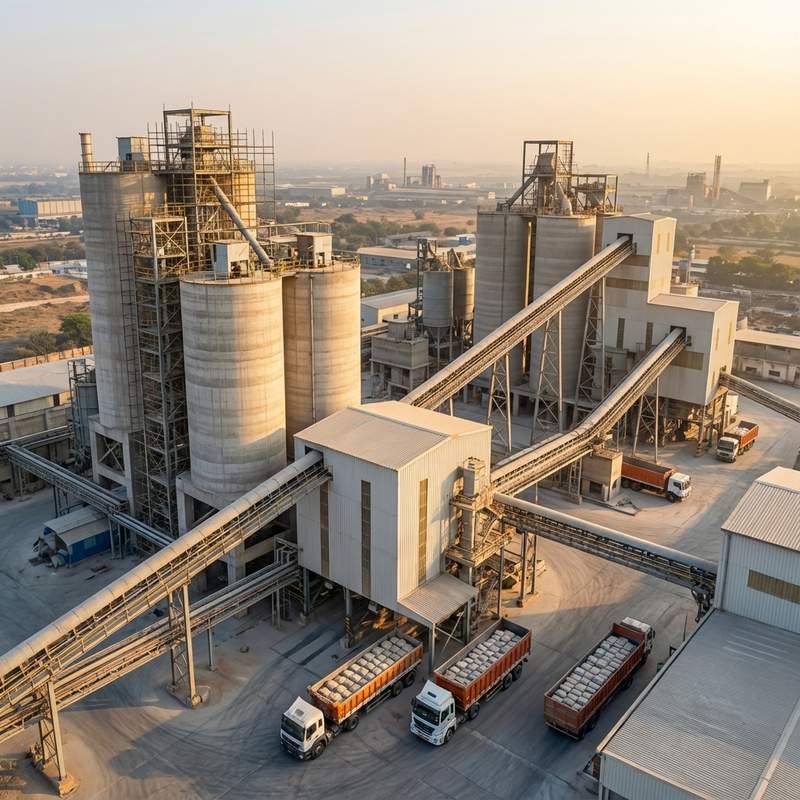
Cement Sector Consolidation: A Structural Shift Towards Efficiency and Market Dominance
हिंदी में सुनें
Listen to this article in Hindi
Analysis of the ongoing consolidation in the Indian cement industry, its implications for market dynamics, and the strategic considerations for investors.
The Indian cement sector, once a tapestry of regional players, is undergoing a significant transformation, driven by the relentless pursuit of efficiency and scale. This isn't merely about expansion; it's a strategic recalibration aimed at securing long-term profitability in an increasingly competitive landscape. The ongoing consolidation wave highlights a fundamental shift: survival and success hinge on achieving cost leadership and seamless pan-India operations.
The driving force behind this trend is multifaceted. Rising input costs, particularly energy and logistics, have squeezed margins, forcing companies to seek economies of scale. A nationwide distribution network offers a crucial advantage, enabling access to diverse markets and mitigating regional demand fluctuations. This has spurred larger players to absorb smaller, regional firms, expanding their footprint and leveraging synergistic benefits. Furthermore, the increasing complexity of infrastructure projects demands suppliers with the capacity and resources to deliver consistently across vast geographies.
This strategic consolidation interacts significantly with global economic cues and domestic policy initiatives. For example, government spending on infrastructure, a key driver of cement demand, is closely tied to overall economic growth forecasts and fiscal policy. A global slowdown could dampen infrastructure investment, impacting cement demand and potentially increasing competitive pressure. Conversely, positive global economic indicators and supportive government policies can fuel demand and bolster investor confidence in the sector.
For the informed retail investor, this environment demands a nuanced understanding of the competitive dynamics within the cement industry. It's no longer sufficient to simply track capacity figures. Investors need to assess a company’s ability to optimize costs, integrate operations, and leverage its distribution network. Companies that can effectively manage these factors are better positioned to weather market fluctuations and generate sustainable returns. Furthermore, the increasing concentration of market share may impact pricing power, potentially affecting profitability for smaller or less efficient players. Understanding stock market basics can help investors evaluate these companies.
The consolidation trend, while promising enhanced efficiency and stability, also presents certain constraints. Over-concentration could raise concerns about anti-competitive practices, leading to increased regulatory scrutiny. The pace of infrastructure development, while generally positive, is subject to delays and unforeseen challenges, which can impact cement demand. Moreover, the sector's reliance on raw materials and energy makes it vulnerable to commodity price volatility and supply chain disruptions. Investors should be mindful of these potential headwinds when evaluating investment opportunities in the cement sector.
Ultimately, the consolidation of the Indian cement industry reflects a broader trend towards greater efficiency and competitiveness in the Indian economy. While the path ahead may present challenges, the long-term outlook for the sector remains positive, driven by sustained infrastructure development and growing urbanization. Investors who understand the underlying dynamics and carefully assess the risks and opportunities are best positioned to benefit from this ongoing transformation. Understanding Indian economy context provides a valuable lens for assessing these opportunities. RBI policy can also affect the sector significantly through interest rate changes and overall economic conditions.
Editor’s note: This article was independently written by the Scoopliner Editorial Team using publicly available information.