Navigating the Complex Web of Global and Domestic Risks: The Indian Market's Path to 2026
हिंदी में सुनें
Listen to this article in Hindi
An analysis of global risks impacting India's market trajectory and investor sentiment ahead of 2026.
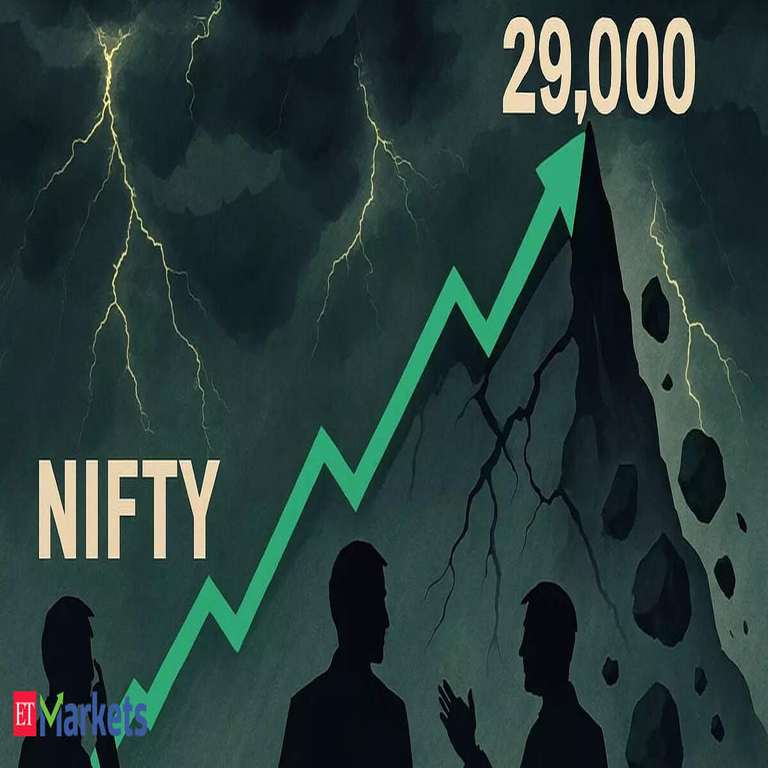
As the Indian market approaches 2026, buoyed by an unprecedented winning streak, the optimism surrounding Nifty's potential to reach 29,000 is palpable. That said, the reality is a bit more complicated. lurking beneath this bullish sentiment is a series of global and domestic factors that could significantly impact the trajectory of Indian equities. Investors must grapple with the reality that the euphoria of rising markets is often tethered to underlying vulnerabilities, particularly as geopolitical tensions and economic uncertainties loom large.
The intricate dance of global trade dynamics, particularly between the U.S. and India, serves as a crucial barometer for market sentiment. The anticipation of a U.S.-India trade deal has been a primary driver of investor optimism, with many market participants pricing in positive outcomes. Yet, this reliance on a singular event creates a precarious situation. Should negotiations falter or face delays, particularly in the early months of 2026, market sentiment could swiftly sour, leading to a decline in export momentum and heightened volatility. The stakes are high; any prolonged uncertainty could catalyze a ripple effect across various sectors, straining the economic fabric that has supported recent market gains.
Compounding these issues is the unpredictable nature of geopolitical events. The potential for political unrest, both domestically and internationally, presents a complex risk landscape for investors. The upcoming U.S. elections, for instance, could shift fiscal priorities and regulatory frameworks in ways that are difficult to predict. Such shifts could have immediate repercussions on foreign policy and trade, impacting Indian corporations that are heavily reliant on the U.S. market. As the market remains inherently forward-looking, the failure to adequately price in these geopolitical uncertainties could lead to a rude awakening for investors who have grown accustomed to a bullish trajectory.
Another significant factor that could influence the Indian market is the potential unwinding of the AI bubble, which has captured the attention of global investors. The concentration of investments in overheated tech stocks has created an environment ripe for correction. If a substantial decline occurs in the U.S. equity markets, particularly within the tech sector, it could trigger a domino effect that spills over into Indian equities. Investors may find themselves grappling with capital flight and foreign institutional investor (FII) outflows, both of which could exacerbate market volatility and dampen liquidity conditions in India.
Moreover, the relationship between earnings growth and market valuations remains a critical focal point. With valuations currently elevated, the onus is on corporate earnings to justify these levels. Should earnings fail to align with heightened expectations, particularly in a market that demands consistent performance, the potential for derating becomes significant. This risk is magnified by the uneven earnings profile across sectors, where any mild disappointments could lead to sharp corrections. For investors, this creates a precarious balance, as the market's past performance does not guarantee future success.
In addition to these internal dynamics, external pressures such as crude oil prices and currency fluctuations further complicate the outlook. A spike in crude oil prices could significantly impact India's current account deficit, thereby affecting macroeconomic stability. The interplay between these external factors and their potential to catalyze currency depreciation introduces a vicious cycle that could tighten domestic liquidity and temper economic growth, leading to an environment of uncertainty that could deter both domestic and foreign investors.
Finally, the equity supply dynamics in the Indian market present yet another layer of complexity. The recent surge in initial public offerings (IPOs) and follow-on offerings (FPOs) has inundated the market with new shares, potentially outstripping demand. This oversupply could create downward pressure on stock prices, further diminishing investor confidence. In a scenario where foreign investment does not compensate for domestic selling, the market's resilience could be tested.
So where does that leave things? while the Nifty's ascent towards the ambitious target of 29,000 is marked by significant investor optimism, it is crucial to acknowledge the myriad risks that could derail this journey. The confluence of global uncertainties, economic pressures, and internal market dynamics suggests that the path forward will not be linear. Investors must remain vigilant, carefully assessing how these interrelated factors will shape market sentiment and volatility as they navigate the complexities of the Indian financial landscape in 2026. Understanding these dynamics is not merely an exercise in analysis but a necessity for informed decision-making in an increasingly unpredictable environment.
Editor's note: This article was independently written by the Scoopliner Editorial Team using publicly available information.