Parker Solar Probe Offers Unprecedented Glimpse of Interstellar Comet's Solar Encounter
हिंदी में सुनें
Listen to this article in Hindi
The Parker Solar Probe observed interstellar comet 3I/ATLAS when it was hidden from Earth, providing valuable data about its behavior near the Sun.
The Parker Solar Probe, NASA's spacecraft designed to study the Sun up close, has achieved a unique feat: observing the interstellar comet 3I/ATLAS during a period when it was invisible from Earth. This observation, made possible by the probe's strategic position and specialized instruments, provides valuable insights into the comet's behavior as it approached and rounded the Sun.
Comet 3I/ATLAS, an object originating from outside our solar system, has been a subject of intense scientific interest since its discovery. Its trajectory and composition offer clues about the formation and evolution of planetary systems beyond our own. That said, the reality is a bit more complicated. observing comets as they near the Sun presents a challenge. The intense glare of our star often obscures these icy bodies from ground-based telescopes, leaving a gap in our understanding of their solar interactions. This highlights the importance of missions like Parker, which can get a closer look at the Sun than ever before.
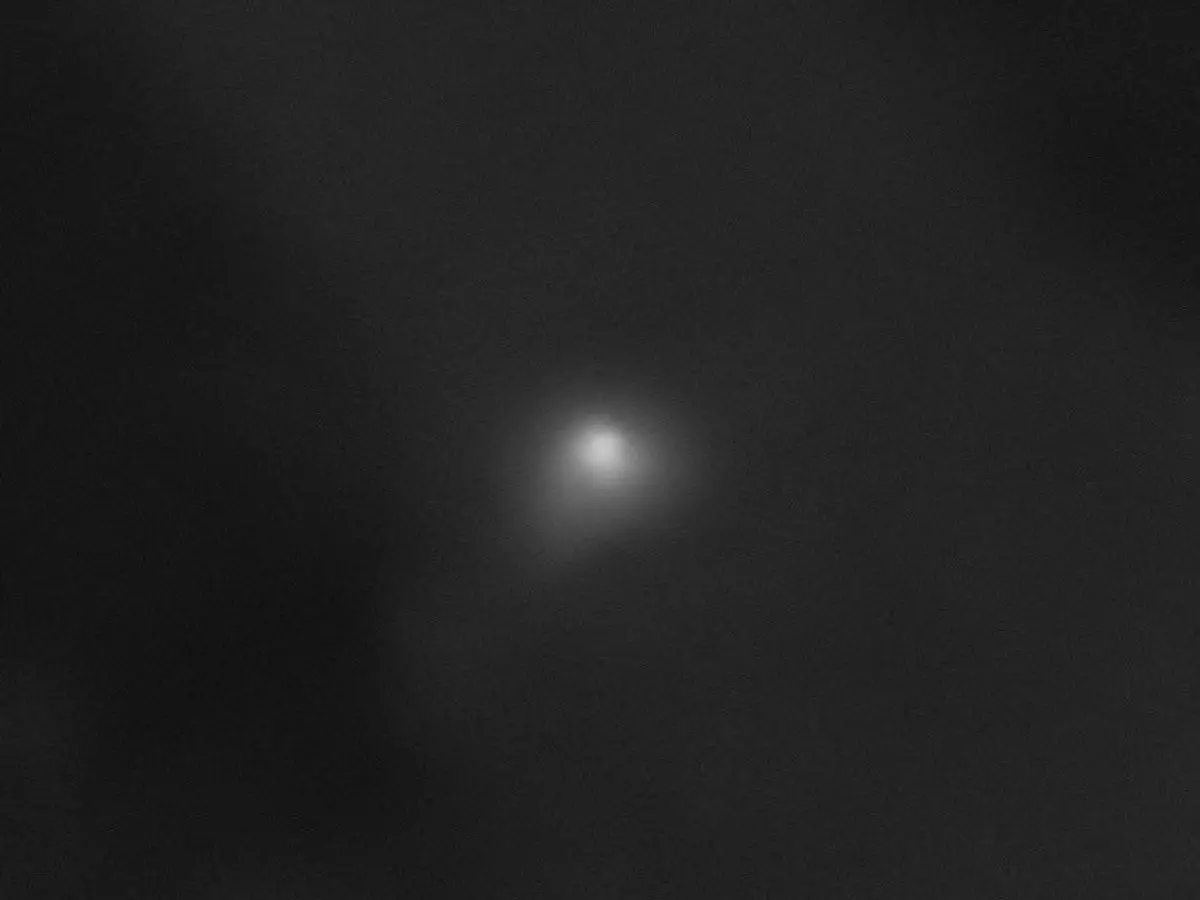
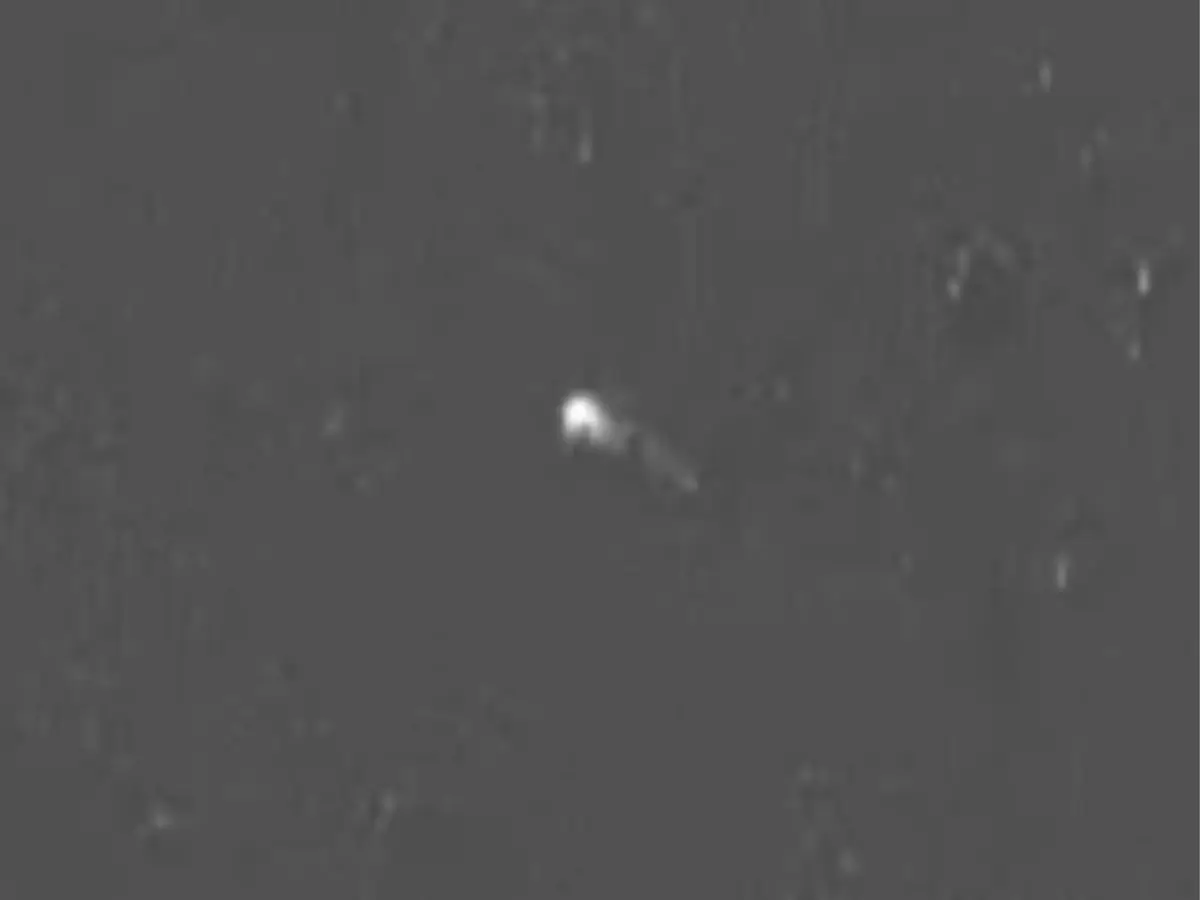
Between October 18 and November 5, the Wide-field Imager for Parker Solar Probe (WISPR) captured approximately 10 images of 3I/ATLAS each day. During this period, the comet was nearing its closest approach to the Sun, known as perihelion, which it reached on October 29. At the time of the observations, 3I/ATLAS was about 209 million kilometers (130 million miles) from the Sun, just outside Mars' orbit. Parker was positioned at a vantage point from which it could see the comet pass behind the Sun, a perspective unavailable to terrestrial observers. These observations are especially valuable because they capture a stage of the comet's journey that would otherwise be unobservable.
The WISPR team is currently processing the images to remove stray sunlight and correct for variations in exposure times. These adjustments are crucial for obtaining accurate data on the comet's brightness and structure. Preliminary analysis suggests that the comet's brightness varied during the observation period, likely due to changes in exposure times and potentially inherent changes in the comet's activity. Once processed, the images will allow scientists to study the comet's coma (the cloud of gas and dust surrounding the nucleus) and tail with unprecedented detail. Understanding these features can reveal information about the comet's composition, the rate at which it is losing material due to solar heating (sublimation), and the influence of the solar wind on its trajectory. This also ties into broader research on space weather and the behaviour of particles in the solar system.
It's important to note that this observation does not validate any claims about 3I/ATLAS being an alien probe, a theory previously suggested because of the period it was hidden from view behind the Sun. The Parker Solar Probe's images simply provide scientific data about the comet's natural behavior. This highlights the importance of scientific rigor and evidence-based conclusions in astronomy and astrophysics. Claims of extraterrestrial origin require extraordinary evidence, which is not supported by the current observations. Understanding the difference between a comet and an asteroid is crucial when considering origins and trajectories.
While these observations offer a unique perspective on 3I/ATLAS, there are still limitations. The data collected by WISPR are primarily images, and further analysis is needed to determine the comet's precise composition and physical properties. Spectroscopic observations, which can identify the chemical elements present in the comet's coma and tail, would provide a more complete picture. Future missions, or even Earth-based observations once the comet is no longer obscured by the Sun, may be able to provide this additional information. Furthermore, the data processing is ongoing, and the final results may reveal new and unexpected aspects of the comet's behavior.
So where does that leave things? the Parker Solar Probe's observation of 3I/ATLAS represents a significant contribution to our understanding of interstellar comets and their interaction with the Sun. By providing a view of the comet during a period when it was hidden from Earth, the probe has filled a critical gap in our knowledge. The processed images promise to yield valuable insights into the comet's composition, structure, and dynamics. This event underscores the importance of space-based observatories in expanding our understanding of the cosmos and complements the ongoing efforts to understand the science basics of comets and other celestial objects.
Editor’s note: This article was independently written by the Scoopliner Editorial Team using publicly available information.