Comet 3I/ATLAS to Grace Skies on December 19: A Must-See Astronomical Event
हिंदी में सुनें
Listen to this article in Hindi
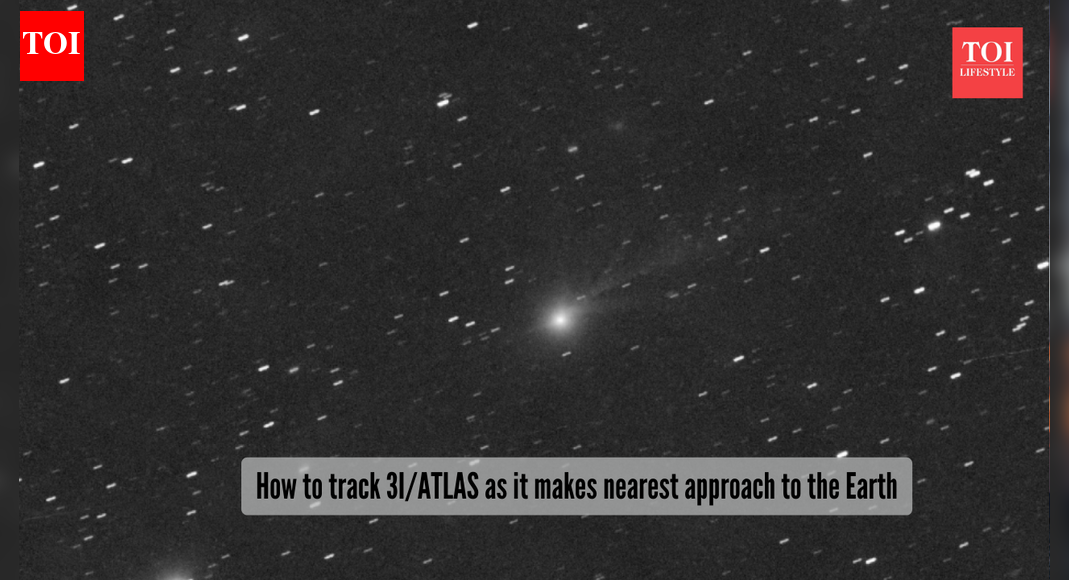
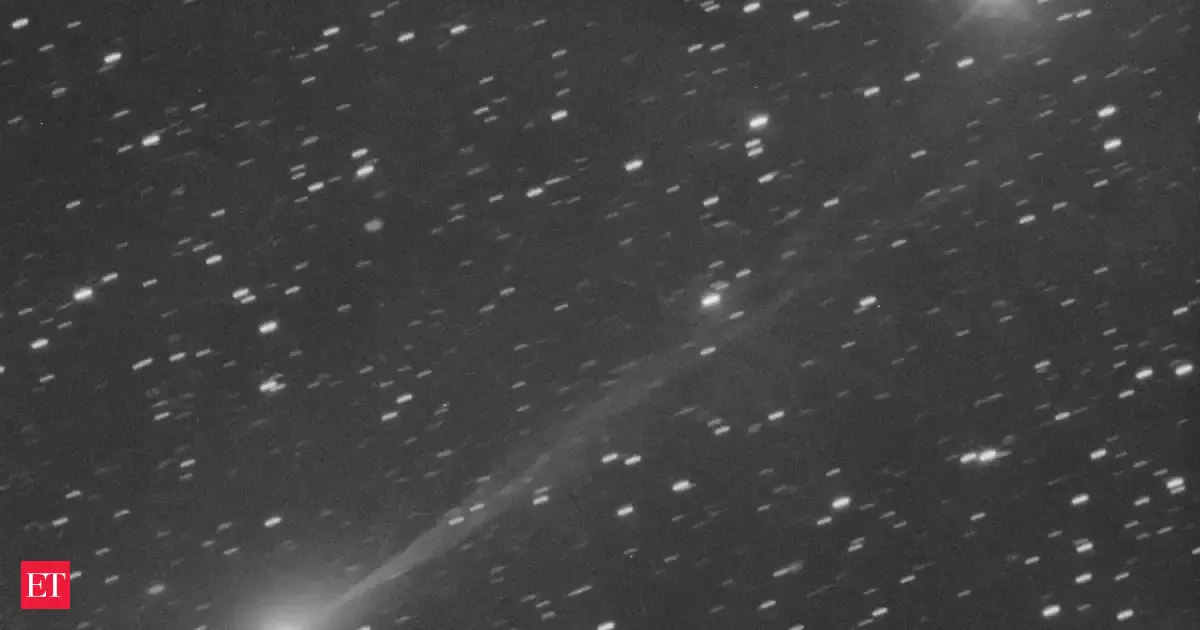
NASA is intensely observing interstellar comet 3I/ATLAS. Closest approach on Dec 19 offers telescope viewing. Learn how and where to spot it!
NASA has launched a comprehensive observation campaign targeting comet 3I/ATLAS, the third interstellar object detected passing through our solar system. Multiple spacecraft and telescopes are focused on studying this celestial visitor. By comparing it to comets originating within our solar system, researchers hope to gain insights into its composition and origin.
The comet, initially spotted on July 1 by the NASA-funded ATLAS telescope in Chile, has been under intensive monitoring by various spacecraft and space telescopes. Soon after its discovery, the Hubble Space Telescope captured images, followed by observations from the James Webb Space Telescope and SPHEREx in August. The combined data from these observations are expected to provide a more complete understanding of this interstellar comet compared to those formed within our own solar system.
**Viewing Opportunity on December 19**
Comet 3I/ATLAS will make its closest approach to Earth on December 19, at a distance of approximately 274 million kilometers. While this is nearly twice the average distance between the Earth and the Sun, posing no threat to our planet, it's still over 700 times farther away than the Moon. Despite the distance, astronomers say this close approach offers the best chance to observe the comet before it continues its journey out of the inner solar system.
Skywatchers may be able to spot 3I/ATLAS in the early morning hours before sunrise, looking towards the east-northeast. The comet will appear slightly below Regulus, a bright star in the Leo constellation. That said, the reality is a bit more complicated. a telescope with an aperture of 30 centimeters or larger will be necessary to view it. Those interested may want to check for skywatching events hosted by local observatories or astronomy clubs.
**A Solar System-Wide Effort**
To date, a dozen NASA instruments have recorded and processed images of comet 3I/ATLAS. Additional spacecraft are expected to observe it as it travels through the solar system. The comet is projected to pass beyond Jupiter's orbit in the spring of 2026 before returning to interstellar space. By comparing 3I/ATLAS to comets from our solar system, researchers can conduct a unique study using observations from Earth, Mars, and space-based telescopes. These observations could offer valuable clues about the formation and evolution of planetary systems throughout the universe.
Notably, some of the closest and most detailed images of 3I/ATLAS were captured near Mars this fall, at a distance of about 30.6 million kilometers. Three NASA missions were involved in observing this event. The Mars Reconnaissance Orbiter (MRO) obtained some of the closest images, while the MAVEN orbiter collected ultraviolet data to help determine the comet's composition. NASA's Perseverance rover even managed to capture a faint image of the comet from the Martian surface, marking a rare instance of interplanetary observation.