3I/ATLAS: Interstellar Comet or Alien Spacecraft? See Its Closest Approach Today
हिंदी में सुनें
Listen to this article in Hindi
NASA released images of comet 3I/ATLAS after a rare flyby. Is it an alien spacecraft? Learn what scientists say and how to view it.
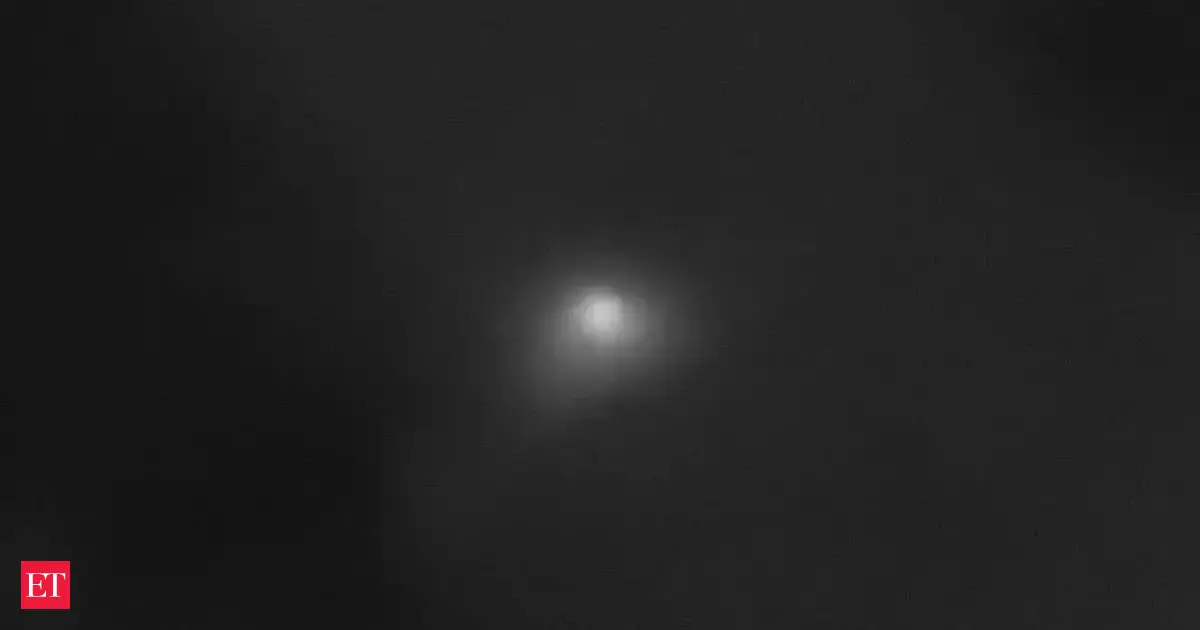
Is 3I/ATLAS an interstellar comet or something more mysterious? New images of the object were released by NASA on December 18, sparking curiosity. These images were taken by the Europa Clipper spacecraft during a recent flyby. Although Europa Clipper's primary mission is to study Jupiter's moon Europa, it found itself in the right place at the right time to observe the comet as they crossed paths at high speed.
Scientists are excited about this event because it provides a unique opportunity to analyze material originating from outside our solar system. The comet is observable via telescopes and online livestreams. NASA has clarified that the data indicates it's a natural comet, not an alien artifact.
An Unexpected Observation
The Europa Clipper, designed to explore Jupiter's moon Europa, wasn't intentionally tracking the comet. NASA reported that the spacecraft happened to be positioned favorably as both objects traversed the solar system. On November 6, Europa Clipper utilized its Europa Ultraviolet Spectrograph to observe the comet for seven hours from a distance of approximately 102 million miles. Scientists have emphasized that this chance encounter allowed them to test instruments intended for other purposes.
Closest Approach Details
Traveling at approximately 153,000 miles per hour, the comet made its closest approach to Earth between December 18 and 19. At its nearest, 3I/ATLAS remained about 168 million miles (270 million kilometers) away from our planet. NASA has assured the public that this distance poses no threat to Earth. The comet is currently traveling through the inner solar system before heading towards Jupiter.
Viewing Opportunities
**Can you see the comet?**
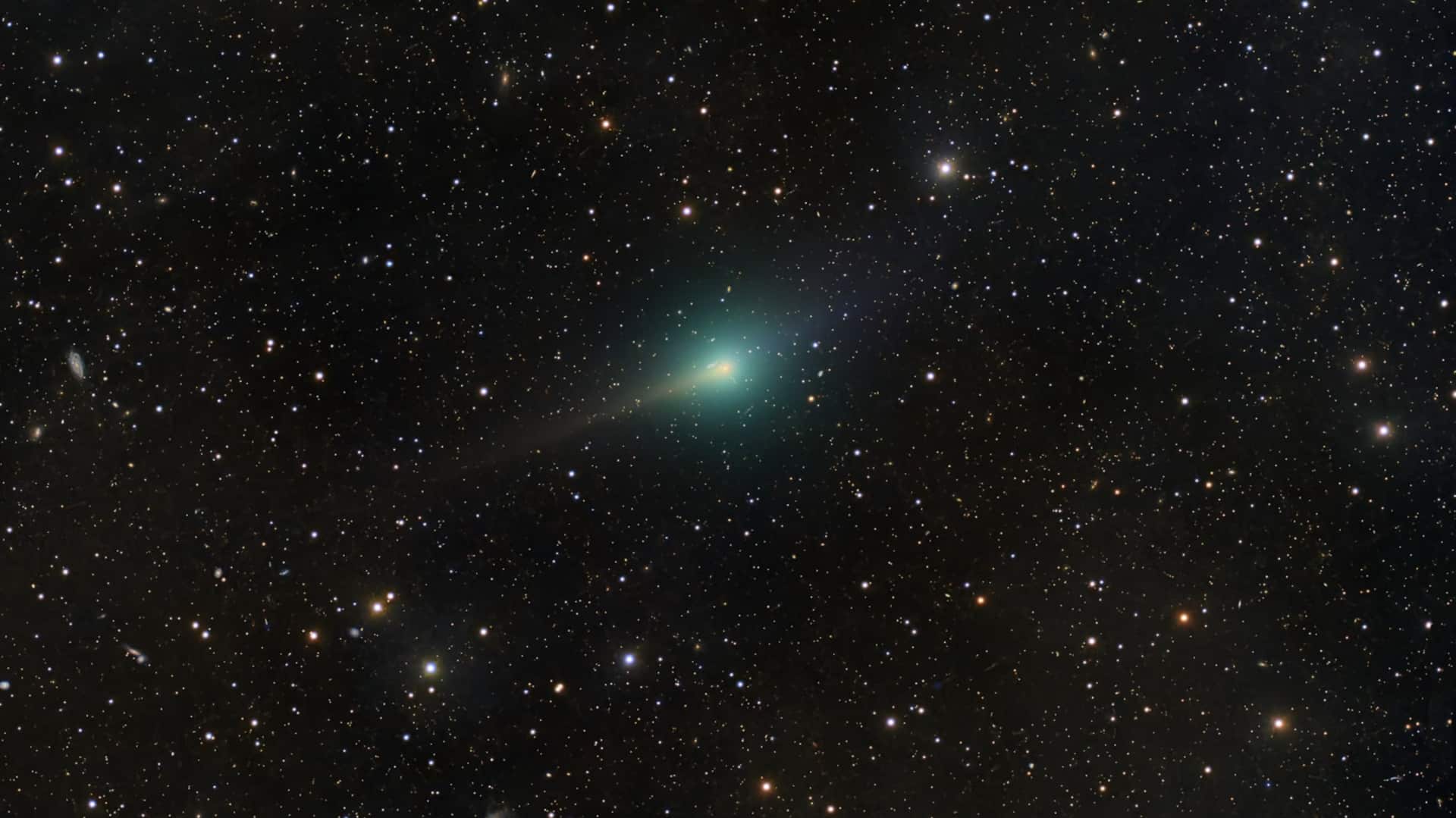
Amateur astronomers with powerful telescopes can attempt to view the comet. According to NASA, it will appear as a faint, rapidly moving green dot. It is not visible without assistance. Those with access to dark skies will likely need telescopes with an aperture of at least eight inches. Recent images from astrophotographers show limited visible detail.
**Livestream Option**
For those without telescopes, the Virtual Telescope Project is hosting a free livestream. It began at 11 p.m. EST on December 18 (0400 GMT on December 19). The livestream will broadcast real-time telescope views from robotic observatories located in Manciano, Italy, depending on weather conditions. The comet's closest approach occurred at 1 a.m. EST on December 19.
What the Images Reveal
The Europa Clipper captured the image using ultraviolet light, which is invisible to the human eye. Scientists processed the data by isolating and layering wavelengths to reveal the comet's appearance beyond the visible spectrum. Other observatories have studied 3I/ATLAS using infrared and X-ray wavelengths, providing insights into its structure and composition.
What We Know About 3I/ATLAS
NASA has stated definitively that there is no evidence suggesting the object is artificial. It has been classified as a natural interstellar comet based on analysis of the gases it releases, known as the coma. Previous observations have indicated the presence of carbon dioxide ice and diatomic carbon gas, which gives the comet its characteristic green glow. The Europa Clipper mission is not searching for life on the comet.
Connection to the Europa Clipper Mission
Both 3I/ATLAS and Europa Clipper are on trajectories that will take them toward Jupiter. The comet will make its closest approach to Jupiter in March 2026, while Europa Clipper will arrive later, in April 2030. Once at Jupiter, Europa Clipper will focus on studying Europa, where scientists suspect a liquid water ocean may exist beneath its icy surface. The mission will investigate Europa's surface, atmosphere, and any potential geysers.
Why 3I/ATLAS Matters
Discovered in July 2023 by the ATLAS survey, 3I/ATLAS is only the third interstellar object ever confirmed. The other two were 1I/‘Oumuamua (2017) and 2I/Borisov (2019). Researchers believe studying 3I/ATLAS could provide valuable information about the formation of planetary systems around other stars.
What's Next?
NASA is still analyzing the detailed ultraviolet data collected by Europa Clipper. The results will be released after processing is complete. Scientists have said that the images already offer an unprecedented glimpse of material originating from outside our solar system.
FAQs
**Is 3I/ATLAS an alien spacecraft?**
No. NASA has confirmed that 3I/ATLAS is a natural interstellar comet. Data analysis reveals the presence of typical comet gases and ice, and there is no indication of artificial structures or alien technology.
**How can I view 3I/ATLAS?**
To observe 3I/ATLAS, use a large telescope in a dark sky location. Alternatively, watch the Virtual Telescope Project's livestream, which broadcasts real-time images during the comet's closest approach to Earth.