3I/ATLAS Heads Out, But Could It Return With Company? NASA Observes Rare Interstellar Comet After Earth Flyby
हिंदी में सुनें
Listen to this article in Hindi
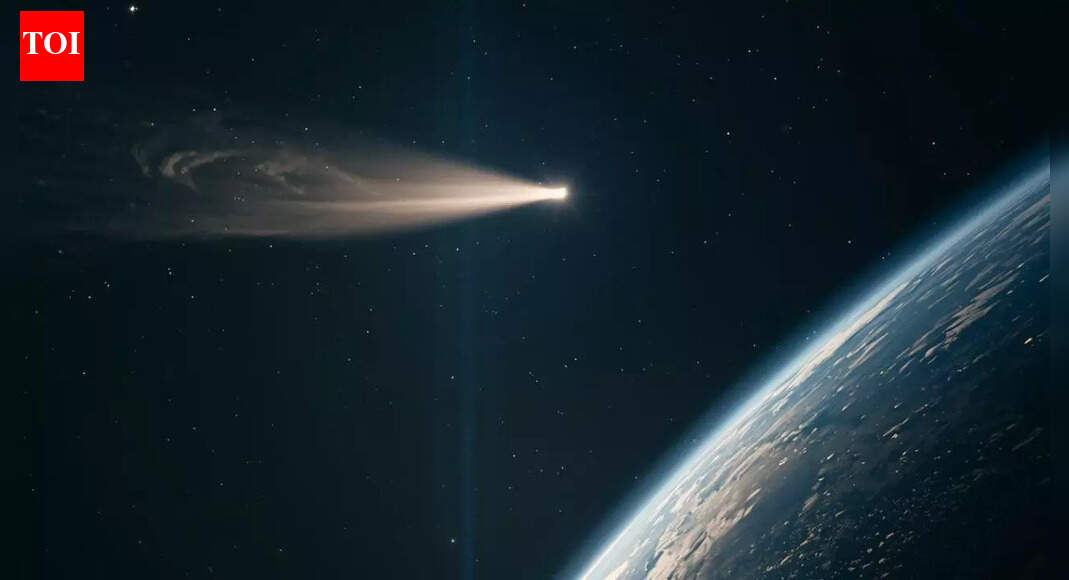
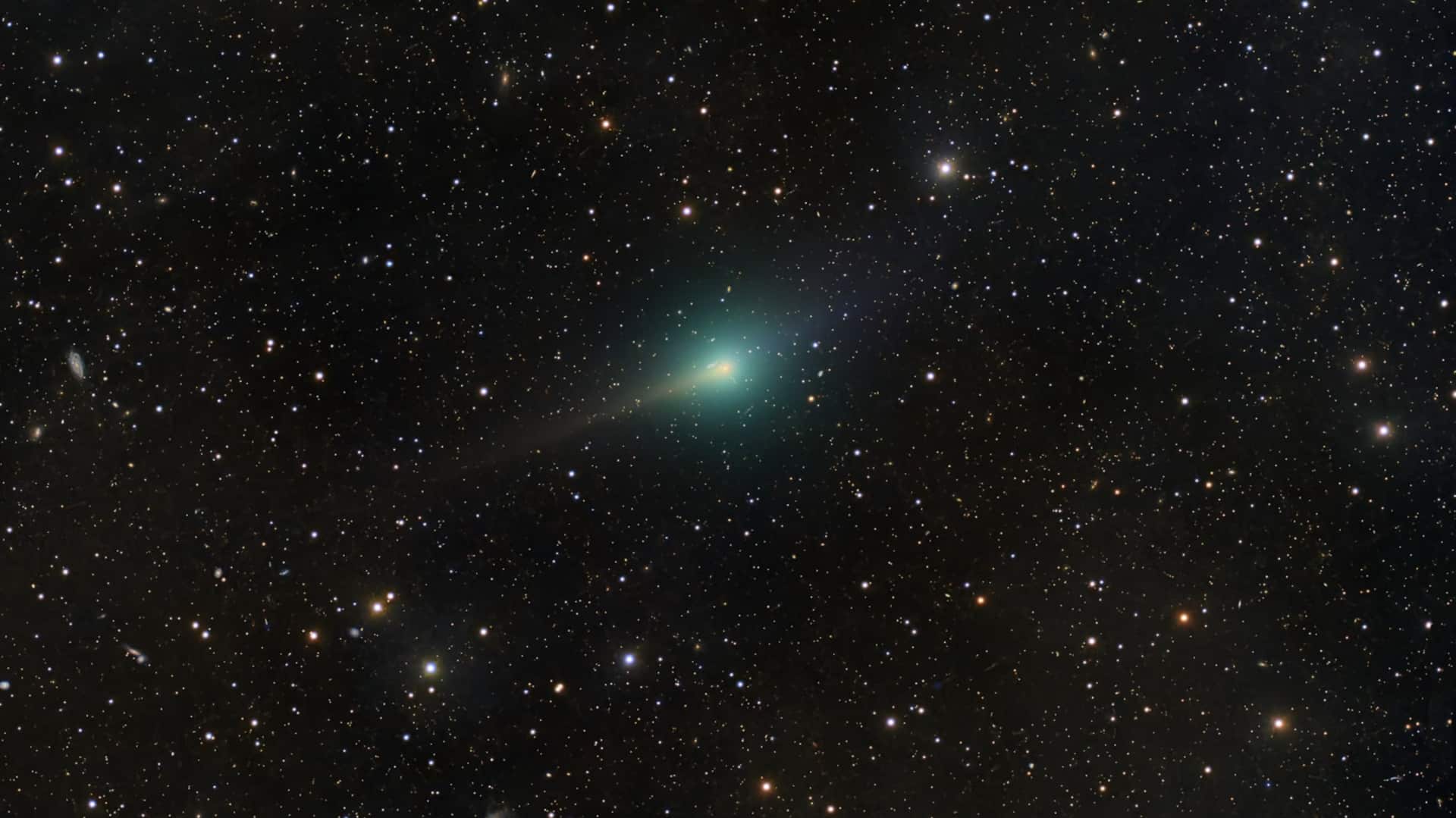
NASA is tracking interstellar comet 3I/ATLAS as it exits our solar system after a close Earth approach. Scientists are studying its origins and unusual brightness.
The interstellar comet 3I/ATLAS is now leaving our solar system, but scientists are still analyzing data gathered during its recent close approach to Earth, according to NASA. While some speculate about the object's nature, the agency continues to focus on scientific analysis. This comet, only the third interstellar visitor ever observed, made its closest pass to Earth on December 19, coming within 168 million miles (270 million kilometers). The information gathered is expected to provide valuable insights into the formation of planets and comets in other star systems.
Although 3I/ATLAS is heading out of the solar system, its scientific impact is just beginning. Researchers are especially interested in its unusual brightness and ancient origins, which continue to pose intriguing questions.
**Third Interstellar Object**
3I/ATLAS joins 1I/‘Oumuamua (2017) and 2I/Borisov (2019) as the only interstellar objects ever recorded. These objects originated far beyond our solar system, making them valuable samples of material from other star systems. Scientists believe they contain primordial matter from the early stages of planetary system formation.
**Discovery and Origin**
NASA's ATLAS system first spotted the comet on July 1, 2025. Its interstellar origin was confirmed when tracking data showed that its trajectory could not be explained by the gravity of our solar system alone. Scientists have traced its path back to a region of the Milky Way older than our solar system.
**Possible Age**
Studies suggest that 3I/ATLAS may be significantly older than typical solar system comets, potentially up to seven billion years old. It is believed to originate from the Milky Way's thick disk, a region of the galaxy that formed before the thinner disk where our sun resides. For comparison, most comets within our solar system are approximately 4.5 billion years old. According to Matthew Hopkins, an astronomer at the University of Oxford, statistical analysis indicates that 3I/ATLAS could be the oldest comet ever observed.
**Unexpected Brightening**
Scientists are also trying to understand why 3I/ATLAS brightened unexpectedly as it approached perihelion on October 29. While comets typically brighten as solar heat causes ice to vaporize, creating a coma and tail, 3I/ATLAS brightened at a faster rate than expected. This phenomenon was observed by several satellites, including STEREO-A, STEREO-B, SOHO, and GOES-19. The cause of this rapid brightening is still unknown.
**Research Findings**
In a paper posted on arXiv, researchers Qicheng Zhang and Karl Battams noted that the brightening rate of 3I/ATLAS exceeded that of most Oort cloud comets at similar distances from the sun, and that no clear explanation exists. Scientists are continuing to analyze the data collected during the comet’s passage.
**Future Discoveries**
Researchers believe that the data collected from 3I/ATLAS will have a lasting impact, helping to improve models of star system formation. NASA also provides access to the comet's path through the Eyes on the Solar System interactive app.
**Frequently Asked Questions**
- Why is 3I/ATLAS important?** Because it originated outside our solar system, providing insights into ancient materials from other star systems and aiding the study of galaxy formation.
- Will 3I/ATLAS return?** No, it is on a one-time path through the solar system and will continue traveling through the Milky Way permanently.