3I/ATLAS: Exocomet's Anti-Tail Extends Beyond Earth-Moon Distance, Says Harvard's Avi Loeb
हिंदी में सुनें
Listen to this article in Hindi
Harvard's Avi Loeb analyzes the unusually large anti-tail of exocomet 3I/ATLAS, noting its extension beyond the Earth-Moon distance. Read more on Scoopliner.com.
As exocomet 3I/ATLAS approaches its closest point to Earth in December 2025, its behavior continues to surprise scientists. This interstellar visitor, the third of its kind after 1I/Oumuamua (2017) and 2I/Borisov (2019), is exhibiting an unusually large anti-tail, puzzling researchers. On December 19, 2025, 3I/ATLAS will reach a point approximately 1.79 AU from Earth, before heading toward Jupiter and eventually exiting our solar system next year.
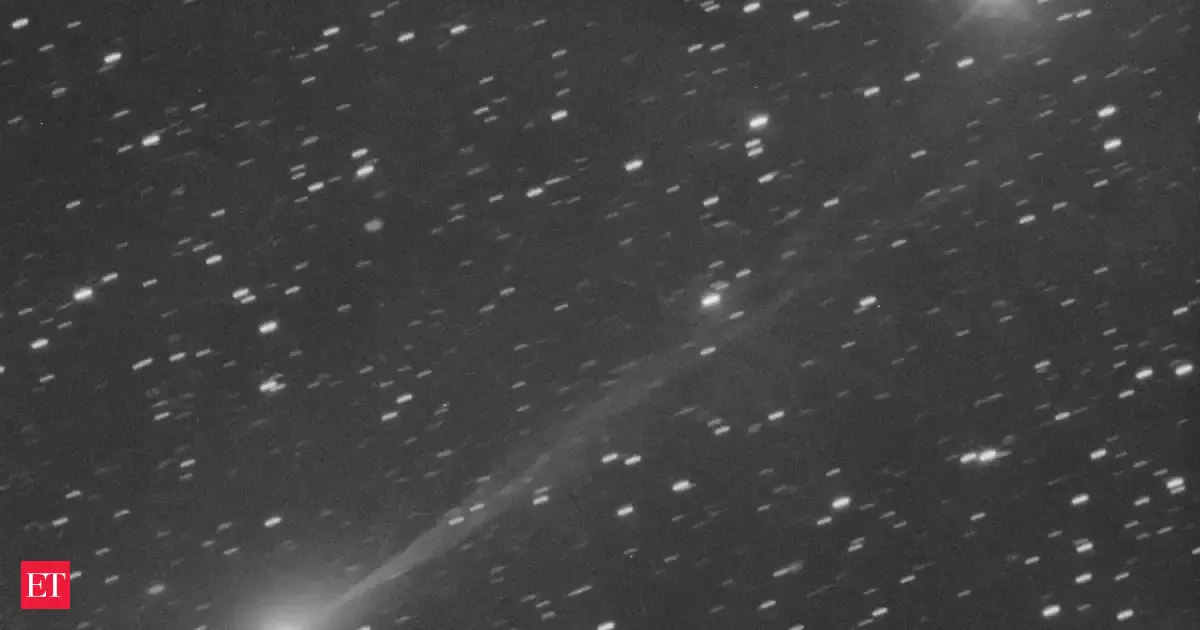
Harvard astrophysicist Avi Loeb has been studying the exocomet's anti-tail, noting its remarkable size in his recent Medium blog post. Images taken on December 14 and 15, 2025, reveal a prominent anti-tail extending about 500,000 kilometers from the comet's nucleus, directed towards the Sun. This distance exceeds the average distance between the Earth and the Moon (384,400 kilometers), making it an unprecedented observation for a comet's anti-tail.
Loeb calculates that the material in the anti-tail must be moving at least 130 meters per second relative to the nucleus of 3I/ATLAS to reach such a scale (500,000 kilometers) in the 45 days following its closest approach to the sun. He questions whether sublimated dust or gas, propelled by solar wind and radiation pressure, can sustain this speed. Loeb proposes an alternative explanation: "The alternative is a jet from a technological thruster."