Interstellar Comet 3I/ATLAS: Assessing the Risk of Cyanide Exposure on Earth
हिंदी में सुनें
Listen to this article in Hindi
The interstellar comet 3I/ATLAS recently passed Earth. We analyze the potential, and negligible risk, of cyanide exposure due to its composition and Earth's atmospheric protection.
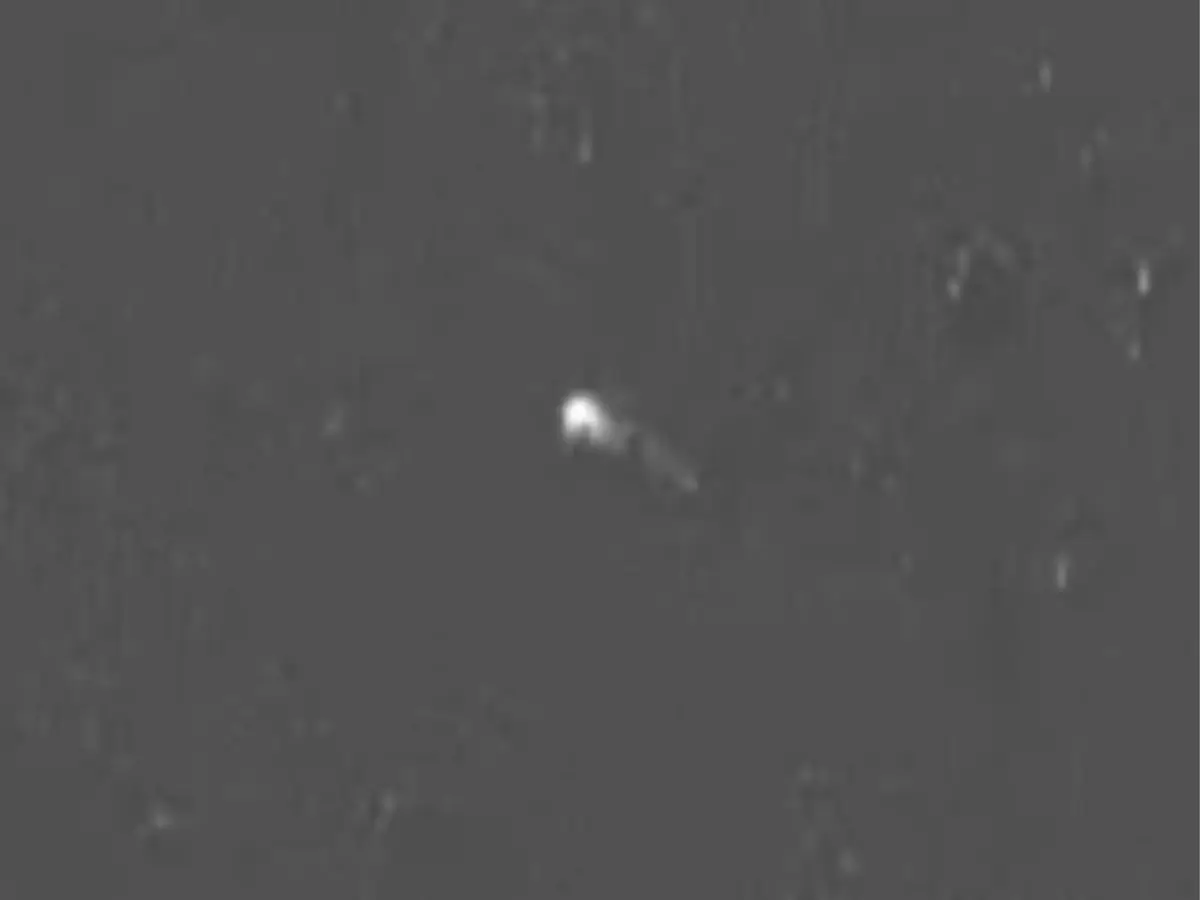
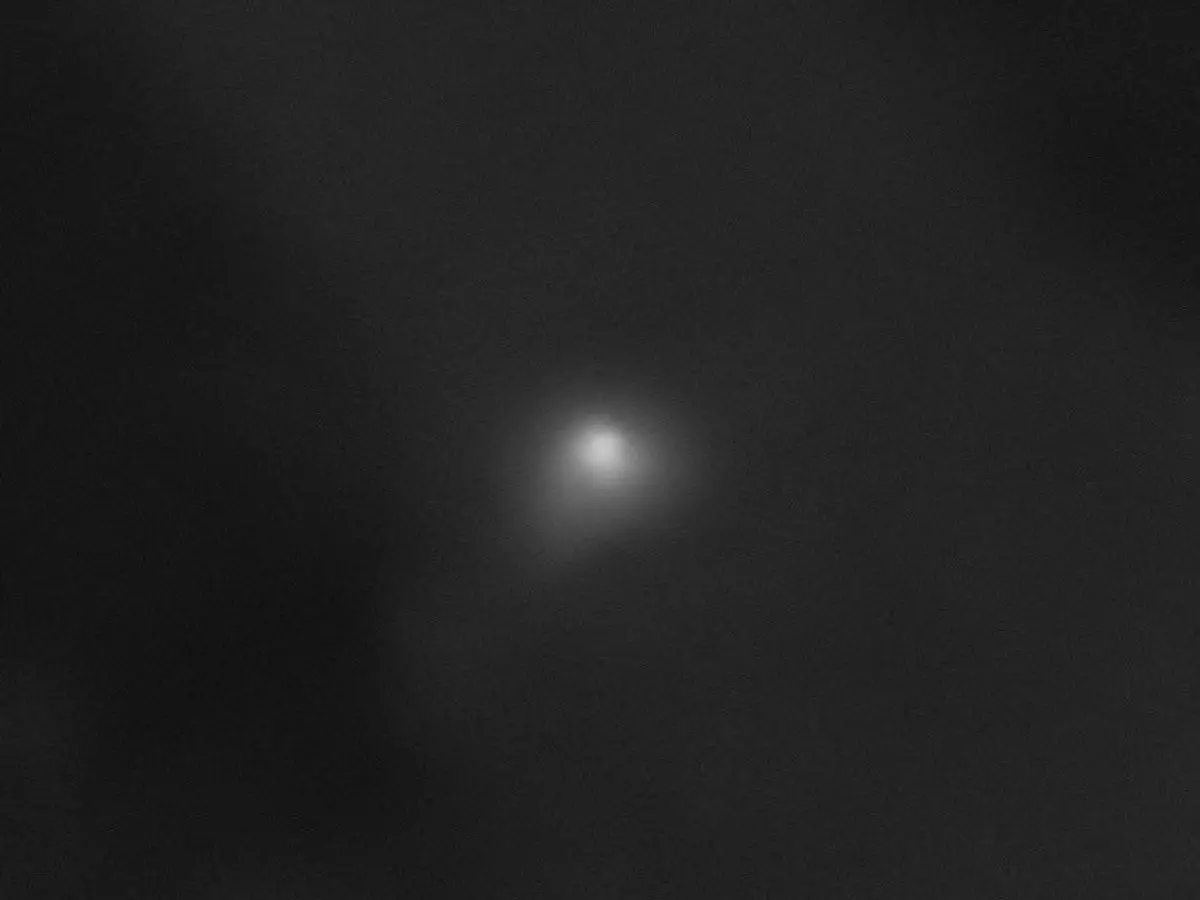
The recent flyby of interstellar comet 3I/ATLAS has offered astronomers a rare opportunity to study a celestial object originating from outside our solar system. While the comet's passage at a distance of approximately 269 million kilometers presented a spectacular visual display, featuring both a tail and an anti-tail, it also raised a pertinent question: Could 3I/ATLAS have had any impact on Earth? Specifically, concerns arose regarding the comet's gas plume, known to contain cyanide and hydrogen cyanide, and the possibility of these substances reaching our planet.
Comets, often described as “dirty snowballs,” are composed of ice, dust, and gas. As a comet approaches the Sun, it heats up, causing its volatile compounds to sublimate – transition directly from solid to gas. This process creates the characteristic coma, a cloud of gas and dust surrounding the nucleus, and the tail, which is pushed away from the Sun by solar wind and radiation pressure. 3I/ATLAS, the third interstellar comet discovered, has presented some unusual characteristics. As WION reported, it lacked a cometary tail for an extended period, exhibited an unusual release of water at a great distance from the Sun, and underwent acceleration and brightening as it approached perihelion (its closest point to the Sun). It also displayed a prominent jet directed towards the Sun, an anti-tail, adding to its intriguing nature.
The concern about cyanide exposure stems from the fact that cometary gas plumes can extend for millions of kilometers. Solar wind, a stream of charged particles emanating from the Sun, can sweep away these gases and dust particles. According to Harvard scientist Avi Loeb, dust particles smaller than a micrometre are particularly susceptible to being carried away by solar radiation pressure. Larger particles, exceeding a millimetre in size, are less affected by these forces. This raises the possibility that cyanide and other materials from 3I/ATLAS could have been dispersed across space, potentially reaching other celestial bodies, including Earth. To understand more about the broader context, a refresher on science basics can be helpful.
That said, the reality is a bit more complicated. the risk of any harmful impact on Earth from 3I/ATLAS's cyanide emissions is considered negligible. Our planet's atmosphere acts as a robust shield, protecting us from a variety of space-based hazards. Just as it filters harmful solar radiation, it would also incinerate any small particles of cyanide released by the comet. The heat generated by friction as these particles enter the atmosphere at high speeds would cause them to burn up long before reaching the ground. Furthermore, the sparsity of such particles, originating from a distance more than twice the Earth-Sun separation, significantly reduces the probability of any significant concentration reaching our atmosphere.
The dynamics of solar wind and radiation pressure also play a crucial role in mitigating the risk. While these forces can disperse cometary material, they also spread it out over vast distances, reducing the concentration of any potentially harmful substances. Moreover, the Earth's magnetic field can deflect charged particles carried by the solar wind, further minimizing the chances of direct impact. The study of space weather, a related field context, highlights the complex interactions between the Sun, Earth, and the interplanetary medium.
It's important to note that this assessment is based on current scientific understanding and models of cometary behavior and atmospheric processes. While the possibility of trace amounts of cometary material entering the Earth's atmosphere cannot be entirely ruled out, the concentrations would be so low as to pose no discernible threat to human health or the environment. Further research into cometary composition and the effects of solar wind and radiation pressure is ongoing, providing a more refined understanding of these phenomena. Scientists will continue to observe 3I/ATLAS with the Juno probe near Jupiter, which will send back more data on this interstellar visitor in March.
So where does that leave things? while the presence of cyanide in the gas plume of interstellar comet 3I/ATLAS sparked some concerns, the Earth's atmosphere, combined with the vast distances involved and the dynamics of solar wind and radiation pressure, effectively eliminates any significant risk of harmful exposure. The flyby of 3I/ATLAS represents a valuable opportunity for scientific study, allowing us to learn more about the composition and behavior of objects originating from beyond our solar system, without posing any tangible threat to our planet.
Editor’s note: This article was independently written by the Scoopliner Editorial Team using publicly available information.