Shan Masood's Record-Breaking Double Century: A New Benchmark for Pakistani Cricket
हिंदी में सुनें
Listen to this article in Hindi
Shan Masood's 177-ball double century marks a new era in Pakistani cricket. Analyzing its implications for his career and the team's future.
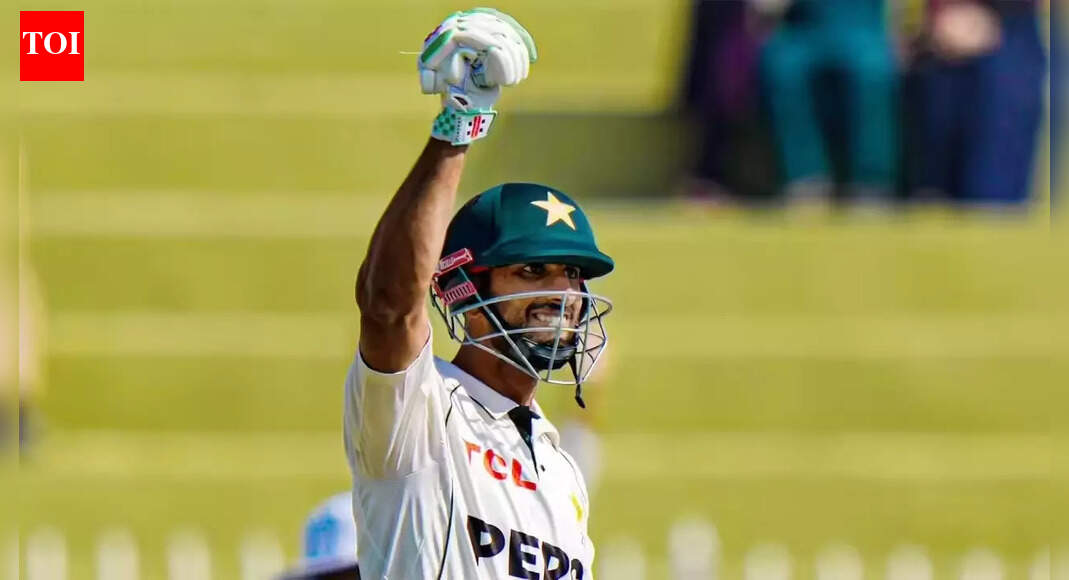
Shan Masood's remarkable achievement of scoring the fastest double century in first-class cricket by a Pakistani in just 177 balls has not only rewritten the record books but also signals a potential shift in the landscape of batting in Pakistani cricket. This accomplishment comes during the President's Cup departmental tournament, a platform where players aim to showcase their skills and secure their spots in the national team. By eclipsing Inzamam-ul-Haq's long-held record of 188 balls, Masood's performance underscores his evolution as a batsman, particularly in the context of modern aggressive batting styles.
Masood's innings of 212 not out from 185 balls demonstrates a strategic approach that combines power with precision. His ability to score rapidly while maintaining composure under pressure reflects a growing trend among cricketers to adapt to faster-paced formats, even within the traditionally slower first-class game. This shift is indicative of broader changes in cricketing strategies, where players are increasingly encouraged to score quickly and efficiently, thereby enhancing the entertainment value of the sport.
The implications of Masood's record extend beyond personal achievement; they place additional pressure on his contemporaries to elevate their game. As the captain of the Pakistan Test team, Masood's performance will likely influence selection decisions, as the PCB evaluates players who can contribute not only in terms of runs but also in setting benchmarks for aggression and resilience. This could lead to an exciting future for the team, especially as they gear up for critical tournaments, including the World Test Championship.
Moreover, the record-breaking innings can be seen as a reflection of Masood's decision to prioritize his playing career over an administrative role within the PCB. By focusing on his performance, he positions himself as a key player within the national setup, potentially inspiring younger cricketers to adopt a similar mindset of prioritizing skill development and on-field contributions over off-field roles. This could foster a competitive environment that emphasizes meritocracy in selection processes.
Masood's achievement also highlights the growing competitiveness of the President's Cup, which serves as a crucial testing ground for players aiming to impress selectors. The tournament's structure allows for high-stakes performances that can define careers, and Masood's record adds to the narrative of this competition as a viable path for players seeking to establish themselves in international cricket.
Looking ahead, Masood's record serves as a benchmark for future generations of Pakistani cricketers. It raises the bar for what is achievable in first-class cricket, and as players aspire to reach or surpass this milestone, it could lead to an era of higher scoring rates and more aggressive batting techniques within the domestic circuit. This evolution is essential for adapting to the demands of international cricket, where scoring quickly can be a pivotal factor in match outcomes.
So where does that leave things? Shan Masood's historic double century not only redefines his personal career trajectory but also sets a new standard for batting excellence in Pakistani cricket. As the cricketing world takes note, it will be interesting to observe how this record influences not only Masood's future but also the broader strategies employed by upcoming cricketers in their quest for success.
Editor's note: This article was independently written by the Scoopliner Editorial Team using publicly available information.